
Last updated September 20, 2026
Full 25-point door and opener safety check with every visit - springs, cables, rollers, tracks, and your LiftMaster or Chamberlain opener included
You get a price before we start. It does not change when the truck arrives.
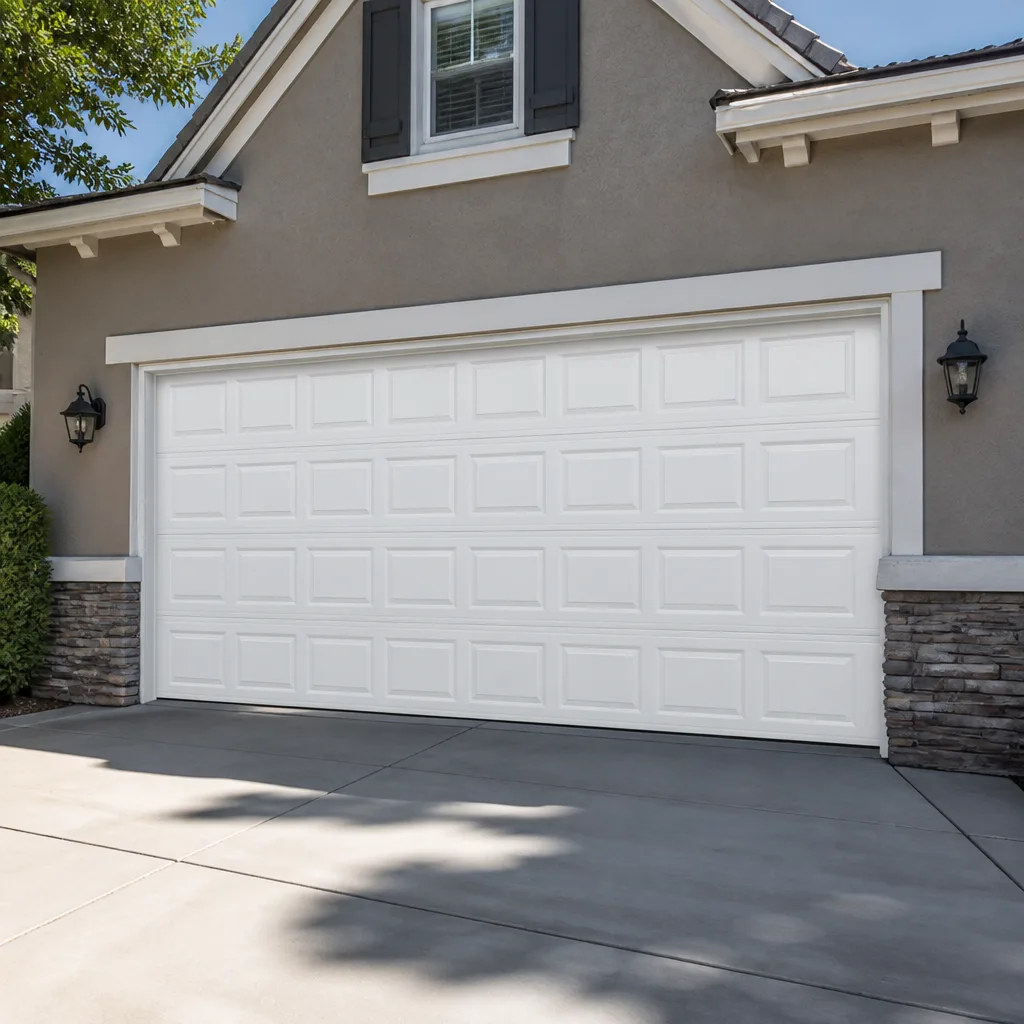
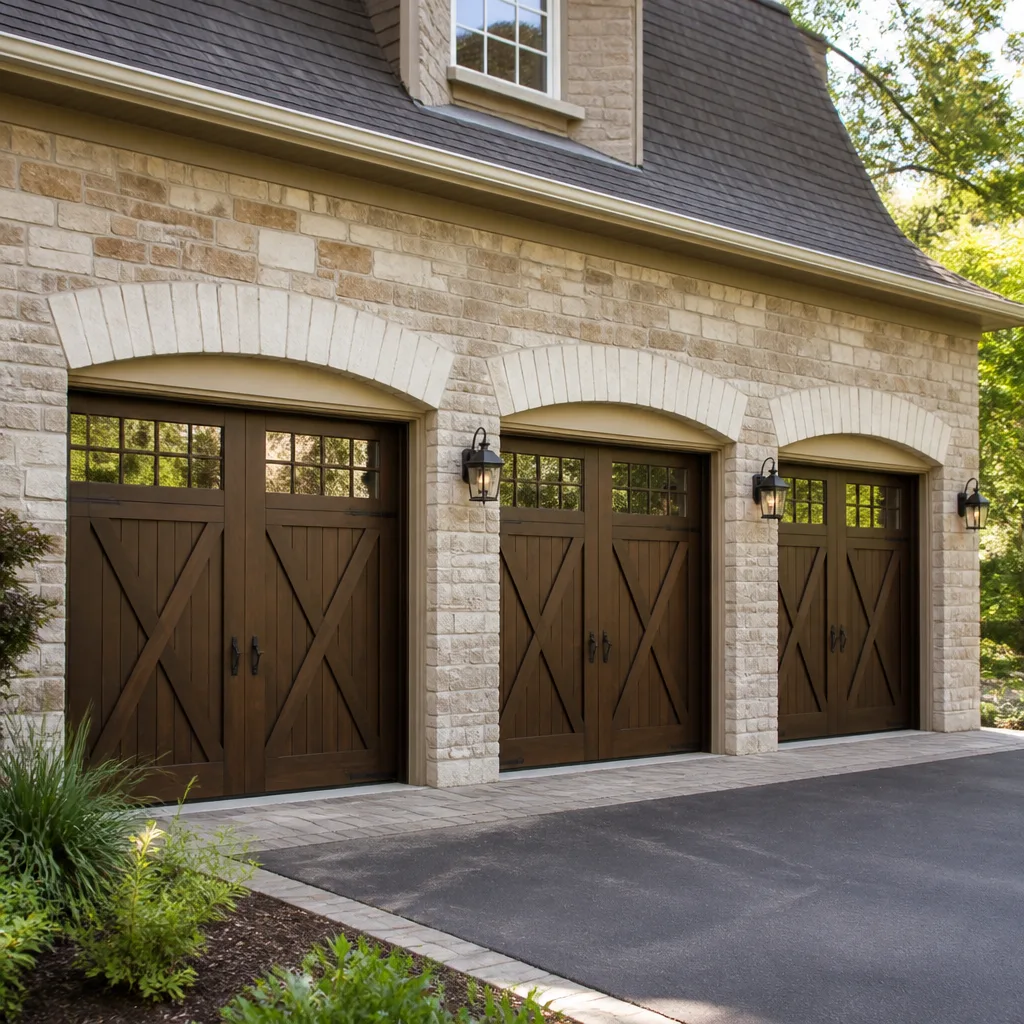
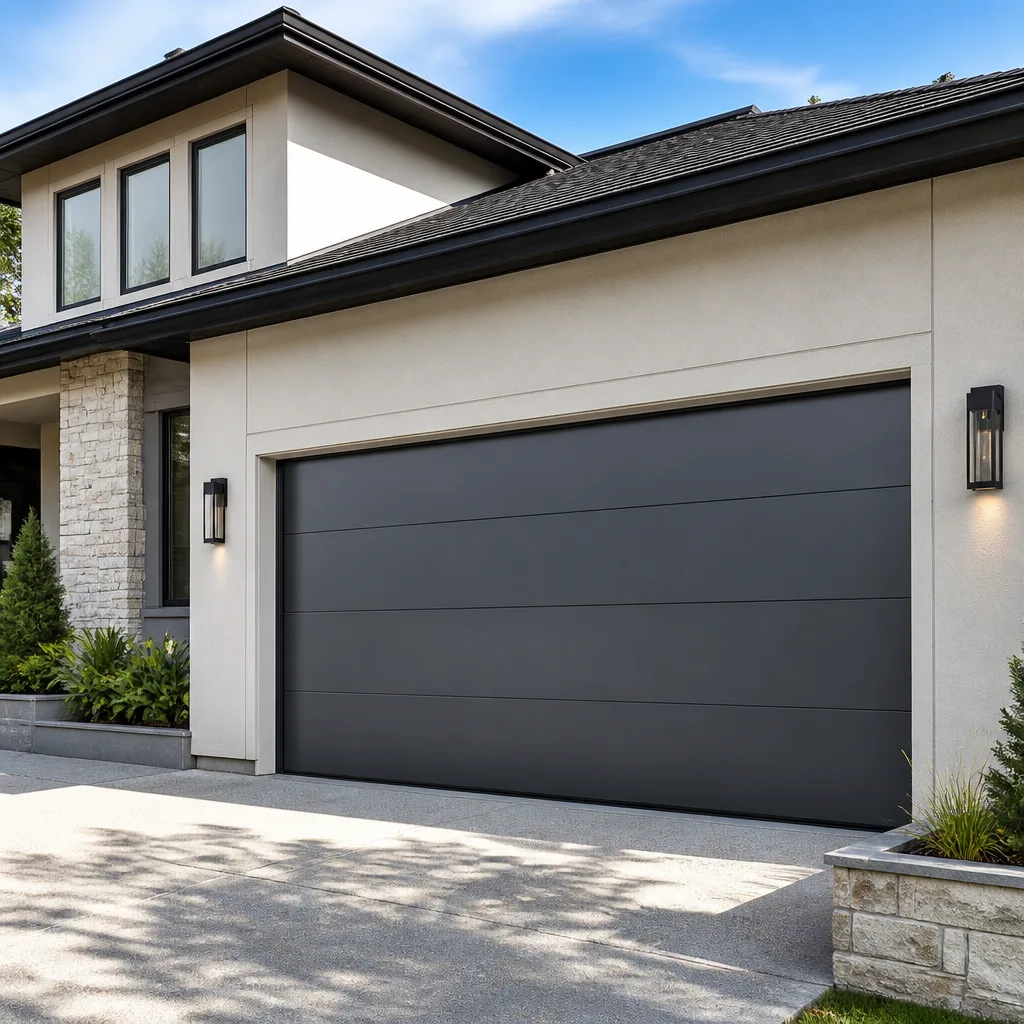
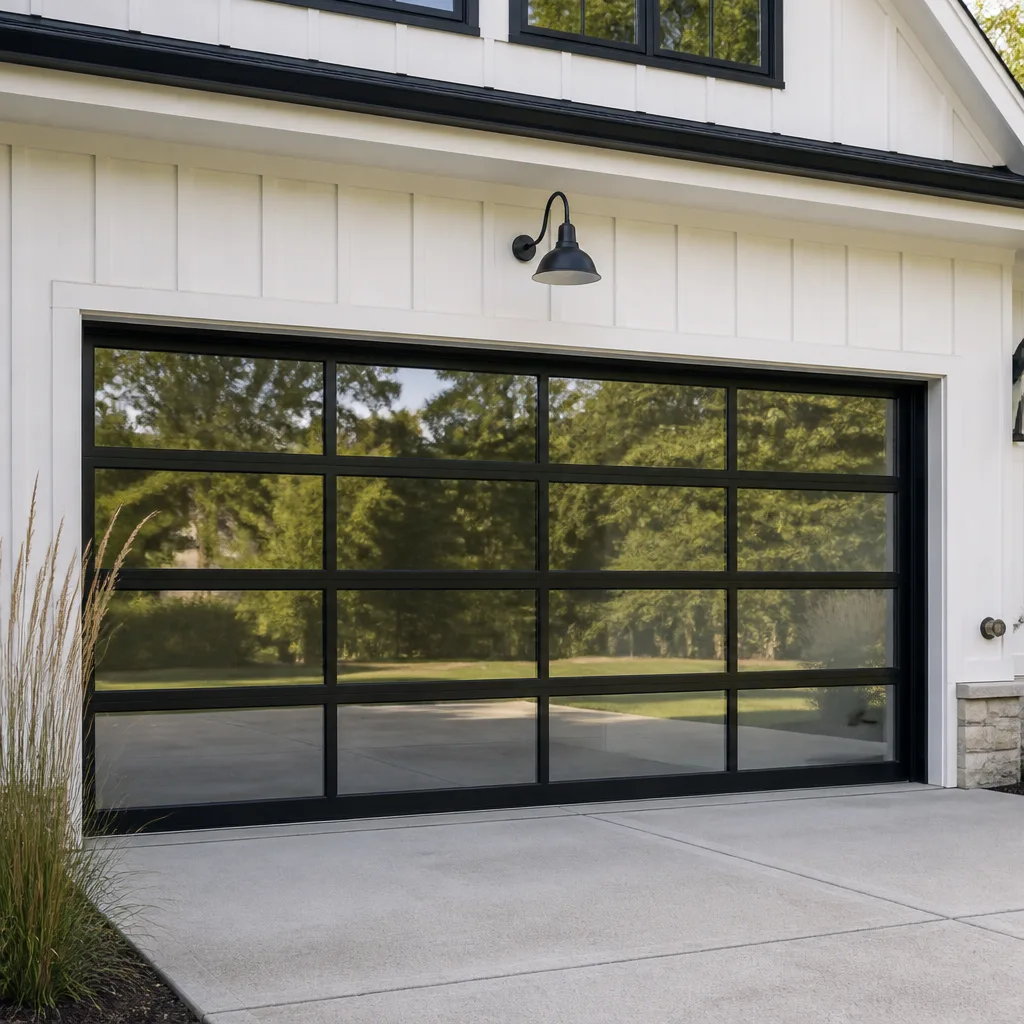
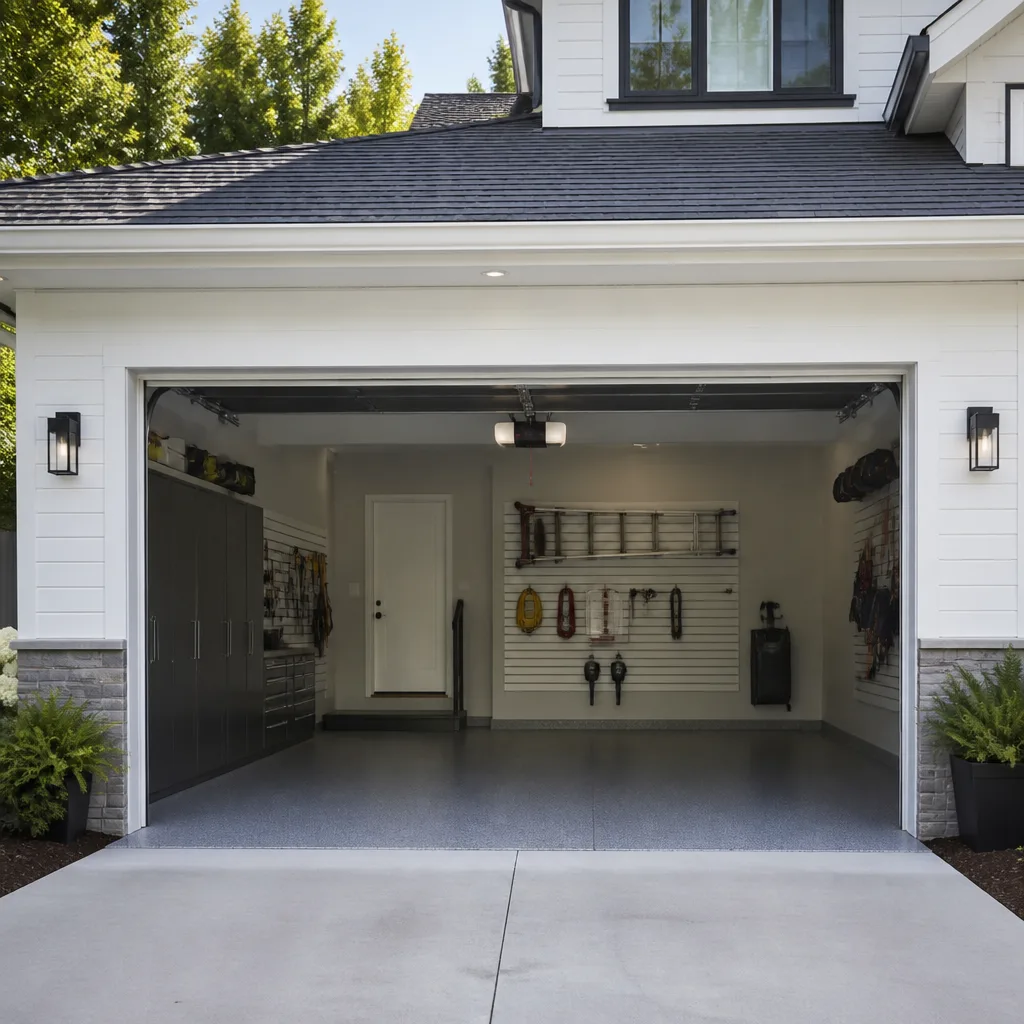
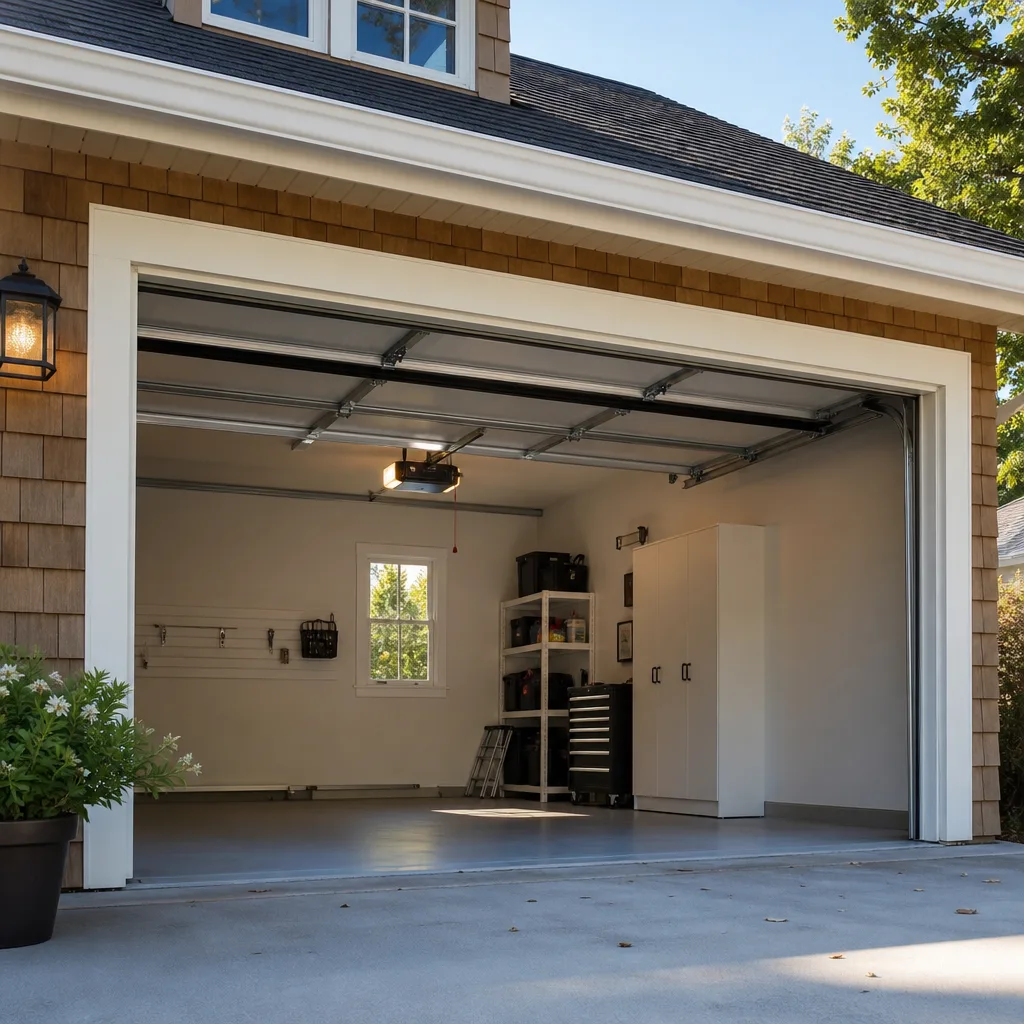
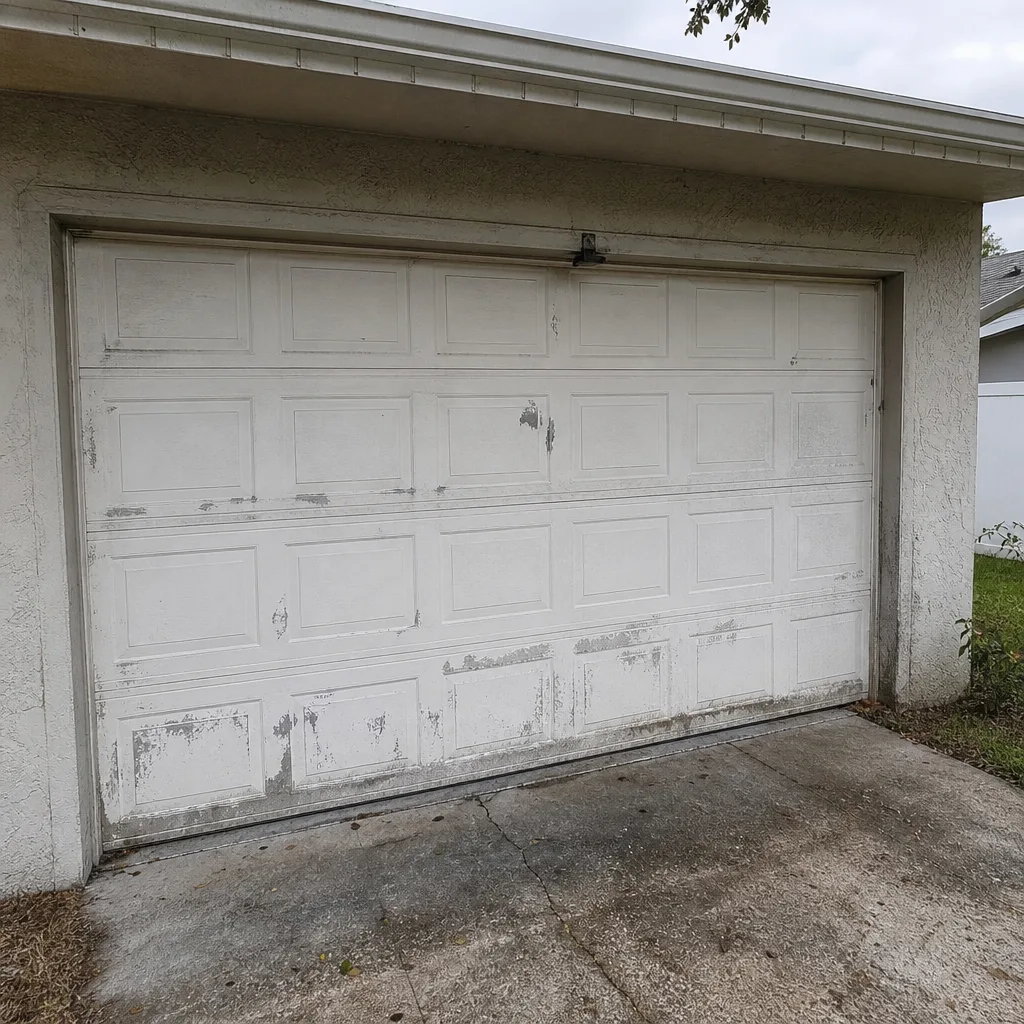 Before
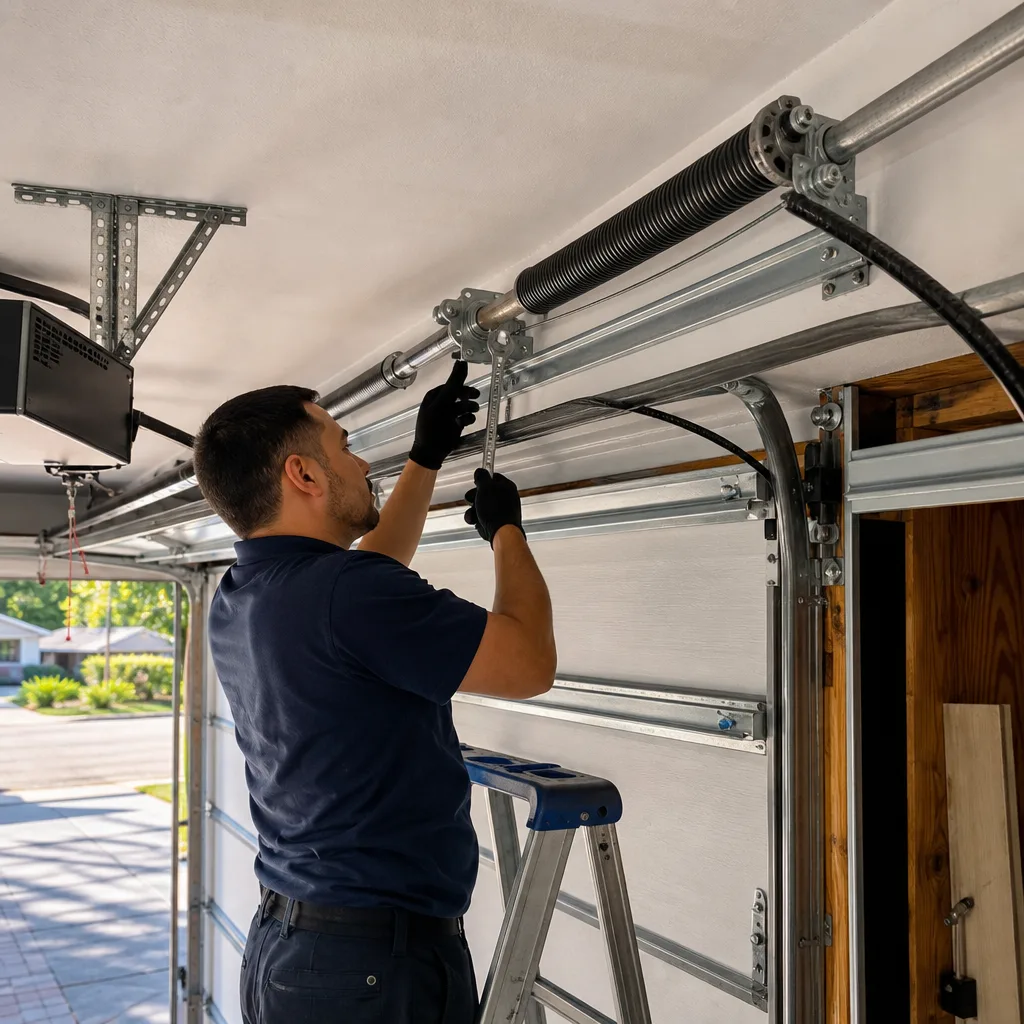 After
After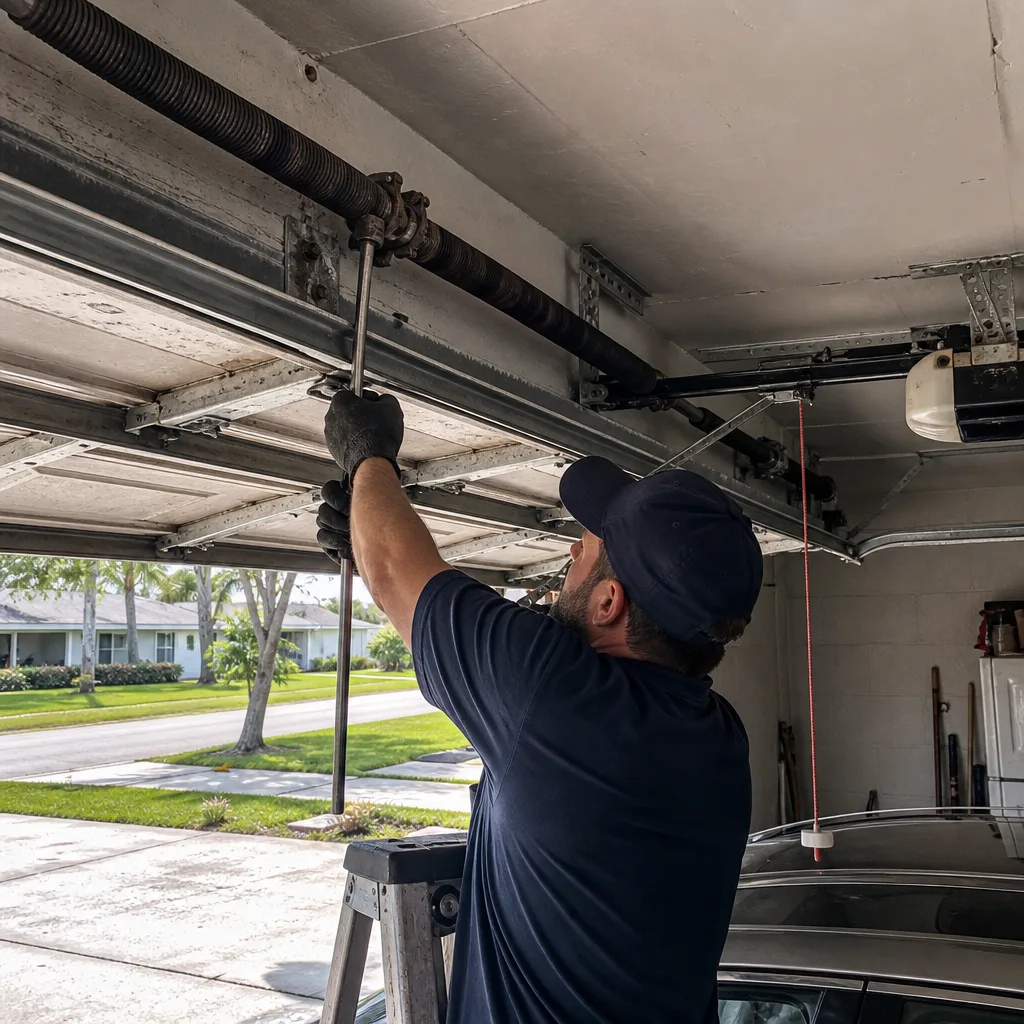 Before
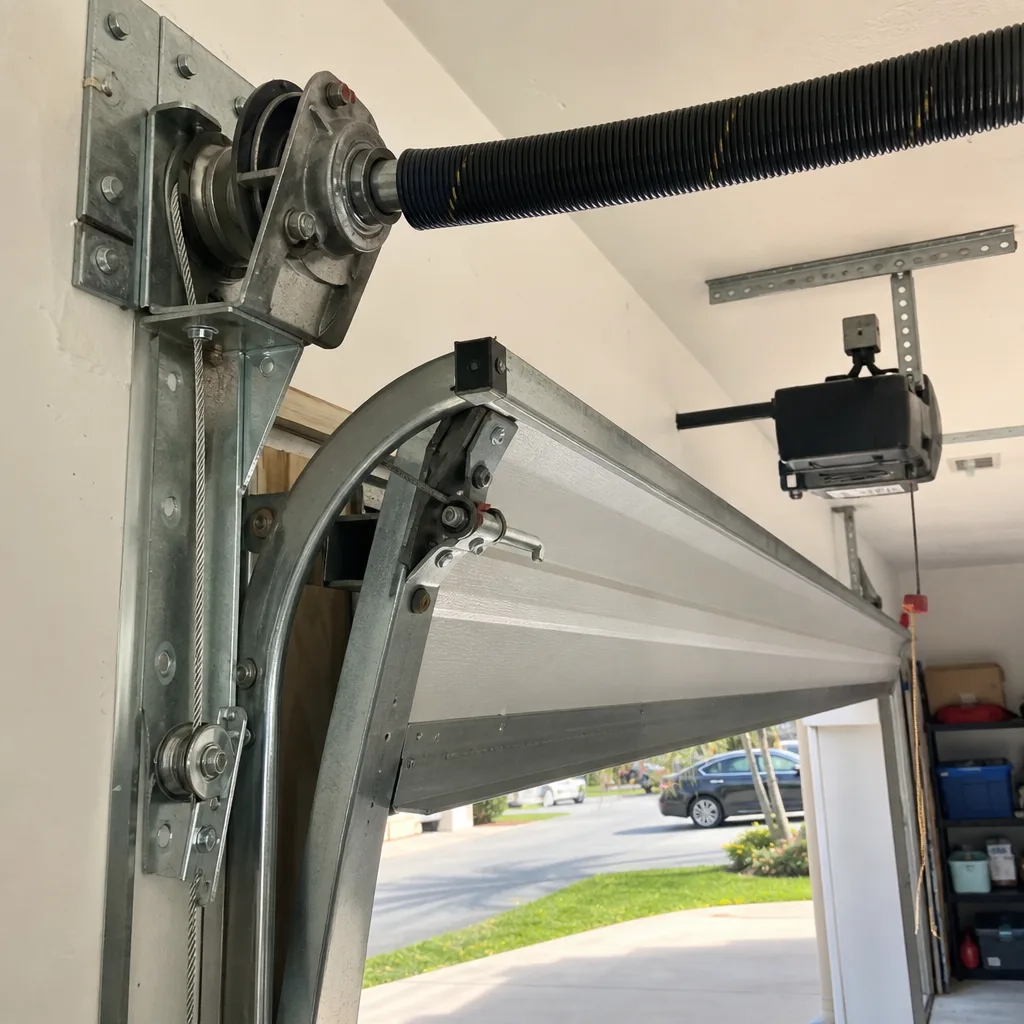 After
After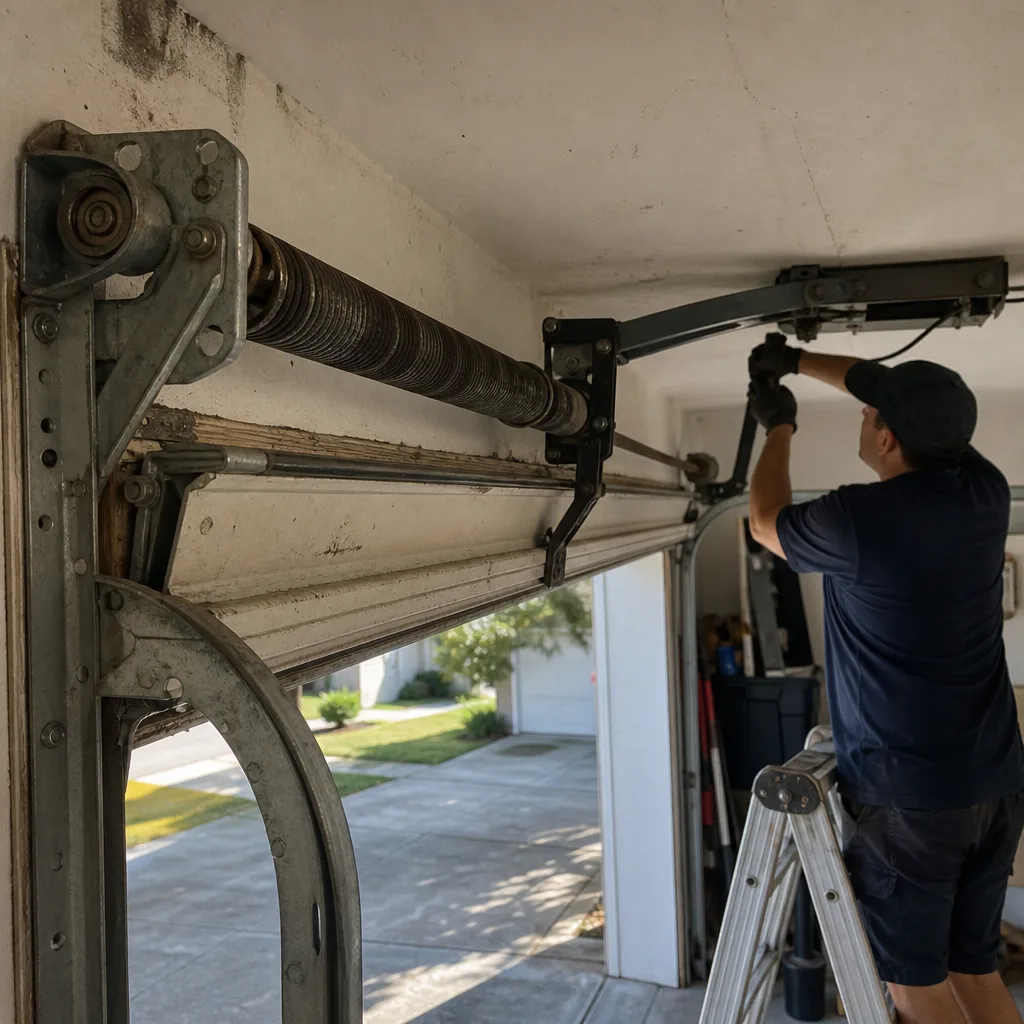 Before
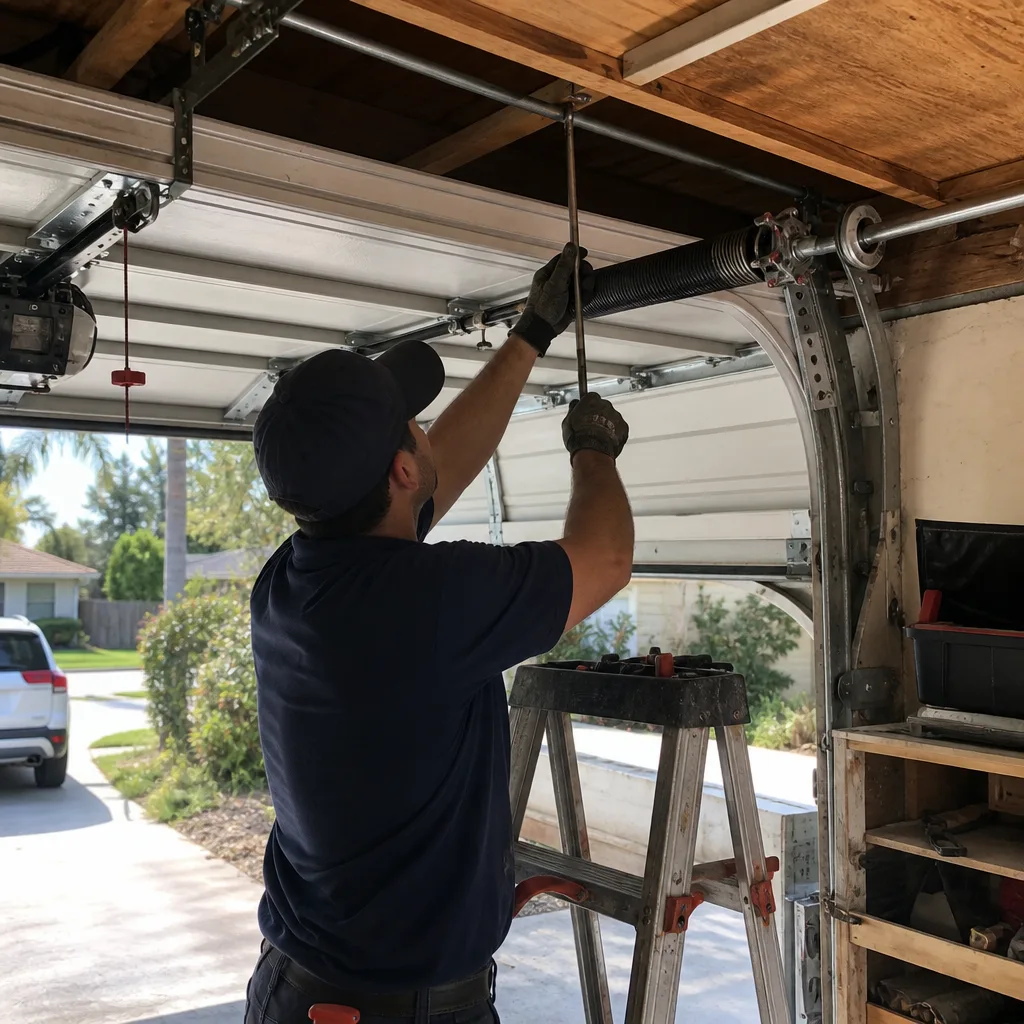 After
AfterThe Complete Guide to Garage Door in Clearwater
Most garage door guides read like they were written for a house in Ohio. Flat terrain, dry air, mild wind, and a door that mostly sits there. Clearwater is a different animal entirely. A garage door here opens and closes roughly 3,200 times a year, and every one of those cycles happens in air that carries salt, moisture, and the constant possibility of a named storm. The result is a mechanical system that fails in specific, predictable ways: spring corrosion that starts at the coil surface, roller bearings that grind down faster than inland installations, and track hardware that rusts from the bracket outward. This guide is written from a Clearwater garage floor, not a content calendar. We’ll map every decision you actually face as a Clearwater homeowner, from wind-load code to cabinet-level hardware choices, with the part names and dollar ranges attached.
Quick Answer
A garage door in Clearwater is a salt-exposed, wind-loaded mechanical system that needs different care than doors in inland Florida, including corrosion-resistant hardware, Florida Building Code Chapter 16 compliant wind ratings, and inspection of torsion springs and bottom brackets after every storm season. This guide covers which components matter most in this climate, what they cost to repair or replace in the Clearwater market (see our Garage Door Cost Breakdown: The Clearwater Homeowner’s Reference for 2026), what documentation you should demand from any contractor, and when an impact-rated door makes financial sense. At the end, you’ll know exactly which questions to ask before writing a check.
Table of Contents
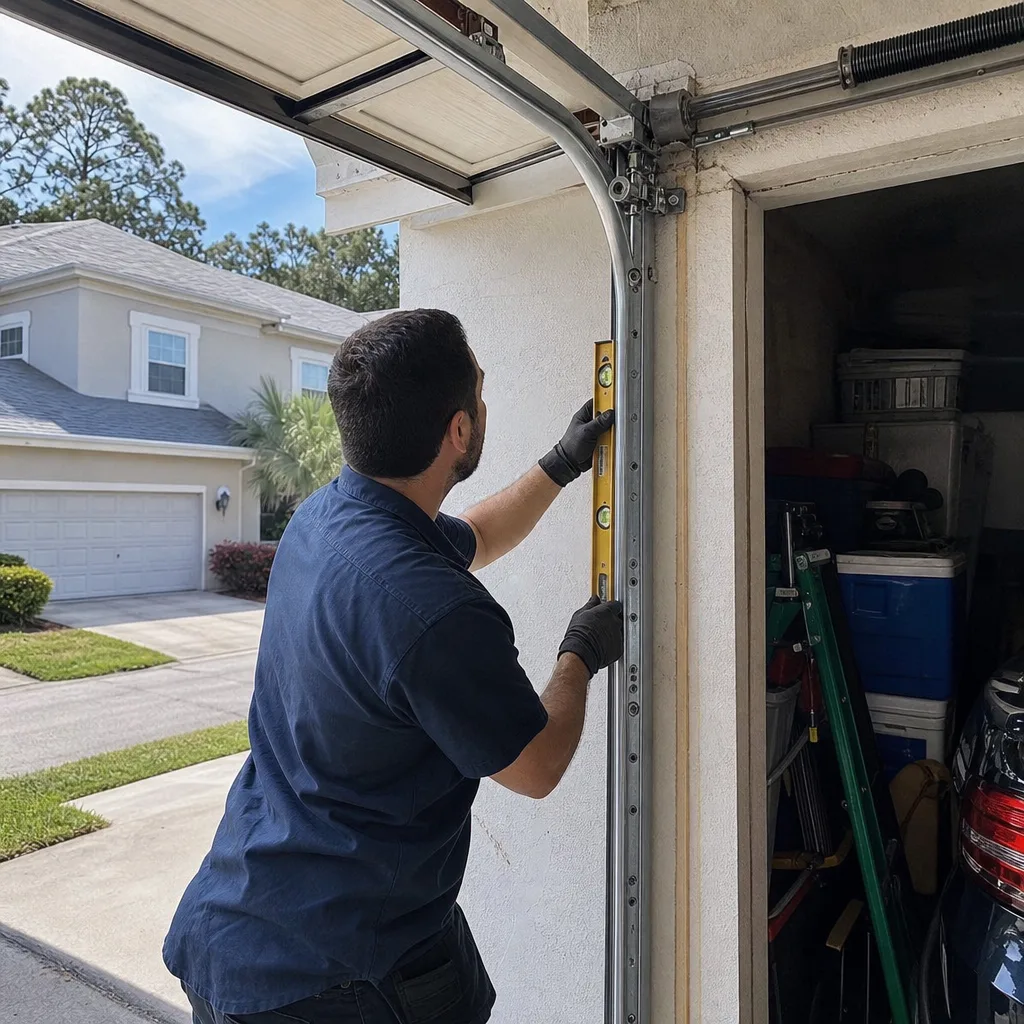
- Clearwater’s Wind-Load Code: Why Chapter 16 Comes Before Brand Preference
- Salt Air and Corrosion: Which Components Fail First in Clearwater
- Impact-Rated Doors vs. Standard Doors: What It Means for Insurance
- Component-by-Component Cost Reference for Clearwater Garage Doors
- The Post-Storm Inspection: A 7-Step Checklist for Clearwater Homeowners
- Documentation You Should Require Before Any Work Begins
- Torsion Springs 101: The Most Misunderstood Part in Your Garage
- Garage Door Openers in a Coastal Climate: Logic Boards, Humidity, and Surge Protection
- Common Mistakes to Avoid
- When to Call a Professional
- Frequently Asked Questions
- The Bottom Line
BeforeAfterClearwater’s Wind-Load Code: Why Chapter 16 Comes Before Brand Preference
The first question most homeowners ask is which brand to buy. It’s the wrong first question. The right first filter is wind-load rating, and that’s set by Florida Building Code Chapter 16 (learn more in our guide to Garage Door Permits, Codes & Inspections in FL: What You Need to Know), not by a manufacturer’s brochure. Clearwater sits in a High Velocity Hurricane Zone wind region, which means the garage door is treated as a structural component of the home envelope, not a convenience. A door that fails under wind pressure doesn’t just let rain in; it allows a pressure differential to build inside the garage that can lift the roof.
Here’s what that means in practical terms. When you select a door panel in Clearwater, the wind-load rating must meet or exceed the design pressure for your specific address. Design pressure accounts for your home’s exposure category, roof height, and distance from the coast. A house three blocks from Clearwater Beach has a higher design pressure than a house near Countryside. You can’t use one rating for every street.
The trade doesn’t make this easy to digest, so here’s the plain version. Wind-load rating is expressed in pounds per square foot, written as psf. Many residential doors in Clearwater require a design pressure rating between +45 and +60 psf, depending on location. That number isn’t a brand preference. It’s calculated from your structure. When you get a quote, ask the contractor to show you the design pressure calculation for your address. If they can’t, that’s a red flag. A real estimator will provide the door’s wind-load certification documentation with the quote, not after you sign.
Impact-rated doors, which we cover in more detail below, carry a separate standard: they’re tested to withstand the impact of a 9-pound 2×4 fired at 34 miles per hour without penetration. That’s a missile test, named accurately, and it’s what separates a wind-rated door from an impact-rated one. Wind-rated doors resist pressure. Impact-rated doors resist pressure plus debris. In Clearwater, the difference matters.
One more note on placement. The wind-load requirement applies to the entire door assembly: panels, track, hinges, struts, and the mounting hardware that anchors the track to the wall. A wind-rated panel bolted to a standard track is not a code-compliant assembly. When you review a written quote, look for the word “assembly.” The warranty and the code compliance both ride on that word.
For a deeper look at the installation side, see our Garage Door Installation in Clearwater guide.
Salt Air and Corrosion: Which Components Fail First in Clearwater
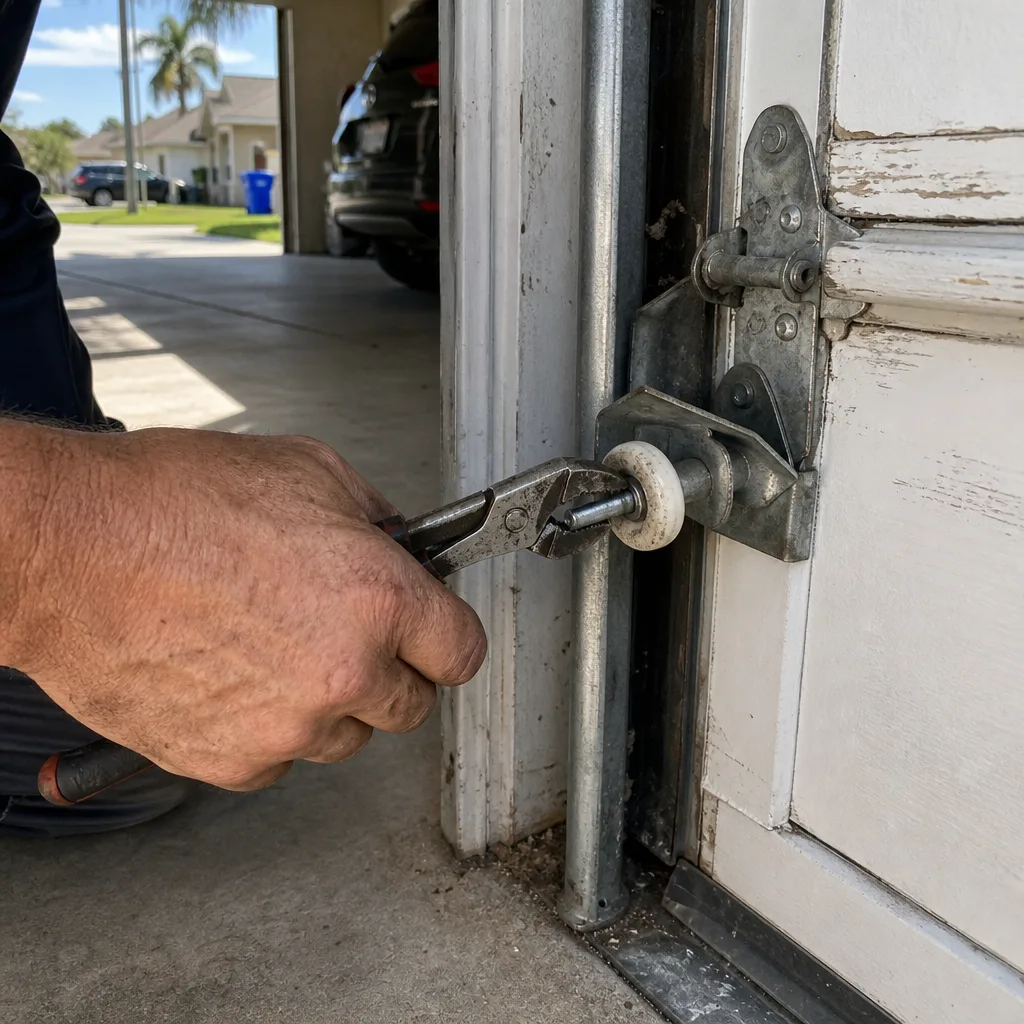
Salt air is not a uniform problem. It attacks different components at different rates, and the pattern is predictable if you’ve been working on Clearwater garage doors long enough. The first casualty is almost always the torsion spring. The second is the bottom bracket. The third is the track hardware. Knowing this order helps you inspect the right places before visible rust becomes a snapped spring or a derailed door.
Torsion springs. The torsion spring sits above the door opening, wound under high tension. It does the actual lifting. In coastal air, the spring’s surface develops micro-pitting within months, not years. That pitting concentrates stress at a single coil, and when the spring breaks, it breaks there. We regularly see springs with a clean snap at a corrosion point, which is why inspecting the spring surface for rust pitting should happen every six months in Clearwater. Look for a reddish-brown speckling that doesn’t wipe off. That’s not cosmetic. That’s stress concentration.
Bottom brackets and cables. The bottom brackets hold the lift cables that run alongside the door. They sit at the lowest point of the assembly, exactly where water collects after a storm or a power wash. Salt residue accumulates in the bracket’s bolt holes, and the resulting corrosion weakens the fasteners. When a bottom bracket fails, the cable can release under tension, which is a dangerous failure mode. This is a safety-critical component that deserves professional inspection, not a DIY vs Professional Garage Door: The Clearwater Homeowner’s Decision Guide look-see.
Track hardware and hinges. Galvanized track and zinc-plated hinges are standard on mid-range doors. They work fine inland. In Clearwater, they rust progressively from the hardware outward, and the failure shows up as a door that binds at a specific point in its travel. The fix is often hardware replacement with upgraded materials: stainless steel hinges and powder-coated track brackets. The upgrade adds cost upfront but doubles the functional life of the assembly in this climate.
Rollers. Roller bearings are sealed units, but in high-humidity coastal air, the seals degrade faster and moisture gets inside. A roller with worn bearings makes a grinding noise and causes the door to run rough. Nylon rollers with stainless steel bearings hold up better than standard steel, and the cost difference is modest per set. This is one of the few components where proactive replacement makes sense before failure.
If you’re dealing with active corrosion or a door that’s binding, our Garage Door Repair in Clearwater page covers the repair process in detail.
Impact-Rated Doors vs. Standard Doors: What It Means for Insurance
The decision between an impact-rated door and a standard wind-rated door in Clearwater comes down to three variables: where your house sits, what your insurance policy says, and how long you plan to stay. The sticker difference is real. Impact-rated doors cost anywhere from $1,500 to $4,000 more than a comparable standard door installed, depending on size and material. The value conversation is where it gets interesting.
Florida insurance carriers offer wind mitigation credits for homes with impact-rated openings, including the garage door. The credit is not cosmetic. A properly documented impact-rated garage door can reduce the wind premium portion of your homeowners’ policy by a meaningful percentage, sometimes in the double digits. But the credit only applies if the door is certified, installed to the approved product approval, and documented with the paperwork your insurer requires. An impact-rated door without the product approval paperwork is just an expensive standard door in the eyes of your carrier.
Here’s the step-by-step for homeowners weighing this decision in Clearwater:
- Call your insurance agent first. Ask specifically what wind mitigation credit applies to an impact-rated garage door on your policy. Get the number in writing, not as a verbal estimate.
- Get a design pressure calculation for your address. This tells you the required rating for a standard assembly. It’s the starting benchmark.
- Compare quotes with the assembly specified. An impact-rated door quote should name the manufacturer, the model, the exact size, and the Florida Product Approval number. Without that approval number, the quote is incomplete.
- Calculate payback. Divide the price difference by the annual premium credit. If the payback is under seven years and you plan to stay, the impact-rated door usually makes financial sense. If you’re selling within three years, the standard wind-rated door may be the better call.
- Ask about product approval documentation. You should receive a copy of the Florida Product Approval with the installation documentation. This is the paper your insurer will ask for when you file for the credit.
One practical note that mainland guides miss: impact-rated doors are heavier. The added mass changes what your opener has to do. If you’re upgrading from a standard door to an impact-rated panel, your existing opener may need to be checked for lift capacity and adjusted travel limits. This is a real consideration, and it’s one a competent Clearwater installer will raise before the install, not after the door binds on day one.
Component-by-Component Cost Reference for Clearwater Garage Doors
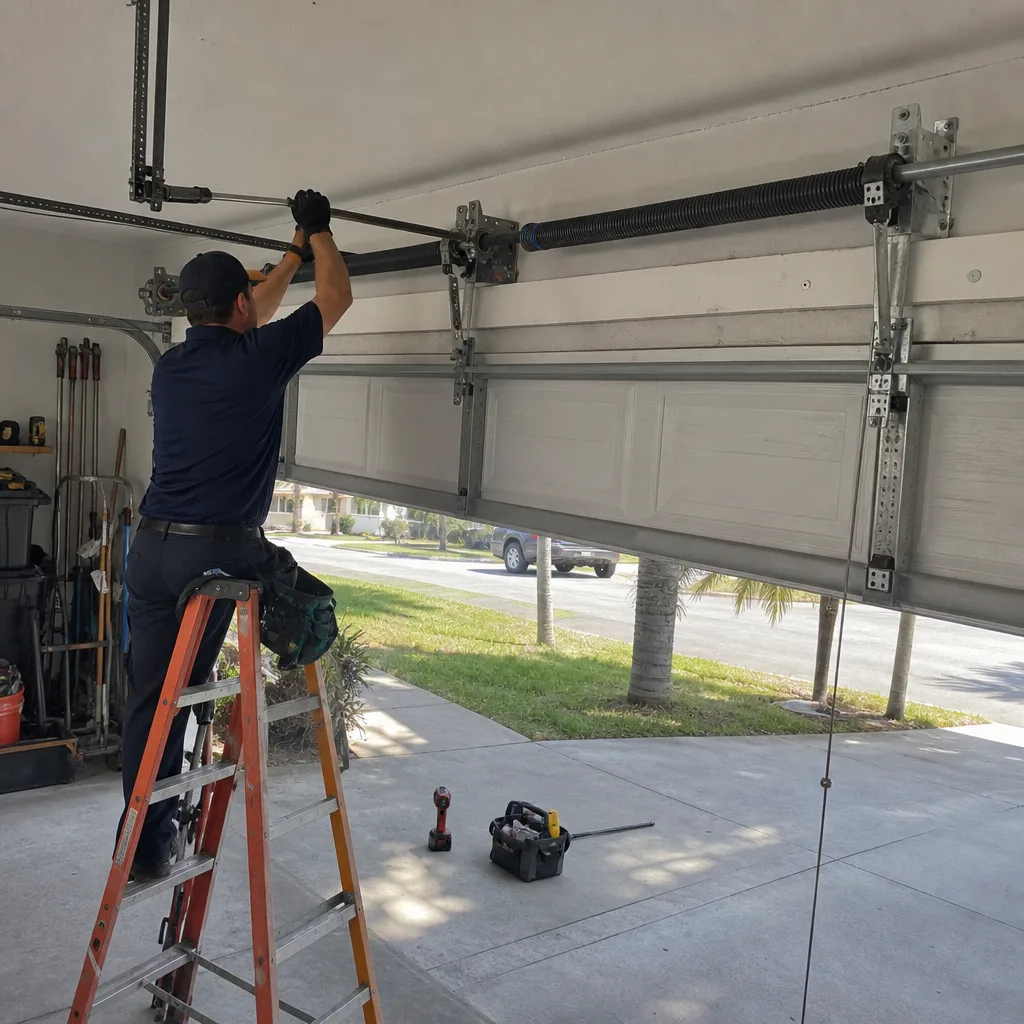
Here’s the section most people skip straight to, and that’s fine. Pricing transparency is why this guide exists. The numbers below reflect what we see in the Clearwater market as of this writing. They are ranges, not quotes, and every job gets a written price before any work starts, per Clause 1 of The Haven Standard. Labor is included in these ranges.
- Torsion spring replacement (single spring): $220 to $380. Includes spring, labor, and a tension balance check. Clearwater’s humidity shortens spring life, so expect replacement at 7 to 10 years rather than the 10 to 12 you’d see inland.
- Torsion spring replacement (pair): $380 to $620. When one spring breaks, the other is typically at the same point in its life cycle. Replacing both is standard practice and cheaper per spring than two separate visits.
- Lift cable replacement (one side): $160 to $260. Cable failure often follows spring failure or bottom bracket corrosion. We recommend replacing both cables at once.
- Bottom bracket replacement (pair): $140 to $240. This is one of the highest-failure components in coastal air. Upgrading to stainless steel hardware adds $40 to $80 and meaningfully extends service life in Clearwater.
- Roller replacement (full set, nylon with steel bearings): $120 to $220. Quieter operation and smoother travel. Worth doing when you hear grinding.
- Panel replacement (single panel, standard steel): $300 to $650 depending on size, gauge, and finish matching. A dented bottom panel on an otherwise healthy door is a common Clearwater scenario after storm debris.
- Full door replacement (standard steel, single car): $1,100 to $2,400 installed. This includes panel, track, springs, hardware, and labor. Wind-load rating and finish options move the number.
- Full door replacement (impact-rated, single car): $2,800 to $5,500 installed. Includes Florida Product Approval documentation.
- Garage door opener (belt drive, installed): $380 to $650. Belt drive is quieter than chain, which matters if you have living space above the garage.
- Logic board replacement: $180 to $320. A failed logic board is the most common opener failure we see in Clearwater, often following a power surge during storm season.
Two things to know about these numbers. First, the price you’re quoted should be the price you pay. If a company quotes a range and then invoices the top of the range “because of complications,” the complications were either knowable at quote time or invented. Demand a written, itemized price before work begins. Second, the cheapest quote in Clearwater is frequently a bait number that climbs after the technician arrives. A documented flat price is not a premium; it’s the baseline for a professional.
The Post-Storm Inspection: A 7-Step Checklist for Clearwater Homeowners
After any storm season, or after any storm with sustained winds above 50 mph, walk your garage door system front to back. This is a homeowner-level inspection, not a repair guide. It takes ten minutes and tells you what to flag for a professional.
- Check the spring surface for pitting. Look at the torsion spring above the door. Reddish-brown speckling that doesn’t brush off is corrosion pitting. That’s a spring that needs professional replacement, not a wait-and-see item.
- Inspect both bottom brackets. The brackets at the lowest corners of the door take the cable tension. Look for rust at the bolt holes and any sign of the bracket pulling away from the door edge. Do not loosen or remove these bolts yourself. The cables are under tension.
- Run the door and listen. A smooth door is quiet. Grinding, popping, or uneven movement means a roller, hinge, or track alignment problem. Note where in the travel the noise occurs.
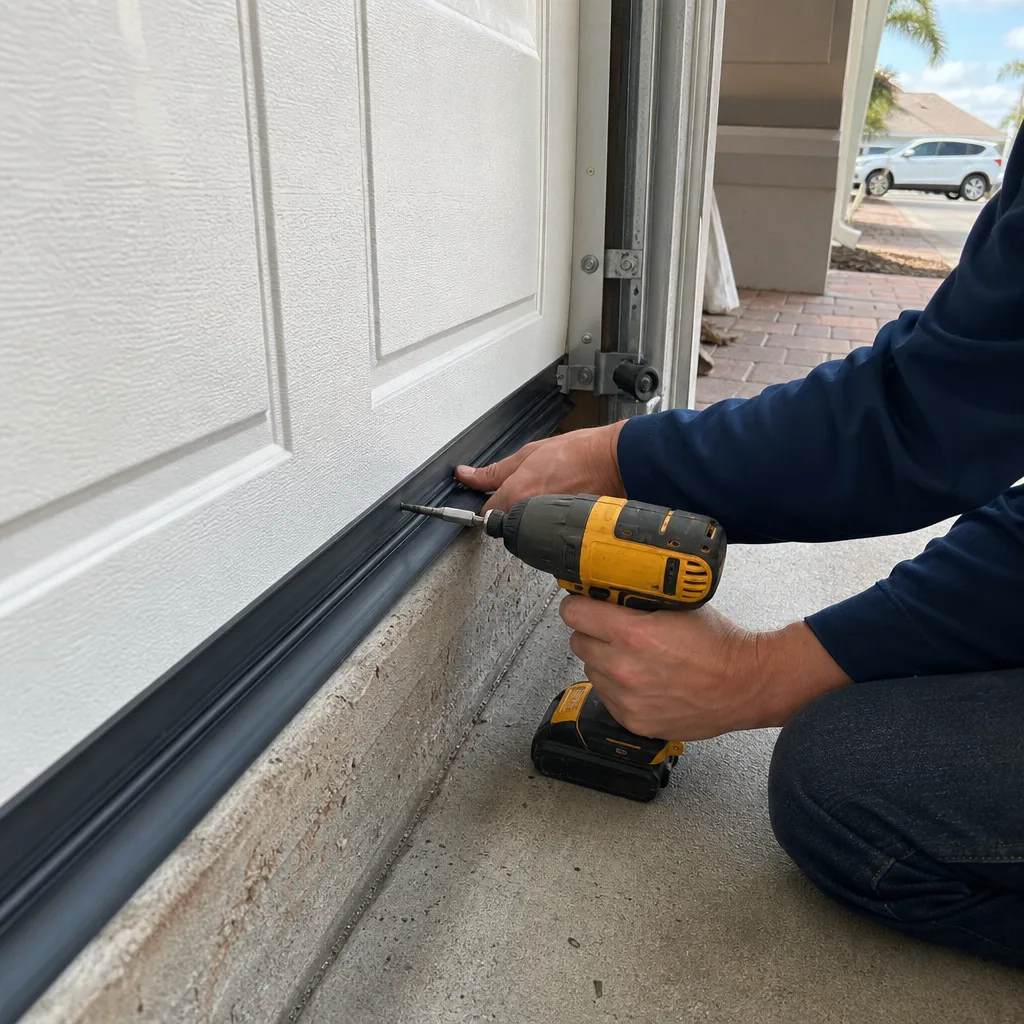
- Check the weather seal. The U-shaped rubber strip at the bottom of the door keeps rain and debris out. In Clearwater’s sun exposure, this seal hardens and cracks within two to three years. Replacement is a low-cost fix.
- Look at the track brackets. The brackets that hold the track to the wall should be tight and rust-free. If they’re loose or corroded, the door doesn’t run true, and the opener works harder.
- Test the auto-reverse. Place a 2×4 on the ground under the door’s path and close it. The door should reverse within two seconds of contact. This is a safety feature required by federal law, and it should be tested monthly, not just post-storm.
- Check the emergency release. Pull the red cord and confirm the door moves freely by hand. If it’s heavy or binds, the door’s balance is off, which points to spring or cable issues. Re-engage the opener after testing.
If anything on this list looks wrong, get a professional assessment. Torn springs, loose cables, and damaged bottom brackets are not DIY repairs. The tension in a torsion spring can cause serious injury if released improperly. Call a licensed, insured technician who will photograph what they find and quote a written price before any work starts.
Documentation You Should Require Before Any Work Begins
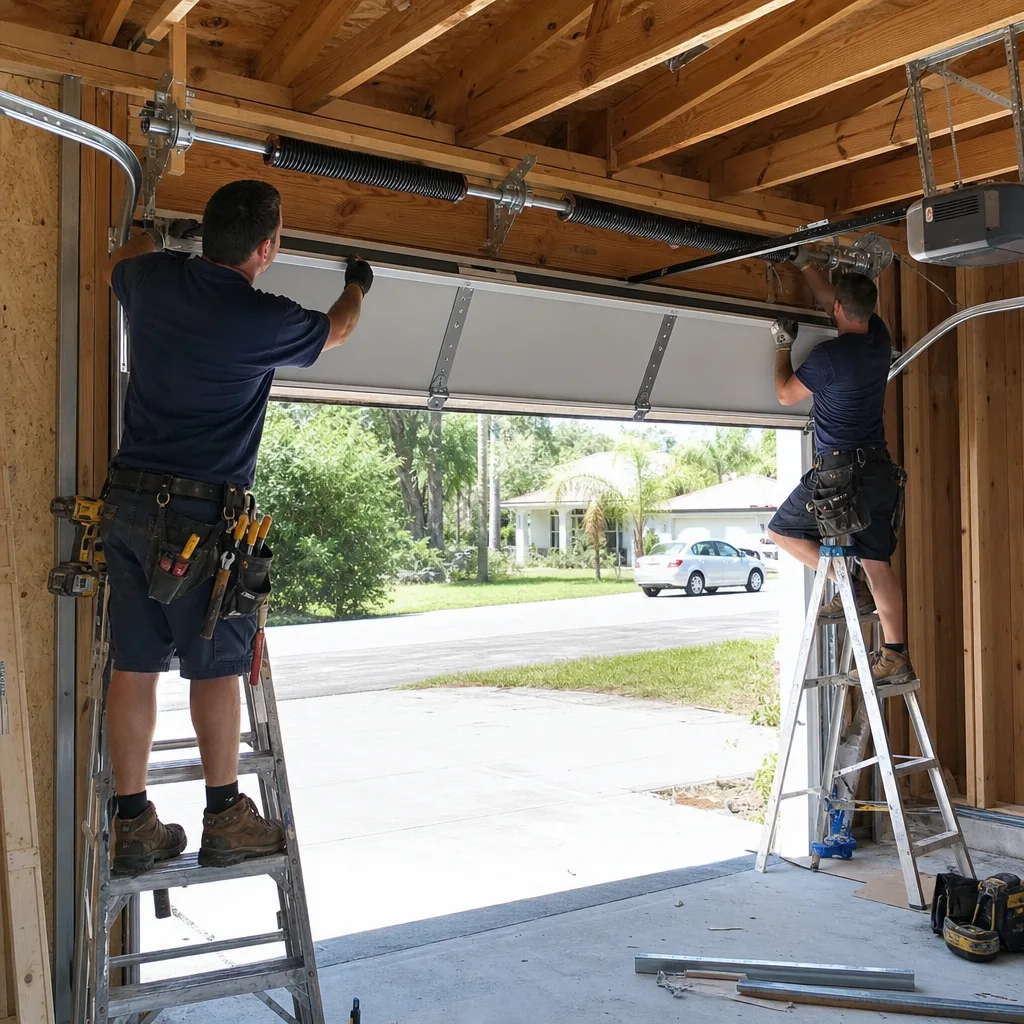
The garage door industry has a documentation problem. Many companies still operate on a handshake and a verbal estimate, and the invoice arrives after the work is done. That’s backwards. Here’s the documentation standard we hold ourselves to, and the one you should require from any contractor in Clearwater before you approve a repair or installation:
- A written, itemized quote. Not a verbal range, not “we’ll see when we get there.” A flat price with each line item separated: spring, hardware, labor, opener, whatever the job involves. Clause 1 of The Haven Standard exists because verbal estimates are how customers get surprised.
- A written scope of work. What exactly will be done, in what order, and what the end state looks like. “Replace torsion springs and balance door” is a scope. “Fix the door” is not.
- A photo of the failed component. This is the one that separates evidence-based contractors from the rest. If a technician tells you a spring is broken, you should see the break. Clause 4 of The Haven Standard requires the photo before the quote, not after. If a company won’t show you the failed part, ask yourself what they’re not showing you.
- A product approval number for any impact-rated door. As covered above, this is the paper your insurance company needs for the wind mitigation credit. It should be delivered with the quote, not requested later.
- A written warranty. Not a verbal “we stand behind our work.” A written document that says what’s covered and for how long. The 365-Day Done Right Promise is ours: if it’s not right, we make it right, backed by a terms page, not a handshake.
- A closing photo record. After the work is done, you should receive photos of what was replaced and what the finished assembly looks like. This is your record if anything goes wrong later, and it’s included on every visit we make.
You have leverage before you pay. Use it. A contractor who pushes back on a written quote or a photo of the failed part is telling you something about how they operate.
Torsion Springs 101: The Most Misunderstood Part in Your Garage
The torsion spring is the single most misunderstood component in a garage door system, and it’s also the one most likely to fail in Clearwater. Here’s what it actually does, in one paragraph: the spring stores mechanical energy when the door closes, and it releases that energy to lift the door when it opens. Your opener doesn’t lift the door. The spring lifts the door. The opener just gets it moving. A four-hundred-pound door feels like ten pounds to your opener because the spring is doing the work.
That’s why spring failure is a complete system failure. When the spring breaks, the door won’t open, or it opens a few inches and stops. The opener strains, the cables go slack, and a homeowner who forces it risks bending the door or damaging the opener. The correct response is to stop using the door and call for replacement.
Spring life is measured in cycles, not years. A standard torsion spring is rated for 10,000 cycles, which translates to roughly 7 to 10 years in Clearwater, because of humidity-accelerated corrosion cutting into that rating. High-cycle springs rated for 20,000 to 30,000 cycles cost more upfront but are the right call if you plan to stay in the house. The price difference between a 10,000-cycle spring and a 25,000-cycle spring is modest, around $60 to $120 per spring, and it buys you a decade of additional life.
What does a broken spring look like? A torsion spring typically breaks clean at a coil, and you’ll see a visible gap in the coil about the width of your finger. Sometimes both springs break, and sometimes one breaks and the other follows within months. This is why we replace springs in pairs by default. It’s not an upsell. It’s an acknowledgment that both springs have been through the same number of cycles, in the same air, and the second one is statistically next.
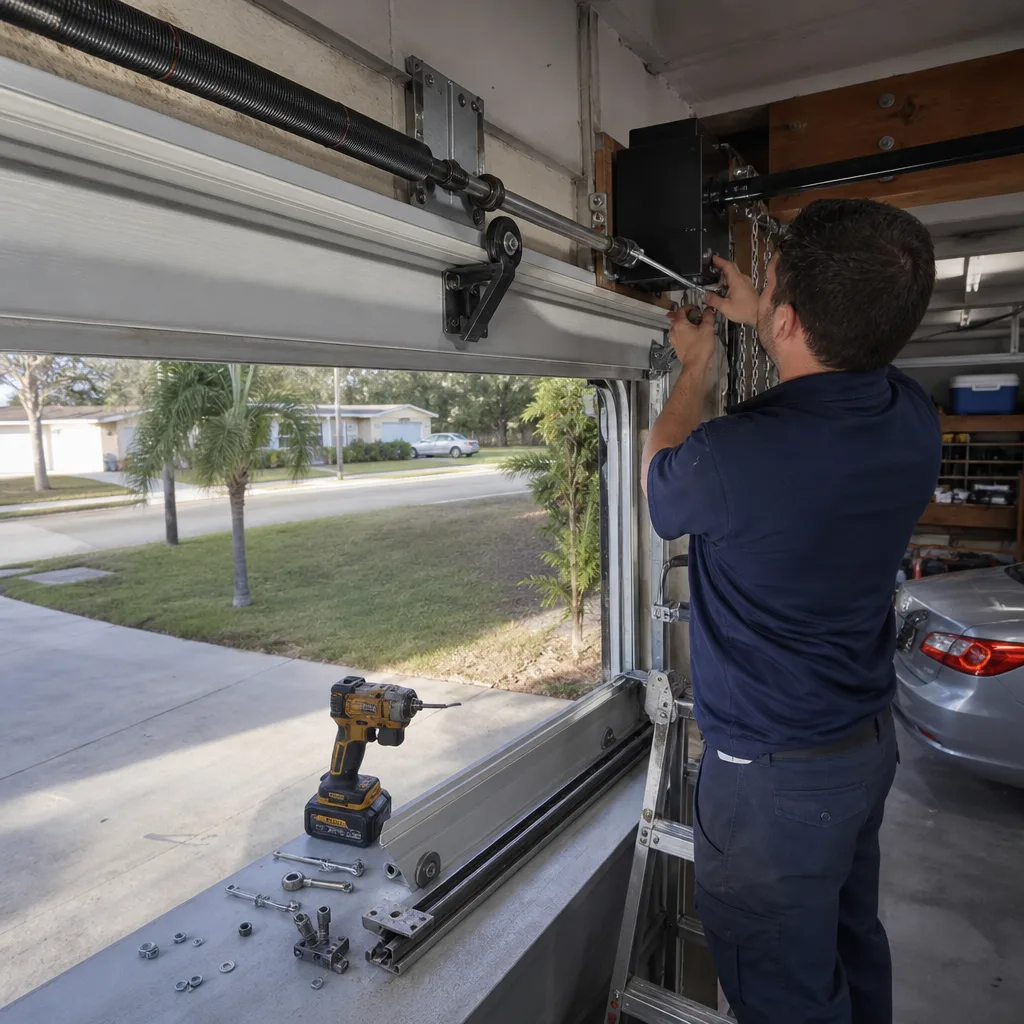
Replacing a torsion spring is not a homeowner repair. The spring is wound under high tension, and the winding bars used to adjust it are a specialized tool. A spring that releases unexpectedly can cause serious injury. This is one of the repairs where the labor cost is not negotiable, because the labor includes the knowledge of how not to get hurt.
Garage Door Openers in a Coastal Climate: Logic Boards, Humidity, and Surge Protection
The garage door opener is the electronic heart of the system, and Clearwater’s climate is hard on electronics. The most common opener failure we see is the logic board, the small circuit board that interprets button presses and sensor inputs. In coastal humidity, logic boards corrode at the solder joints over time. The symptom is usually intermittent operation: the opener works, then doesn’t, then works again. Homeowners describe it as “the opener has a mind of its own.” It doesn’t. It has a failing board.
Sometimes the fix is board replacement. Other times, if the opener is 12 to 15 years old or more, replacement is the better value. A new opener brings a fresh motor, new safety sensors, and compatibility with modern features like battery backup and garage door apps. Belt-drive openers are the standard recommendation for Clearwater homes with bedrooms above the garage, because they run noticeably quieter than chain-drive units.
Two Clearwater-specific points worth your attention:
Surge protection. Storm-season power surges are a real cause of opener failure in this market. A lightning strike a mile away can send a spike through the line that fries a logic board instantly. A quality surge protector installed at the opener outlet costs $30 to $60 and is the cheapest insurance you can buy for your opener. This is standard practice for any professional install in Clearwater.
Battery backup. Since 2019, Florida building code has required battery backup on all newly installed residential garage door openers. This is not optional equipment. If your opener is older or was installed before the code change, it likely doesn’t have battery backup. When you replace it, the new unit will include it. During a power outage after a storm, that battery allows the door to open and close a limited number of cycles, so you’re not trapped or locked out. If you’d like to understand the full opener replacement process, see Garage Door Opener Repair & Installation in Clearwater.
One more thing about brands. We service all eight major brands: LiftMaster, Chamberlain, Genie, Clopay, Amarr, Wayne Dalton, Craftsman, and Raynor. That means we don’t steer you toward whichever brand we have the best margin on. We diagnose what you have and quote the repair or replacement on its merits.
Common Mistakes to Avoid
- Forcing the door after a spring breaks. When a torsion spring snaps, the door is heavy, and the opener strains against it. Running the opener repeatedly stresses the motor, can bend the door panel, and makes the eventual repair more expensive. Stop using the door and call for spring replacement.
- Accepting a verbal quote. “It’ll probably be around four hundred” is not a quote. A written price and scope before work starts is the minimum standard. If a company pushes back on this, find another company.
- Choosing a door by brand instead of wind-load rating. Brand preference is secondary. The design pressure calculation for your address is primary. A reputable brand with the wrong rating is the wrong door for a Clearwater home.
- Replacing only one spring to save money. The second spring is at the same point in its life cycle. You’ll pay a second service call fee and likely have the second spring fail within months. Replace both.
- Ignoring a noisy door. Grinding, popping, or binding is your door telling you something. Ignoring it allows a $200 roller replacement to become an $800 track-and-panel repair. Diagnose early.
- Skipping the post-storm inspection. Clearwater storms leave damage that isn’t immediate. Corrosion accelerates after salt deposits sit on hardware. Ten minutes of inspection after storm season catches problems before failure.
- Buying an impact-rated door without the paperwork. No product approval number, no insurance credit. The paperwork is the product. Get it in writing with the quote.
When to Call a Professional
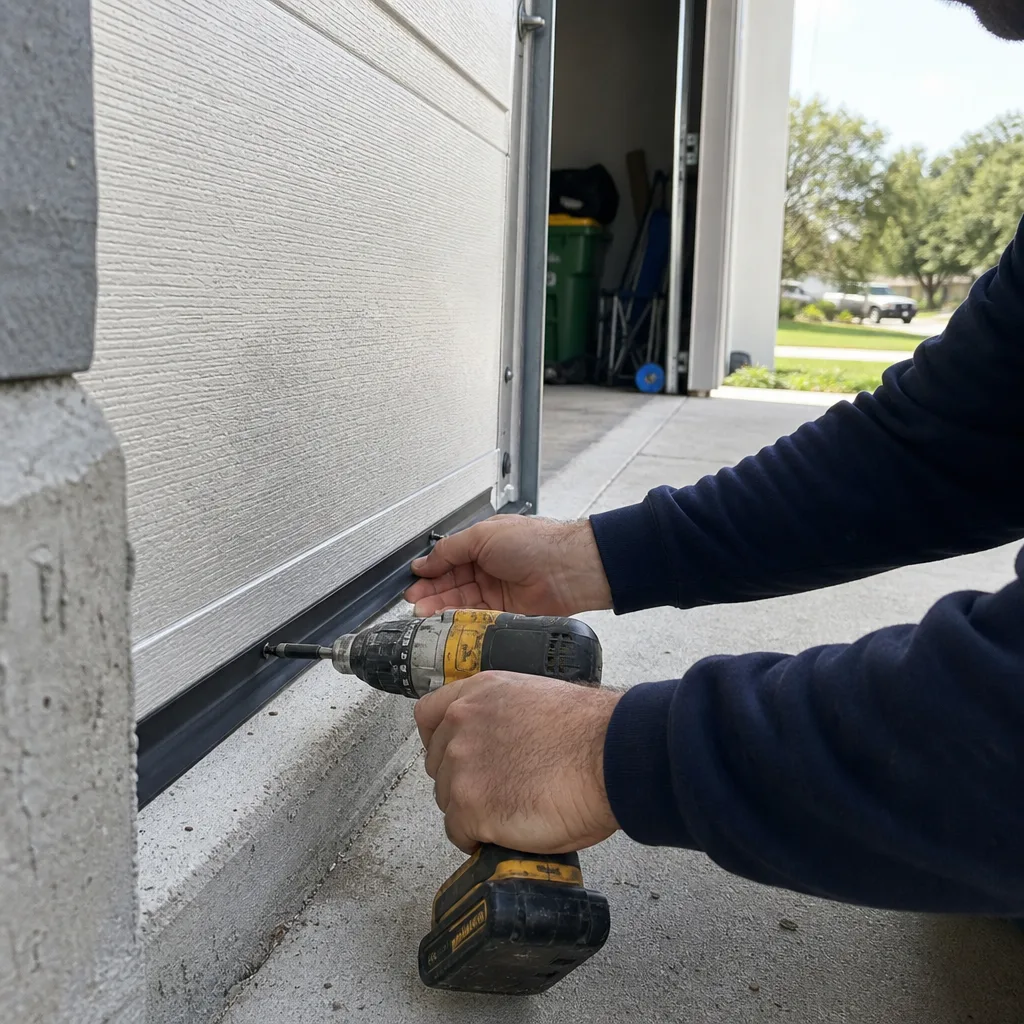
Some garage door work is safe for a homeowner. Lubricating hinges, testing the auto-reverse, replacing weather seal: those are reasonable DIY tasks. But the components that make a garage door dangerous are the ones under tension. Torsion springs, lift cables, and bottom brackets should only be handled by a trained technician with the right tools and the experience to do it safely. A torsion spring releasing unexpectedly can cause serious injury. A lift cable under tension that slips can do the same. The labor cost is not a convenience fee; it’s what you pay for someone who knows how not to get hurt and will photograph the failed part before quoting the repair. For more guides & resources, visit our blog. Servo Garage Doors Clearwater offers free estimates in Clearwater, call (727) 485-0719.
Frequently Asked Questions
A single torsion spring replacement in Clearwater typically costs $220 to $380, and replacing both springs as a pair runs $380 to $620, including labor. The exact price depends on spring size, cycle rating, and door weight. Call (727) 485-0719 for a written quote, and you’ll get a flat price before any work starts.
A new impact-rated garage door installation in Clearwater typically runs $2,800 to $5,500 for a single-car door, including the Florida Product Approval documentation required for insurance wind mitigation credits. The range covers differences in door size, material, and finish. Get a written quote that lists the product approval number before you commit.
Standard torsion springs in Clearwater last 7 to 10 years, shorter than the 10 to 12 years you’d expect inland, because coastal humidity and salt air accelerate corrosion on the spring surface. High-cycle springs rated for 20,000 to 30,000 cycles extend that meaningfully and are worth the modest price premium if you plan to stay in the home.
Yes, in most cases spring replacement, cable repair, roller replacement, and other common repairs can be completed the same day. We carry a full set of springs, cables, rollers, and hardware on the truck, so the technician can quote and complete most repairs in one visit. Call (727) 485-0719 and a live person will answer, 24/7.
No. The price you’re quoted is the price you pay. Clause 1 of The Haven Standard requires a flat, written price and written scope before any work starts, on every job, no exceptions. If a contractor won’t commit to a written price, that’s the sign to call someone else.
Yes, especially in Clearwater. Storm winds stress the springs, cables, and hardware, and salt deposits accelerate corrosion after the storm passes. A ten-minute visual inspection catches pitted springs, rusted brackets, and hardened weather seal before they become failures. If you see anything concerning, call for a professional assessment.
The Bottom Line
A garage door in Clearwater is a mechanical system that lives in one of the harsher operating environments in the country. Salt air shortens spring life, wind code dictates the door you can install, and storm season makes post-storm inspection a predictable part of homeownership. The good news is that the problems are predictable. When you know which components to watch, what documentation to demand, and what a fair price looks like in this market, the whole experience changes from guesswork to routine maintenance. Whether you need a repair, a replacement door, or a second opinion on a written estimate, we’re at Servo Garage Doors Clearwater home with free estimates and a written price before any work starts. Call (727) 485-0719.
Written by Marcus Deller, Owner at Servo Garage Doors Clearwater, serving Clearwater since 2015.