
Last updated September 20, 2026
Full 25-point door and opener safety check with every visit - springs, cables, rollers, tracks, and your LiftMaster or Chamberlain opener included
You get a price before we start. It does not change when the truck arrives.
 Before
 After
After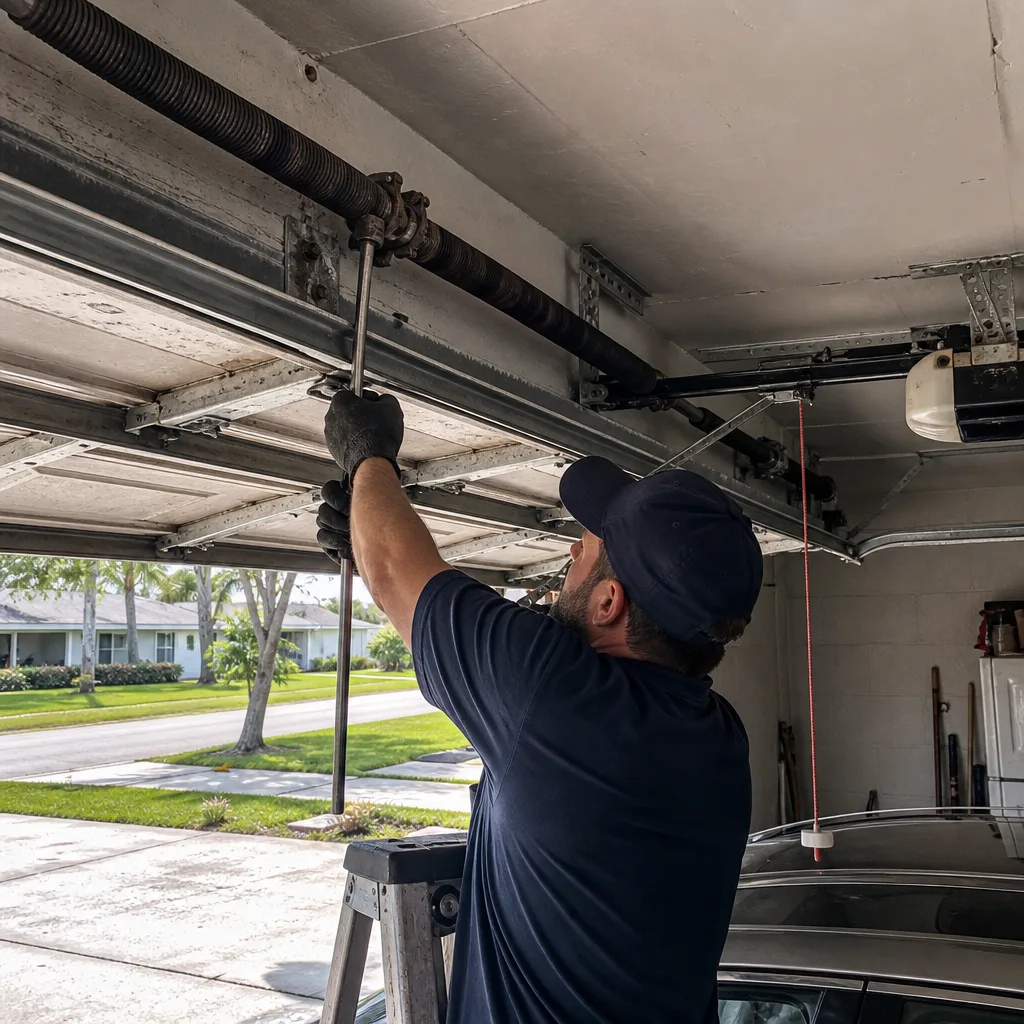 Before
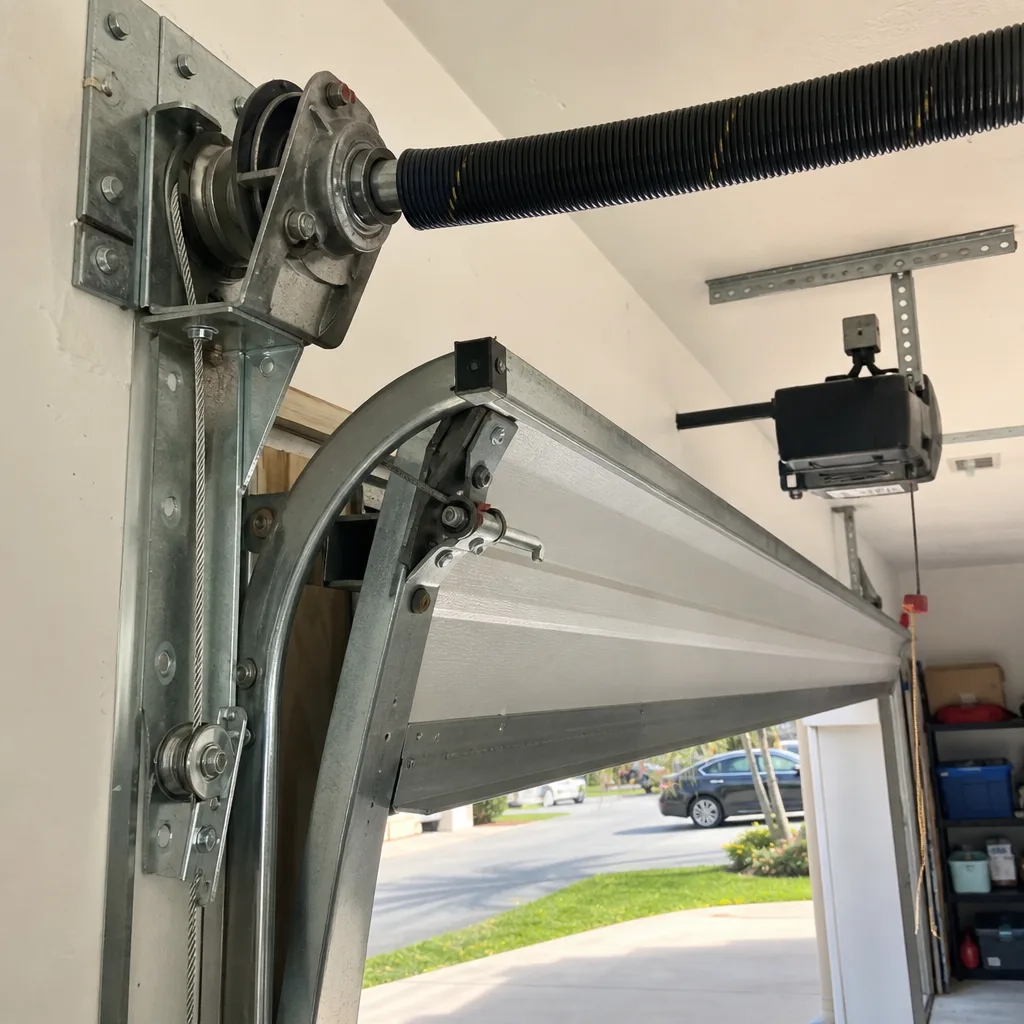 After
After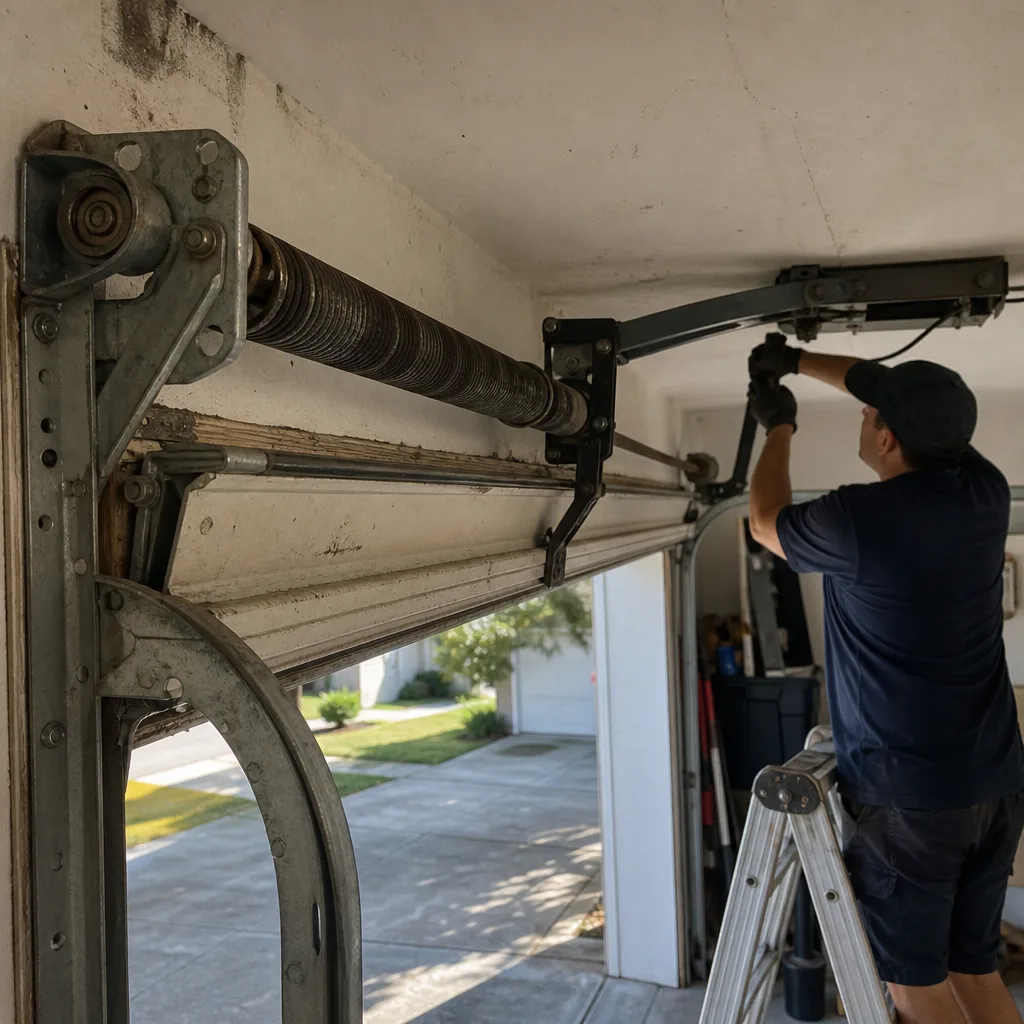 Before
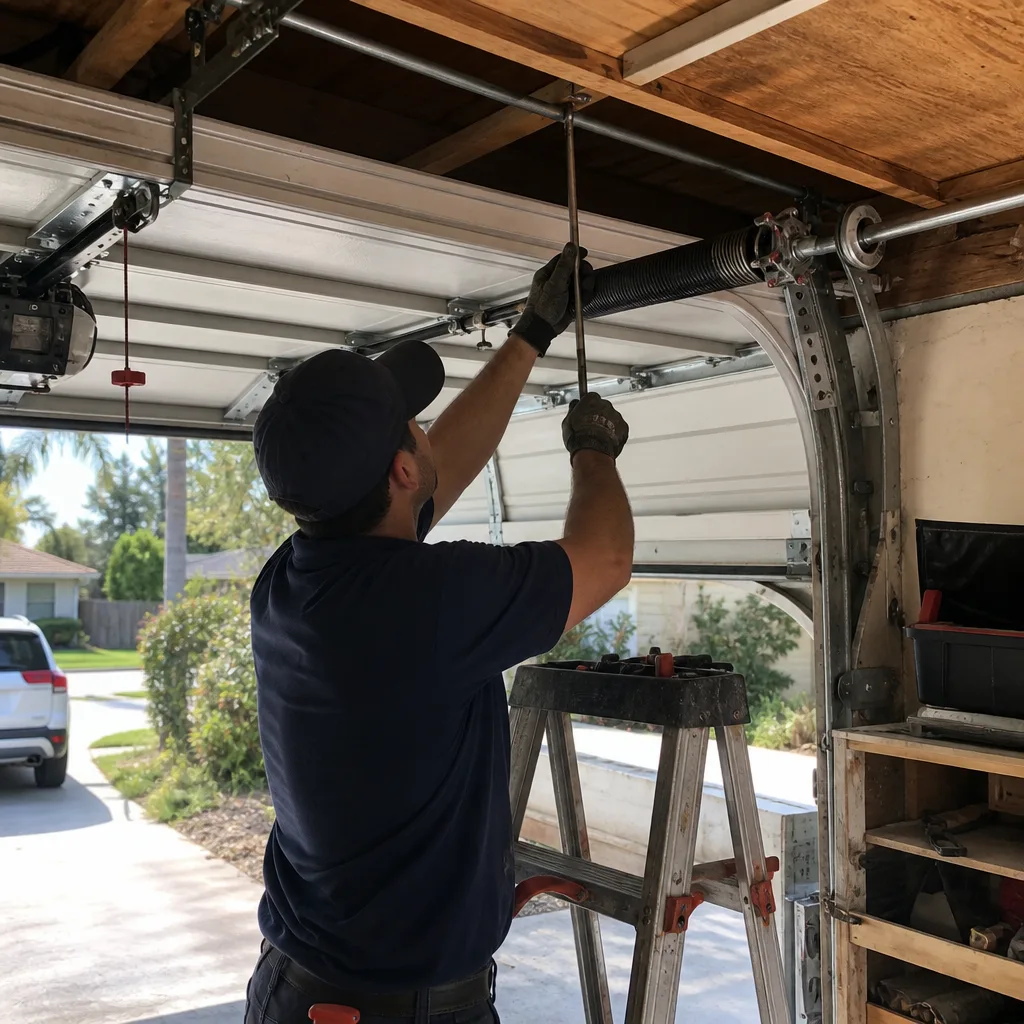 After
AfterGarage Door Permits, Codes & Inspections in FL: What You Need to Know
A garage door replaced without a permit in Florida is technically an unpermitted structure alteration. That’s not a paperwork quibble. After a hurricane, that distinction can give an insurer grounds to deny a structural claim on the entire garage, not just the door. In Clearwater, where wind-borne debris and 140 mph gusts are design assumptions rather than worst-case hypotheticals, the permit is the legal mechanism that says your door was installed to survive what the next named storm brings. This guide explains exactly when a permit is required in Pinellas County, what the inspector measures, what wind-load ratings actually mean, and what to do if your door was replaced without one. For more guides & resources, see our other articles.
Quick Answer
In Clearwater and throughout Pinellas County, a garage door replacement requires a building permit when the door’s dimensions change, the opening is altered, or the replacement door is not a like-for-like swap that meets current Florida Building Code wind-load requirements. A permit costs roughly $50 to $150, and the inspection verifies that the door, its tracks, anchor bolts, and reinforcement struts can resist the design wind pressure assigned to your Wind-Borne Debris Region. Skipping it can void a homeowners insurance claim after a storm and complicate a future home sale.
Table of Contents
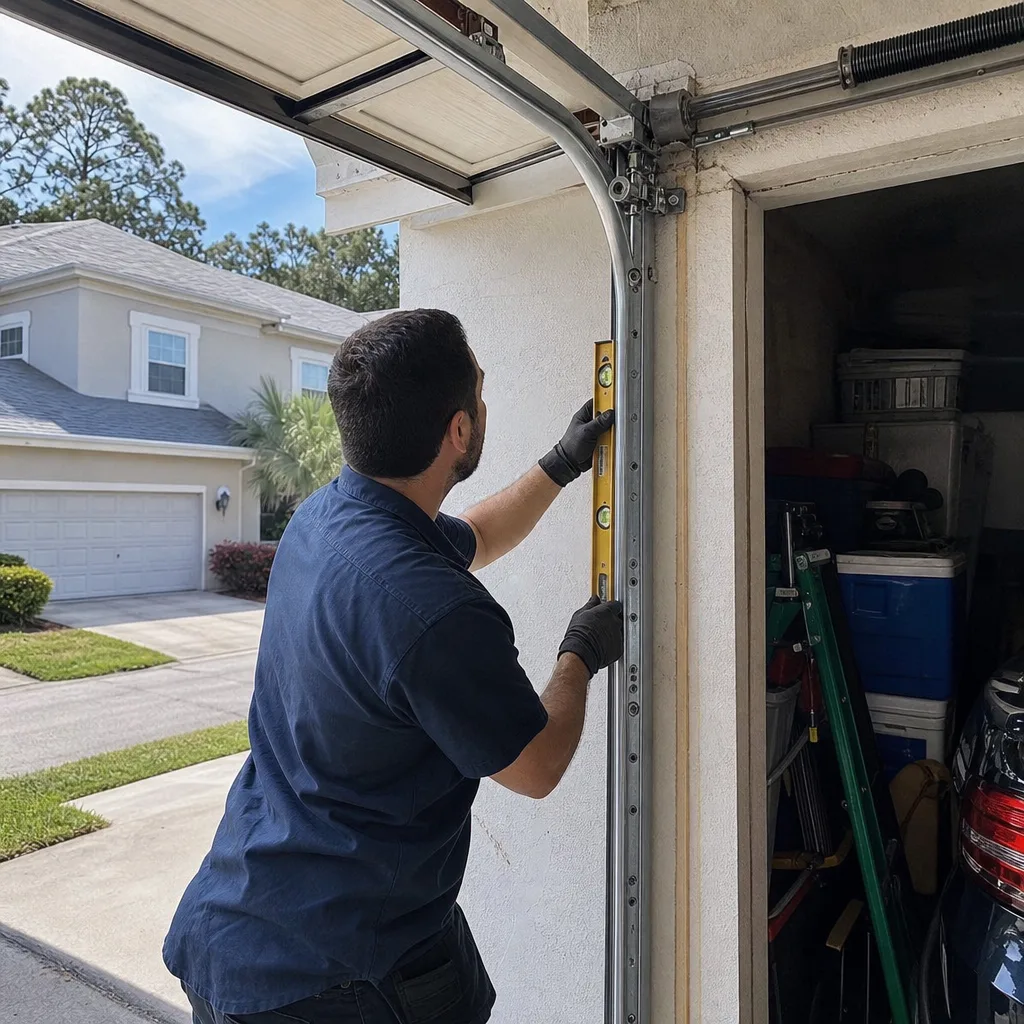
- What the Florida Building Code Actually Requires for Garage Doors
- When a Permit Is Required in Pinellas County (and When It Isn’t)
- Clearwater’s Wind Zone and the Design Pressure Rating Your Door Needs
- What the Inspection Process Actually Checks: A Step-by-Step Walkthrough
- How a Code-Compliant Garage Door Affects Your Homeowners Insurance
- The Previous Owner Replaced the Door Without a Permit: What Now?
- Common Mistakes to Avoid
- When to Call a Professional
- Frequently Asked Questions
- The Bottom Line
BeforeAfterWhat the Florida Building Code Actually Requires for Garage Doors
Garage doors in Florida are regulated as structural components, not as cosmetic fixtures. The Florida Building Code, 8th Edition (2023), governs their installation under Section 1609, which covers wind loads, and specifically under the provisions for Wind-Borne Debris Regions. Most of Pinellas County, including all of Clearwater, sits inside a Wind-Borne Debris Region, which means a garage door must either be impact-rated or protected by an approved impact-resistant cover during a storm. This isn’t a recommendation. It’s a code mandate with enforcement teeth.
The relevant standard for garage door wind resistance is ANSI/DASMA 108, which establishes testing protocols for garage doors under positive and negative wind pressures. A door that passes gets a design pressure rating, expressed as a number like “±45 PSF” or “+45/-50 PSF.” That number tells you how much wind pressure the door can resist before failing. For Clearwater homes, depending on exact location, exposure category, and roof height, the required design pressure rating typically falls between +35 and +50 PSF, though some waterfront or elevated structures require higher numbers.
What the inspector verifies is not whether the door “looks strong.” The inspector checks whether the installed door and all its components match the manufacturer’s approved product documentation for the design pressure rating required at that specific address. That means the door panel itself, the track gauge, the anchor bolts, the hinge count, and any horizontal reinforcement struts all have to correspond to what the manufacturer’s Florida Product Approval documentation specifies.
In our experience across Clearwater, from Island Estates to Countryside, we regularly replace doors that were originally installed to an older code cycle. A door installed in 2003 under a less stringent wind-load standard does not automatically meet the current requirement. When that door gets replaced, the new installation must comply with the code in effect today, not the code from when the house was built. That single fact drives more permit requirements than homeowners expect.
When a Permit Is Required in Pinellas County (and When It Isn’t)
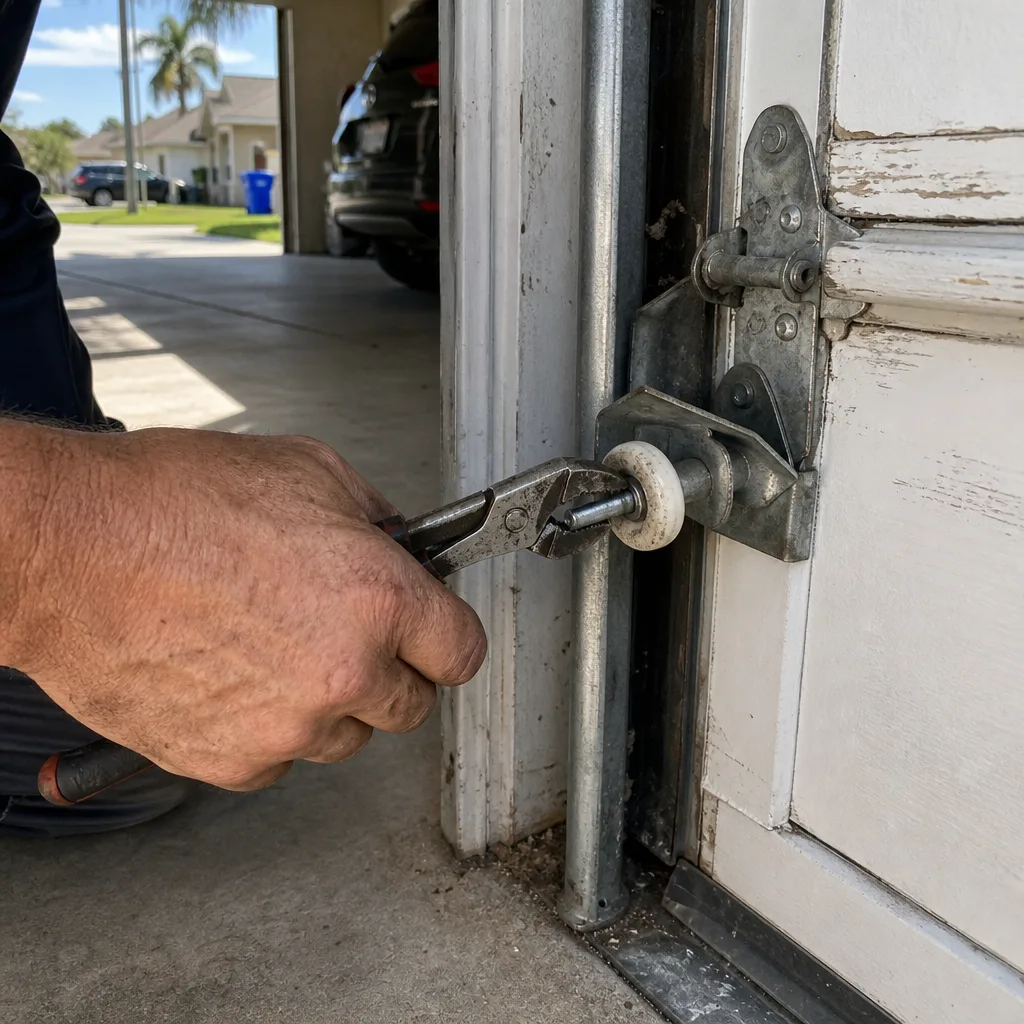
Florida Building Code Section 105.2 lists work exempt from permits. The list is specific. In Pinellas County, which enforces the FBC through its Building Services department, garage door work falls into one of three buckets. Knowing which bucket applies to your project determines whether you need a permit, an inspection, or nothing at all.
Bucket 1: Permit required, no exceptions
- Replacing a garage door with a door of different dimensions or weight.
- Modifying the rough opening, header, or jambs in any way.
- Converting a non-rated door to a different wind-load class, or upgrading a non-impact door to an impact-rated assembly that requires structural changes.
- Installing a new garage door where none existed. That’s an addition to the building envelope, and it requires a full permit with structural review.
- Replacing a door on a commercial property, a condominium building, or any structure with more than two dwelling units.
- Any work involving a mullion, a frame change, or a door that is part of a rated wall assembly.
Bucket 2: Like-for-like replacement, permit may still be required
Many homeowners assume a direct swap is exempt. That’s only partially correct. FBC Section 105.2 does not list garage door replacement among the exempt items. Some jurisdictions treat a like-for-like residential garage door replacement as falling under “repair,” which can be exempt if the work does not alter the structure. But Pinellas County’s interpretation has tightened since Hurricane Irma in 2017. We see permits pulled for like-for-like swaps in Clearwater more often now than five years ago, because the building department wants a record that the replacement door meets the current wind-load requirement. If you’re unsure whether your door shows garage door warning signs, it’s worth checking before replacement. The safest read: if the door’s design pressure rating, dimensions, or installation method differs from the original in any way, assume the permit is required.
Bucket 3: Genuinely exempt work
The specific work we do that rarely triggers a permit in Clearwater includes:
- Replacing a torsion spring, cable, roller, hinge, or bracket. These are repair items on an existing approved door. No structural change, no permit.
- Replacing an opener motor on an existing door. The opener is not a structural component. No permit.
- Adjusting track alignment or replacing weatherstripping. Cosmetic and functional, not structural.
- Replacing a panel on an impact-rated door with an identical panel from the same manufacturer. This falls under repair.
For any door replacement project, the contracting party named on the permit is legally responsible for the accuracy of the application. If you hire a company that tells you no permit is needed and the county later determines one was required, you are the property owner who inherits the correction. We’ve been called to fix that scenario more than once. The paper trail matters, and it already got mentioned before any tool came off the truck.
Clearwater’s Wind Zone and the Design Pressure Rating Your Door Needs
Clearwater sits in a unique position on the Pinellas peninsula. Homes east of Clearwater Harbor and west of Tampa Bay face different wind exposure than homes inland, and the Florida Building Code accounts for this through a risk category and wind speed map. Most single-family homes in Clearwater fall under Risk Category II, with a design wind speed of 150 mph per the current ASCE 7 standard adopted by the FBC. But that’s just the starting number. The actual design pressure calculation for your garage door adjusts that number based on your home’s roof height, its proximity to water, whether the garage is enclosed, and the surface roughness of the surrounding terrain.
What this means in practical terms: a single-family home in the Morningside neighborhood, three blocks from the Intracoastal, may need a garage door rated at +45/-50 PSF, while a home in the On Top of the World retirement community further inland may only need +35/-40 PSF. Same city, different numbers. The code assigns different wind pressure zones within Clearwater, and the permit application must list the correct design pressure rating for that specific address.
You don’t need to calculate this yourself. The door installer’s job is to reference the manufacturer’s Florida Product Approval, which lists every approved design pressure rating for that door model based on width, height, and reinforcement configuration. Following a Garage Door Repair Maintenance Checklist for Clearwater Homeowners helps catch issues before they require full replacement. The installer selects the configuration that meets or exceeds the required rating at your address. Clause 4 of The Haven Standard is why the technician photographs the failed part before quoting a replacement; likewise, the permitted installation includes documentation that the right wind-load door was specified for the property. We’ll hand you that documentation at the end of the job, not when you ask for it months later.
The impact-rated versus wind-load-rated distinction
Florida recognizes two approaches to protecting a garage door opening. An impact-rated door uses laminated glass or reinforced panels that can withstand a direct hit from a 2×4 traveling at 34 mph without penetration. A wind-load-rated door resists wind pressure but does not carry impact resistance, meaning it can only be used with an approved impact-resistant cover or shutter. In Clearwater, homes built after 2002 almost always have impact-rated openings or shutter systems. Older homes may have wind-load-rated doors with no impact protection, which is a completely different compliance conversation. If your garage door faces east or southeast without any tree canopy, the impact rating is not optional in practice, even if the code letter allows a shutter alternative.
What the Inspection Process Actually Checks: A Step-by-Step Walkthrough
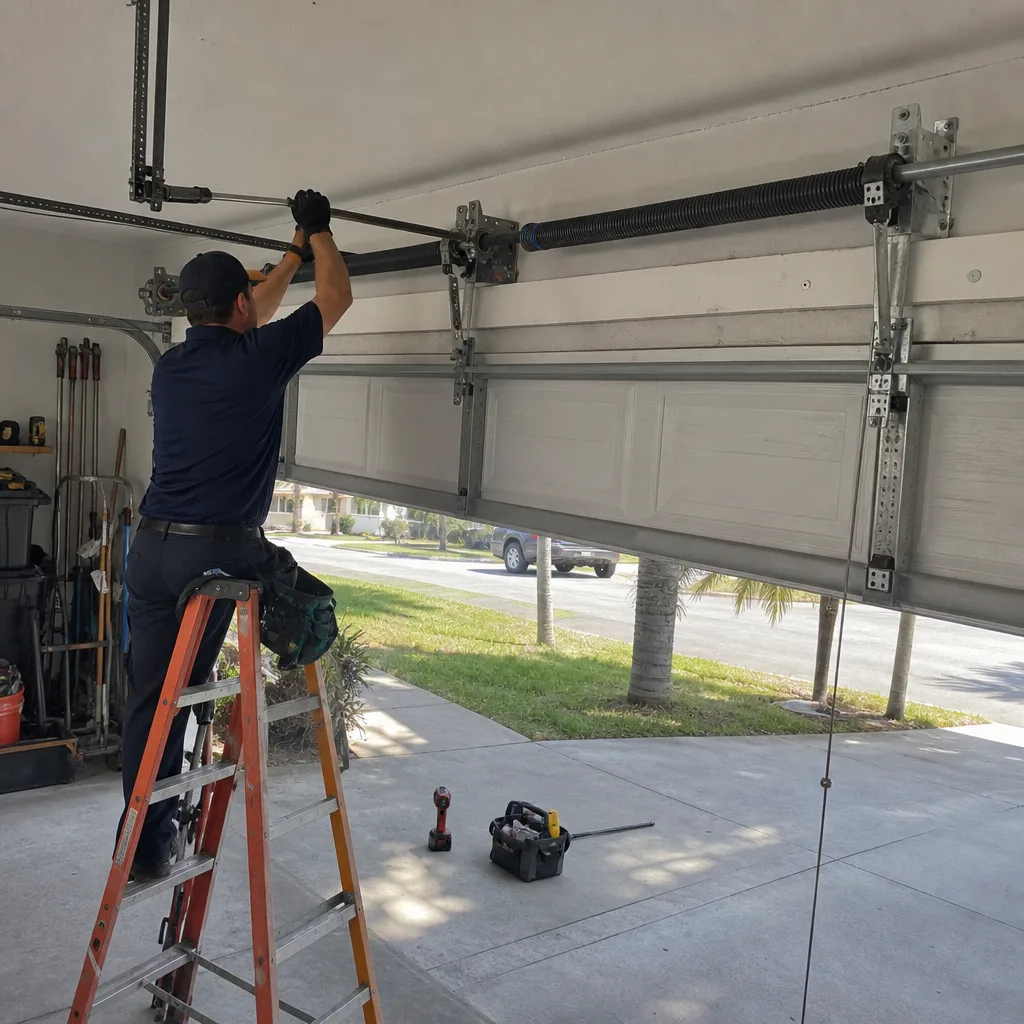
After the permit is pulled and the door is installed, the Pinellas County building inspector visits the property. They are not checking whether the door opens smoothly, though that’s part of it. They are verifying that the installed assembly matches the approved documents. Here’s what that round of checks looks like in the order inspectors typically follow:
- Permit and product approval match: The inspector confirms the installed door model, manufacturer, and size match the approved permit documents and Florida Product Approval. This includes the door’s labeled permanent identification, which must be visible.
- Design pressure rating: The inspector verifies the installed door assembly matches the design pressure rating required at that address. If the permit says +40/-45 PSF, the door and all components must be rated at or above that figure.
- Anchor bolts and fasteners: The inspector checks the quantity, size, and spacing of anchor bolts connecting the vertical tracks and jambs to the framing. Undersized anchors are one of the most common inspection failures we see on retrofits. A door that meets the wind-load rating on paper but is anchored with 1/4-inch lag bolts instead of the specified 5/16-inch hardware will not pass.
- Horizontal reinforcement struts: Wide single-car doors and doors rated for higher wind pressures require horizontal steel struts across each panel. The inspector confirms the struts are present, correctly sized, and installed per the manufacturer’s drawings. A missing or undersized strut is an automatic fail on an impact-rated installation in Clearwater.
- Track gauge and mounting: The inspector measures the vertical and horizontal track thickness and confirms the mounting brackets are spaced per the product approval. The track gauge, expressed in metal thickness, is part of the tested assembly, not a generic door part you can swap.
- Opener disconnect and operation: While the opener is not structural, the inspection includes a function check of the emergency release, which is the mechanism that lets you open the door manually during a power outage. In Clearwater, where every hurricane season brings outages that can last days, a door that cannot be manually opened because the disconnect is misaligned or painted over is a safety issue the inspector will flag.
- Weather seal and drainage: The inspector looks for gaps under the door and confirms the bottom seal sits properly against the slab. This is not about energy efficiency here; the seal keeps water out, and in a city that sees hurricane-driven rain, seal failure means water intrusion.
The inspector either passes the installation or issues a correction notice listing exactly what needs to be fixed. Corrections are re-inspected. Every visit generates a written record, and that record is what your insurer sees if a claim is ever filed. If the installation fails, the permit stays open and the work is not legally complete until the re-inspection passes.
How a Code-Compliant Garage Door Affects Your Homeowners Insurance
Florida homeowners insurance carriers scrutinize openings. A garage door is the largest single opening in most homes, and it is the component that fails first under wind pressure. When a garage door fails during a hurricane, the sudden internal pressure change can lift the roof and blow out windows. Your insurer knows this. It is why the wind mitigation report asks specifically about the garage door’s rating, and why a door that does not meet current code can reduce or eliminate wind mitigation credits on your premium.
The state-run My Safe Florida Home program, which provides free wind mitigation inspections and grant funding for qualifying hardening improvements, does not apply to garage doors. That’s the detail most Clearwater homeowners miss. The program’s grant list covers roof replacement, opening protection (shutters or impact windows), and exterior door replacement, but garage doors are excluded from the grant funding. However, that exclusion does not mean the garage door has no bearing on your insurance. The wind mitigation credit evaluation still scores your garage door separately from the grant-funded improvements, and a code-compliant impact-rated door can still meaningfully lower the wind portion of your premium.
One important point from our work across Clearwater: the credit only applies if the door is documented. A previous owner’s verbal assurance that “the door is hurricane-rated” carries zero weight with an insurance carrier unless the door’s Florida Product Approval number, design pressure rating, and installation record are available. We see this in Clearwater constantly. The homeowner bought the house in 2019, was told the door is “hurricane rated,” and cannot produce a single document. The insurer treats that door as a standard, non-rated opening, and the premium reflects it.
The Previous Owner Replaced the Door Without a Permit: What Now?
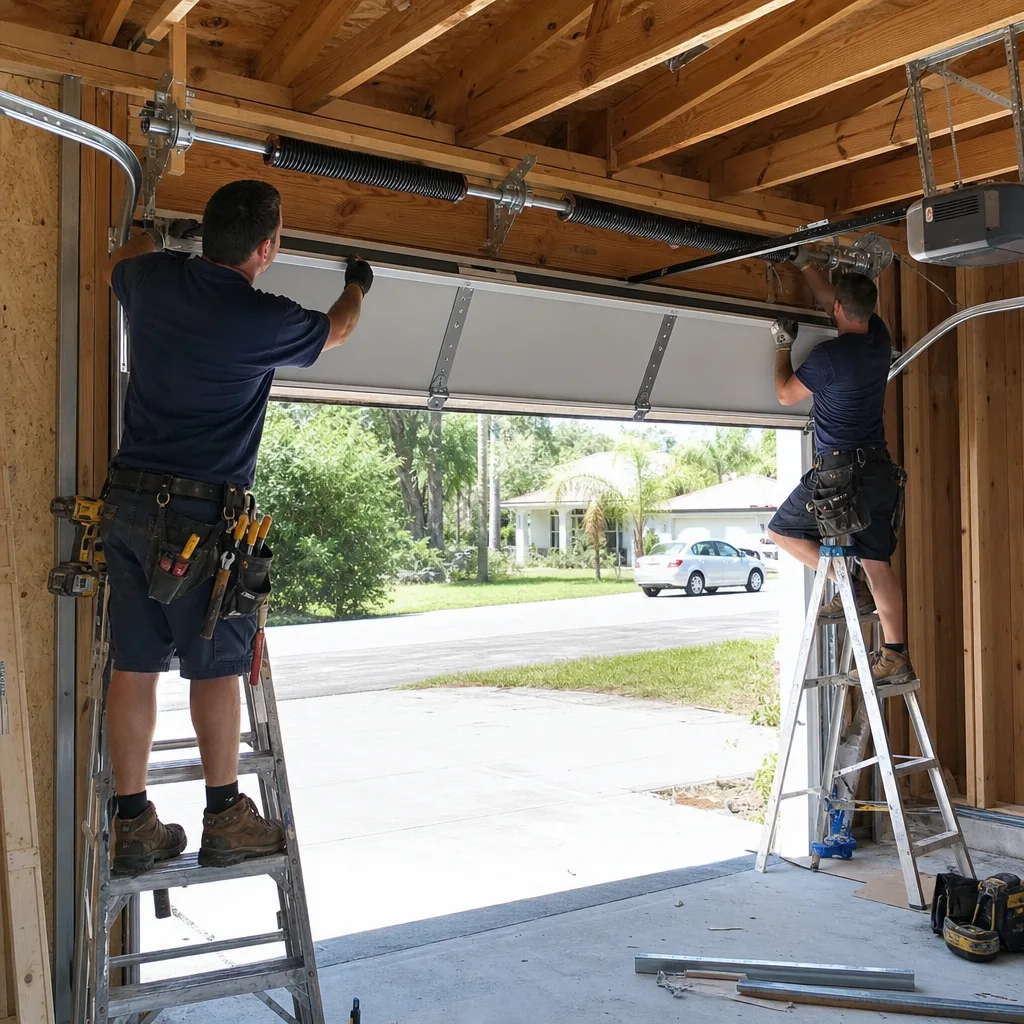
This scenario is common in Clearwater, especially in homes built before 2005 and sold during the 2015 to 2025 buying wave. The inspection report flags the door as unpermitted, the buyer asks for it to be addressed, and someone has to deal with the retroactive process. Here’s the path, and the honest cost picture.
First, understand that Pinellas County does not have a simplified “retroactive permit” form. The process is the same as pulling a permit for new work. You or your contractor files an application, describes the existing installation, and requests an inspection. The county will process it as an after-the-fact permit, which may carry a penalty, typically a doubling of the permit fee. The base permit fee for a garage door replacement in Clearwater generally runs between $50 and $150, so the after-the-fact version lands in the $100 to $300 range before any corrective work. That’s the fee. The inspection determines whether the installed door actually meets code. If it does not, the door may need to be brought into compliance, which can mean anything from adding horizontal struts and upgrading anchor bolts to replacing the door entirely.
The worst-case Clearwater scenario we’ve handled: a home in a flood zone near the Bayshore corridor where the previous owner installed a standard non-rated two-car door in 2014, no permit, no product approval. The buyer’s insurer required proof of code compliance before binding coverage. The retrofit to bring that door into compliance cost more than a new door would have, because the existing door could not be modified to meet its required design pressure rating. The homeowner ended up replacing the door, pulling the permit correctly the second time, and paying the after-the-fact penalty for the original unpermitted work.
If you’re buying a home and the inspection reveals an unpermitted door, the cost to correct it belongs in your negotiation with the seller, not on your after-closing to-do list. If you already closed, the path above is the only legitimate way forward. We’ve seen sellers split the cost or pay to close the permit in order to keep a contract alive. That conversation goes much better when you can cite the specific code requirement rather than a general “this feels wrong.”
Common Mistakes to Avoid
- Assuming the door company’s verbal promise is an inspection record. If the installer cannot produce a permit number, a Florida Product Approval, and a written design pressure rating for your address, the paperwork does not exist. The door may be perfectly installed and still legally unpermitted.
- Choosing the cheapest door without checking the design pressure rating. A $799 special-order non-rated door installed in a Clearwater Wind-Borne Debris Region will not pass inspection, will not earn a wind mitigation credit, and will likely require replacement. The cheap door is the expensive door.
- Replacing the opener and the door at the same time without considering the permit. The opener needs no permit. The door might. A single job card often confuses the two, and the homeowner is left with an unpermitted door because nobody separated the items.
- Letting a “handyman” install a door because “it’s just a door.” In Pinellas County, only a licensed contractor can pull a permit for a garage door installation. A handyman cannot legally pull that permit, and if they tell you no permit is needed for a door replacement, that statement is a red flag on its own.
- Ignoring the old opener’s disconnect during an inspection prep. The inspector tests the emergency release. If that mechanism binds, is painted shut, or has been removed, it can be a correction item. It’s the cheapest fix we see, and it fails inspections more than you would expect.
- Filing no paperwork and hoping the insurance company won’t ask. After Hurricane Ian, Florida insurers ran aggressive claim reviews. Homes in Clearwater got dropped or saw premium increases precisely because opening protection could not be documented. The paper trail is not optional, and retroactive documentation is expensive.
- Failing to check whether your home is in a flood zone before upgrading the door. If your Clearwater home is in a Special Flood Hazard Area, some garage door modifications may require additional flood-related documentation. That’s separate from wind-load compliance, and it can change what you can and cannot install.
When to Call a Professional
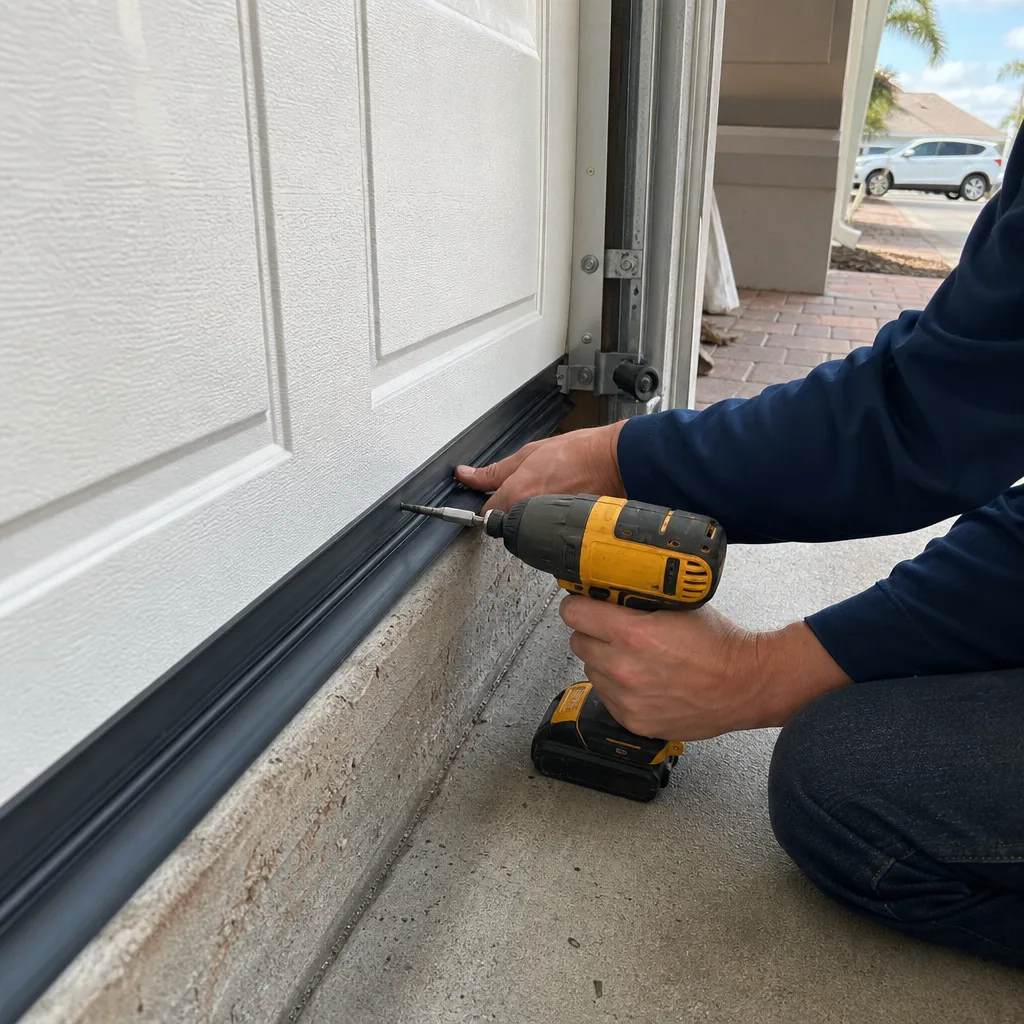
You should have a professional involved any time the garage door project touches the building envelope in a way that requires a permit. That includes replacing the door itself, widening or narrowing the opening, converting a non-rated door to a rated assembly, or addressing an inspection correction from the county. Pinellas County does not issue permits to a homeowner for work on a garage door in most cases; the permit is pulled by the licensed contractor, who carries the liability for the installation’s compliance with the Florida Building Code. If you suspect an unpermitted door on a property you own or are buying, a professional assessment gives you the exact scope and cost of correction before you make any decisions. Read our guide on How to Hire a Garage Door Contractor in Clearwater: A Step-by-Step Guide to ensure you choose qualified help. Servo Garage Doors Clearwater offers free estimates in Clearwater. We will tell you in writing what your door needs, what it costs, and what the permit and inspection path looks like, before any work starts. Call (727) 485-0719.
Frequently Asked Questions
A garage door replacement permit in Clearwater typically costs between $50 and $150, depending on the scope of the work and the value of the installation. An after-the-fact permit for previously unpermitted work carries a penalty, usually doubling the base fee to $100 to $300. The permit fee is separate from the door, the installation labor, and any corrective work the inspection identifies. Call (727) 485-0719 for an exact estimate for your address; we provide written permit and installation pricing before any work starts.
No, replacing a torsion spring, extension spring, cable, roller, hinge, or bracket on an existing garage door does not require a permit in Pinellas County. These components are repair items on an already-approved door, and the work does not alter the building structure or the door’s wind-load rating. The permit requirement attaches to the door assembly as a whole, not to the wearable parts inside it.
Yes, Pinellas County can impose a fine when unpermitted work is discovered, typically in the form of a doubled permit fee plus any cost of bringing the installation into compliance. The larger financial risk sits with your insurance company, which can deny a structural claim after a hurricane if the garage door cannot be documented as code-compliant. The fine is small compared to a denied claim.
No, replacing a garage door opener or its motor does not require a permit in Florida. The opener is an appliance, not a structural component, and the Florida Building Code exempts appliance replacement from the permit requirement. If the opener replacement is being done at the same time as a door replacement, only the door portion triggers the permit.
In Clearwater, a straightforward garage door replacement permit is usually issued within 1 to 3 business days, and the inspection is typically scheduled within 1 to 2 weeks after the installation is complete. After-the-fact permits take longer, often 2 to 4 weeks, because they require additional review. The inspection itself takes 15 to 30 minutes when the documentation is in order.
If the garage door was installed with a valid permit, passed inspection, and meets the wind-load requirement for its Clearwater location, the structural portion of a hurricane claim is generally supportable. If the door is unpermitted or undocumented, the insurer can deny or reduce the claim. The permit is the chain of evidence that ties your installed door to the Florida Building Code.
The Bottom Line
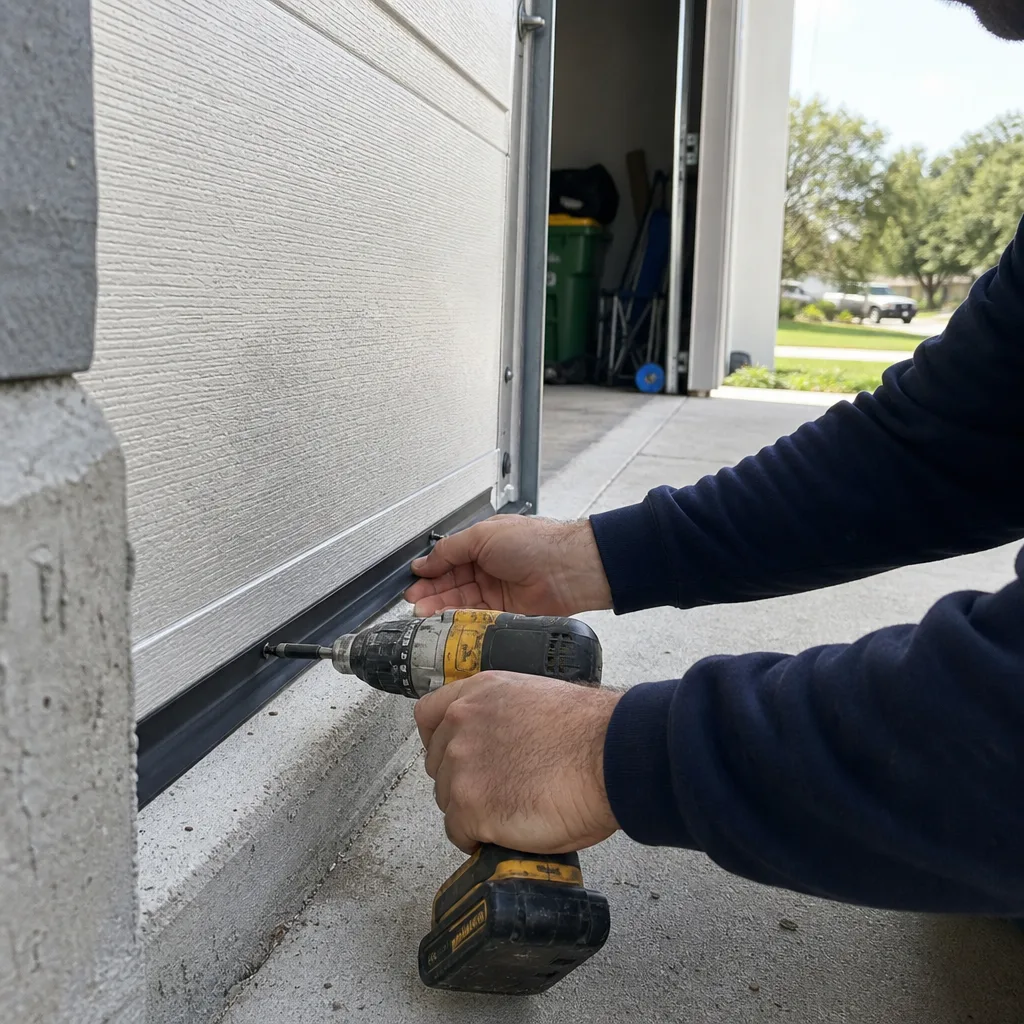
In Clearwater, the garage door permit is not a bureaucratic hurdle. It is the enforceable paper trail that proves your home’s largest opening meets the wind-load and impact requirements of the Florida Building Code. Permits are required for most replacements, inspections verify specific structural details, and the alternative, an unpermitted door, becomes a liability problem at the worst possible time. The right path is documentation first: a written price, a permit application tied to your address, a Florida Product Approval matched to your door, and an inspection record you can hand to your insurer. That’s how our Servo Garage Doors Clearwater home page describes our approach, and it’s how we execute every Garage Door Installation in Clearwater. For repair work that doesn’t need a permit, start at our Garage Door Repair in Clearwater page. If your opener is part of the puzzle, see Garage Door Opener Repair & Installation in Clearwater.
Written by Marcus Deller, Owner at Servo Garage Doors Clearwater, serving Clearwater since 2015.