
Last updated September 20, 2026
Full 25-point door and opener safety check with every visit - springs, cables, rollers, tracks, and your LiftMaster or Chamberlain opener included
You get a price before we start. It does not change when the truck arrives.
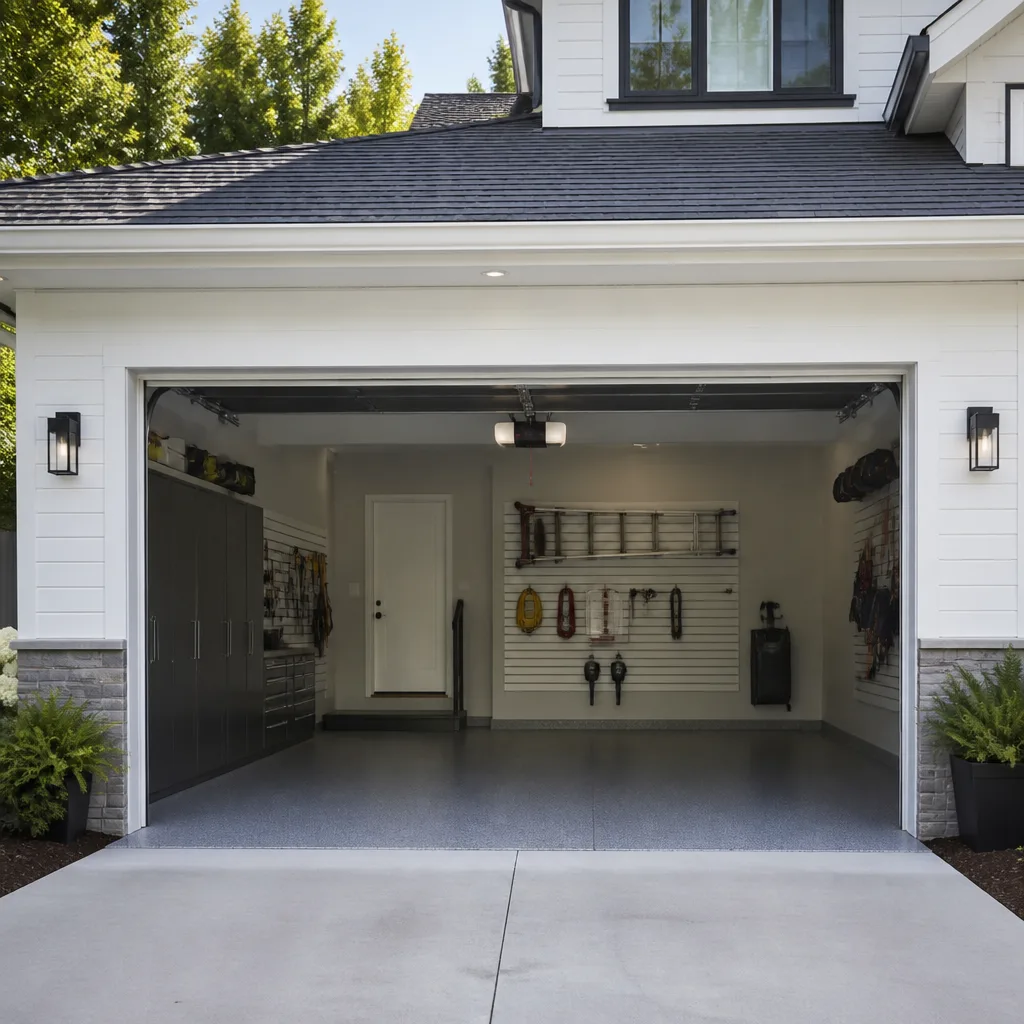
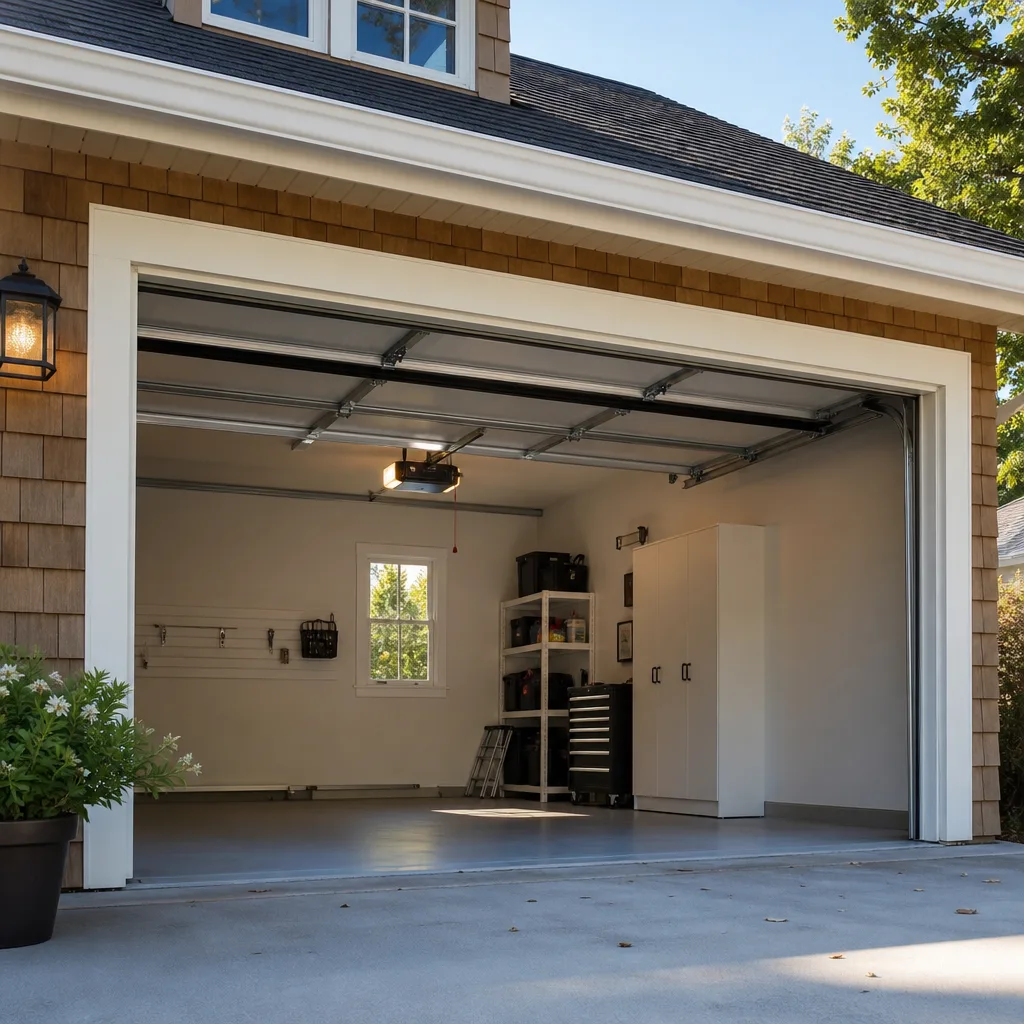
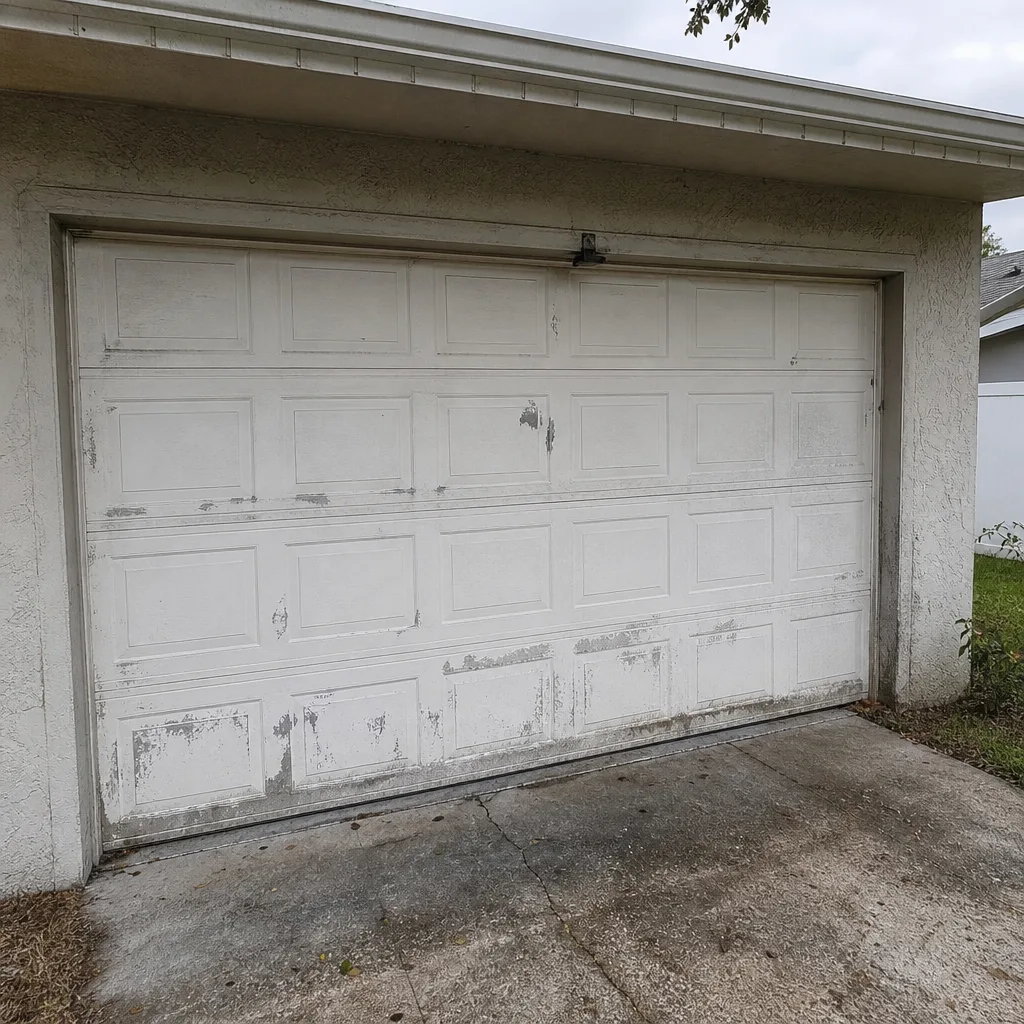 Before
 After
After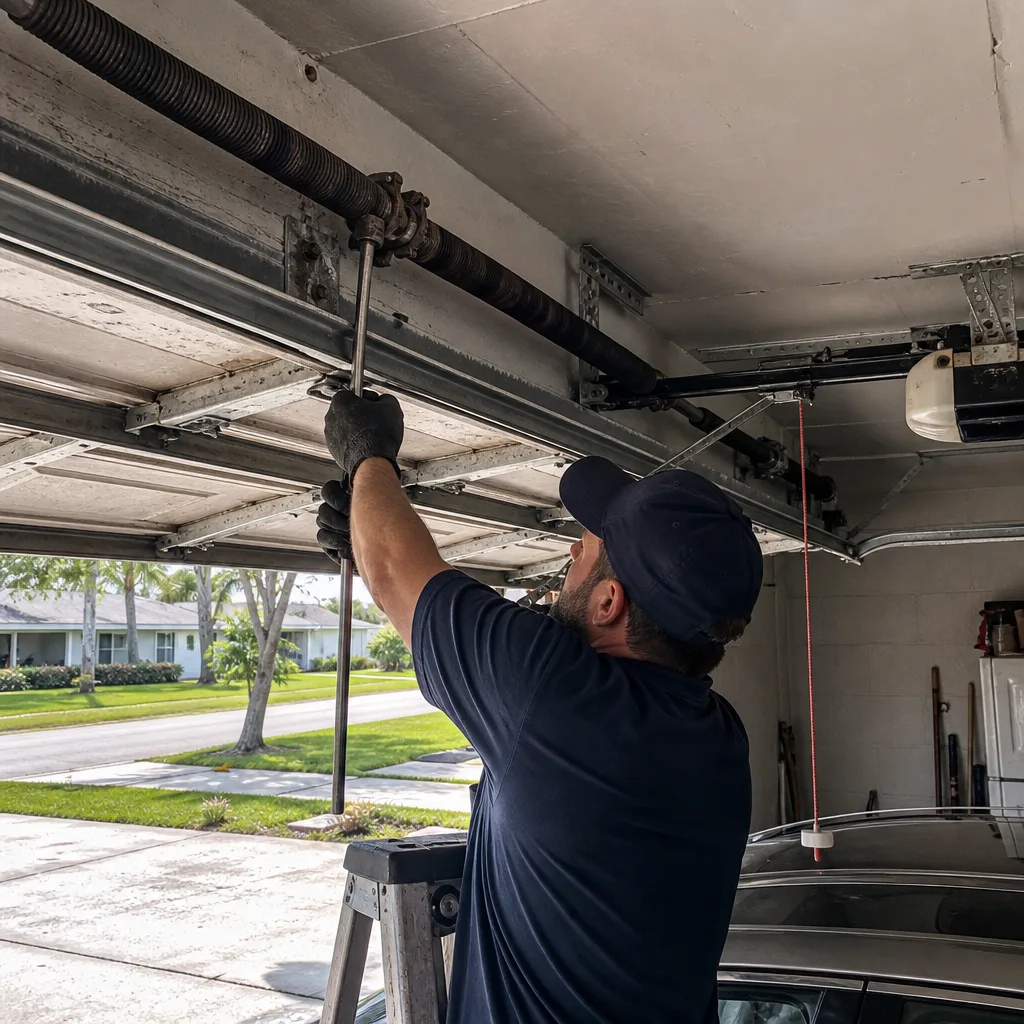 Before
 After
After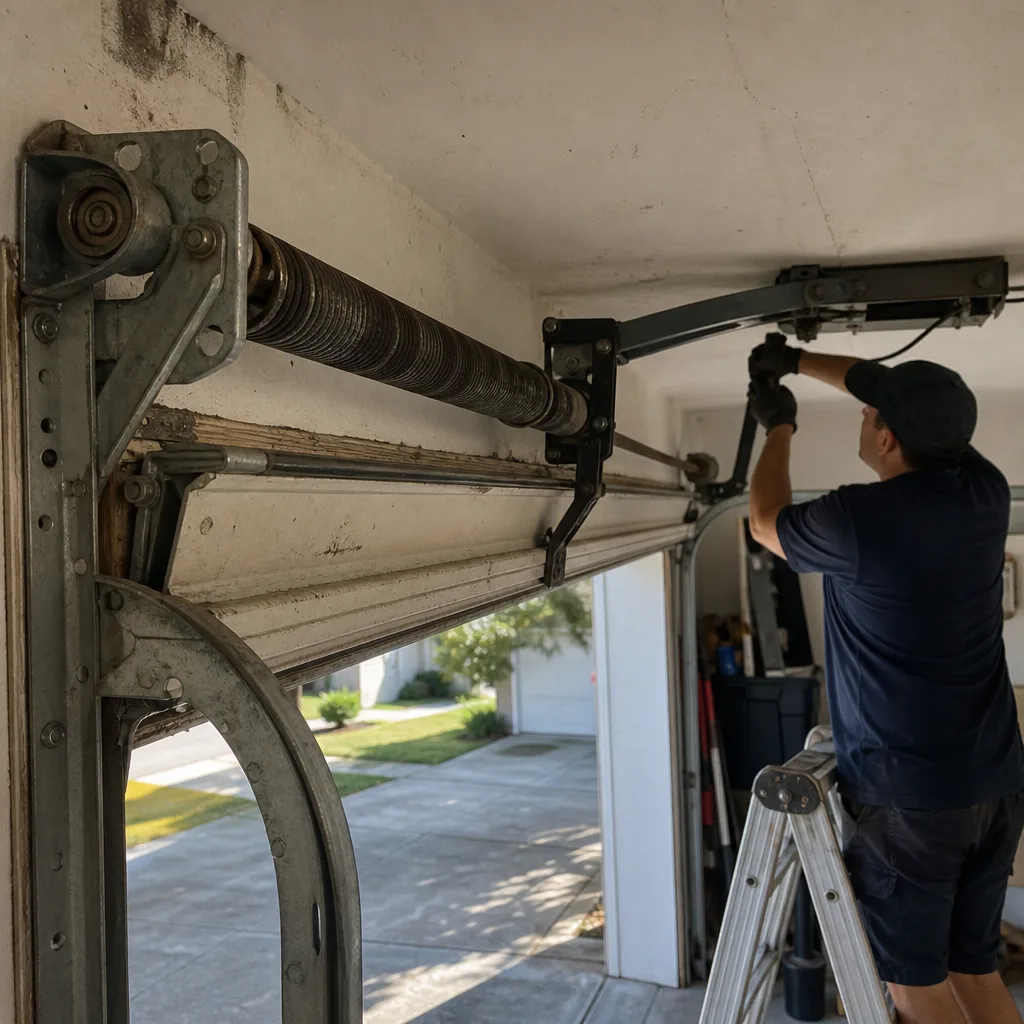 Before
 After
AfterDIY vs Professional Garage Door: The Clearwater Homeowner’s Decision Guide
A torsion spring stores roughly 100 foot-pounds of torque when fully wound. The online tutorials that make spring replacement look manageable were filmed by people who had done it dozens of times, and those people still occasionally end up in the emergency room. The failure mode is not gradual. It is instantaneous. This guide walks Clearwater homeowners through exactly which garage door tasks make sense to do yourself, which ones require a permit under Florida law, and which ones are technically possible but financially foolish. For a full maintenance checklist Clearwater homeowners can follow, see our companion resource. We’re writing this from Clearwater, where hurricane code requirements add a compliance layer most national DIY guides never mention.
Quick Answer
For Clearwater homeowners, the DIY-versus-professional garage door question comes down to three categories. Cosmetic and low-risk maintenance tasks like weatherstripping, roller lubrication, and panel painting are genuinely DIY-able. Full door replacement requires a permit and a licensed contractor under Florida Building Code-see our guide to garage door permits, codes & inspections in FL for specifics. Spring and cable work sits in a middle category: technically possible without a permit, but carrying a documented injury risk that makes the $80 to $150 in labor savings a poor trade.
Table of Contents
- The Real Question: Liability, Not Skill
- Clearwater Code: What Florida Law Actually Requires
- The Task Matrix: DIY, Professional, or Never Touch
- The Honest Cost Comparison: DIY Savings vs Real Risk
- The Partial DIY Approach: Diagnose First, Pay for Labor Second
- Why Diagnosis Is the Most Valuable Part of a Service Call
- Common Mistakes to Avoid
- When to Call a Professional
- Frequently Asked Questions
- The Bottom Line
BeforeAfterThe Real Question: Liability, Not Skill
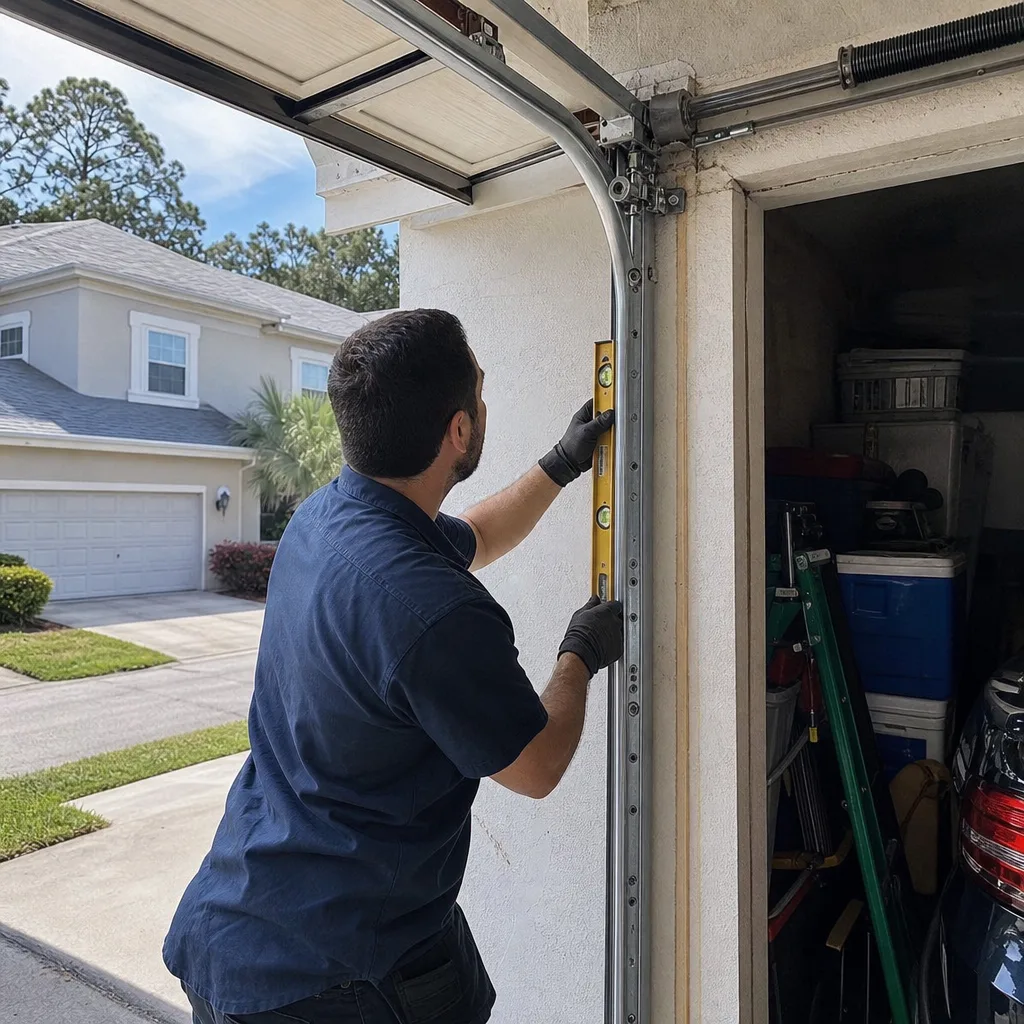
Most garage door DIY guides frame the decision as a skill assessment. Are you handy enough? Do you own the right tools? That framing misses the point. The actual question is whether the task carries liability that amateur completion makes a bad financial decision regardless of ability.
Think about it this way. If you replace a bathroom faucet and it leaks, the worst case is water damage you can see and fix. If you replace a garage door spring incorrectly and it fails under tension, the worst case is a steel bar moving through soft tissue at high velocity. The consequences are not comparable, and neither is the decision framework.
Clearwater adds a second liability layer: hurricane code compliance. A garage door in Pinellas County is part of the home’s wind-load protection system. If a door fails during a storm, flying debris and pressure differentials can compromise the entire structure. That’s why full door replacement requires a permit and a licensed contractor under the Florida Building Code. More on that below.
We’ve been doing garage door repair in Clearwater since 2015. In that time, we’ve seen the aftermath of DIY spring failures, DIY door replacements that voided insurance claims, and DIY opener installations that worked for three weeks before the logic board fried. The pattern is consistent: the homeowner who researched the task understood the risk, and the homeowner who watched one YouTube video did not.
Clearwater Code: What Florida Law Actually Requires
Florida Building Code section R609 covers garage doors. Under current code, garage doors in wind-borne debris regions, which includes all of Pinellas County, must be either impact-rated or protected by an approved shutter system. The door assembly, including the tracks, springs, and mounting hardware, is tested as a unit.
What does this mean for the DIY question? It means a full door replacement is not a weekend project in Clearwater. Here is the specific breakdown:
| Task | Permit Required? | Licensed Contractor Required? | DIY Legal? |
|---|---|---|---|
| Full door replacement | Yes | Yes | No |
| Structural header or track modification | Yes | Yes | No |
| Spring replacement (torsion or extension) | No | No | Technically yes, inadvisable |
| Cable replacement | No | No | Technically yes, inadvisable |
| Opener replacement (same footprint) | No | No | Yes, with caveats |
| Roller replacement | No | No | Yes |
| Weatherstripping replacement | No | No | Yes |
| Panel repainting | No | No | Yes |
Here is the part most guides skip. A door replacement performed without a permit, even if it is mechanically perfect, creates an insurance and resale liability. If a storm damages the home and the insurer discovers an unpermitted door replacement, the claim can be reduced or denied. If you sell the home and the buyer’s inspector flags the unpermitted work, you are negotiating from a weak position. The permit exists to verify that the door assembly meets wind-load requirements and was installed by someone who is accountable.
This is not bureaucracy for its own sake. Clearwater sits in a hurricane zone. The code exists because garage doors are the largest opening in most homes and the most common structural failure point during high-wind events. A door that meets impact standards costs more because it is tested and documented. A door installed without a permit has no documentation, which means it has no verifiable compliance.
The Task Matrix: DIY, Professional, or Never Touch
Here is the task-level breakdown most Clearwater homeowners actually need. We’ve divided the common garage door jobs into three categories based on legal requirements and injury risk, not based on how hard the task looks on video.
Category 1: Genuinely DIY-Able
These tasks are legal to do yourself, carry low injury risk, and are hard to get wrong enough to cause real damage:
- Weatherstripping replacement: The rubber seal along the bottom of the door and the vinyl trim around the frame. This is a wear item in Clearwater’s heat and humidity. Home Depot and Lowe’s in Clearwater stock the common sizes.
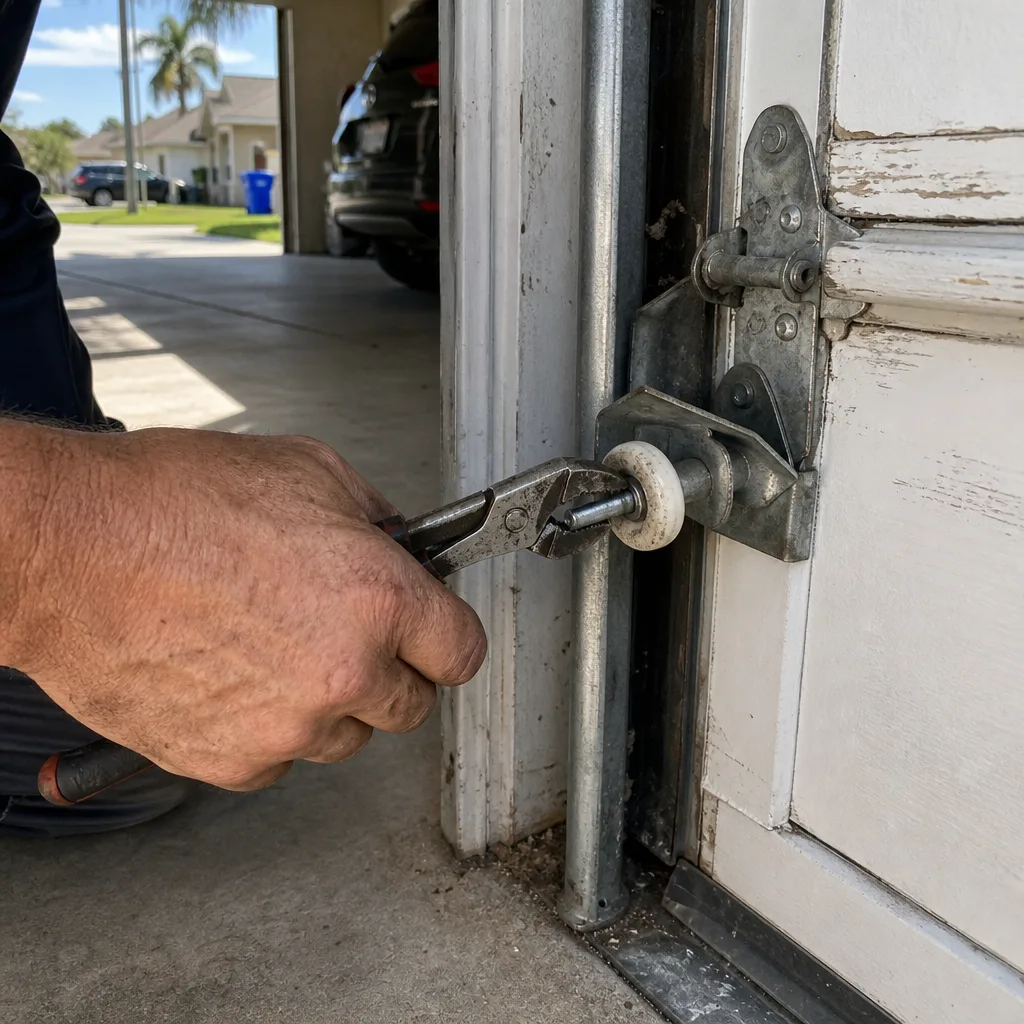
- Roller replacement: The wheels that guide the door along the track. Steel rollers with ball bearings run about $10 to $20 each and take ten minutes per roller. If the roller is on a bottom bracket, the cable is under tension, so do not remove the bottom bracket yourself.
- Panel repainting: Cosmetic work. Use an exterior-grade paint rated for metal. Avoid painting the weatherstripping or the rollers.
- Sensor cleaning and alignment: The photo-eye sensors near the bottom of the track get dusty and misaligned. Wipe them with a dry cloth and check the alignment light.
- Lubrication: Spray a lithium-based grease on the rollers, hinges, and springs every six months. Skip the track. The track should stay dry so it does not collect dirt.
Category 2: Technically DIY, Practically Inadvisable
These tasks do not require a permit, but they carry a documented injury risk that makes the labor savings a poor trade:
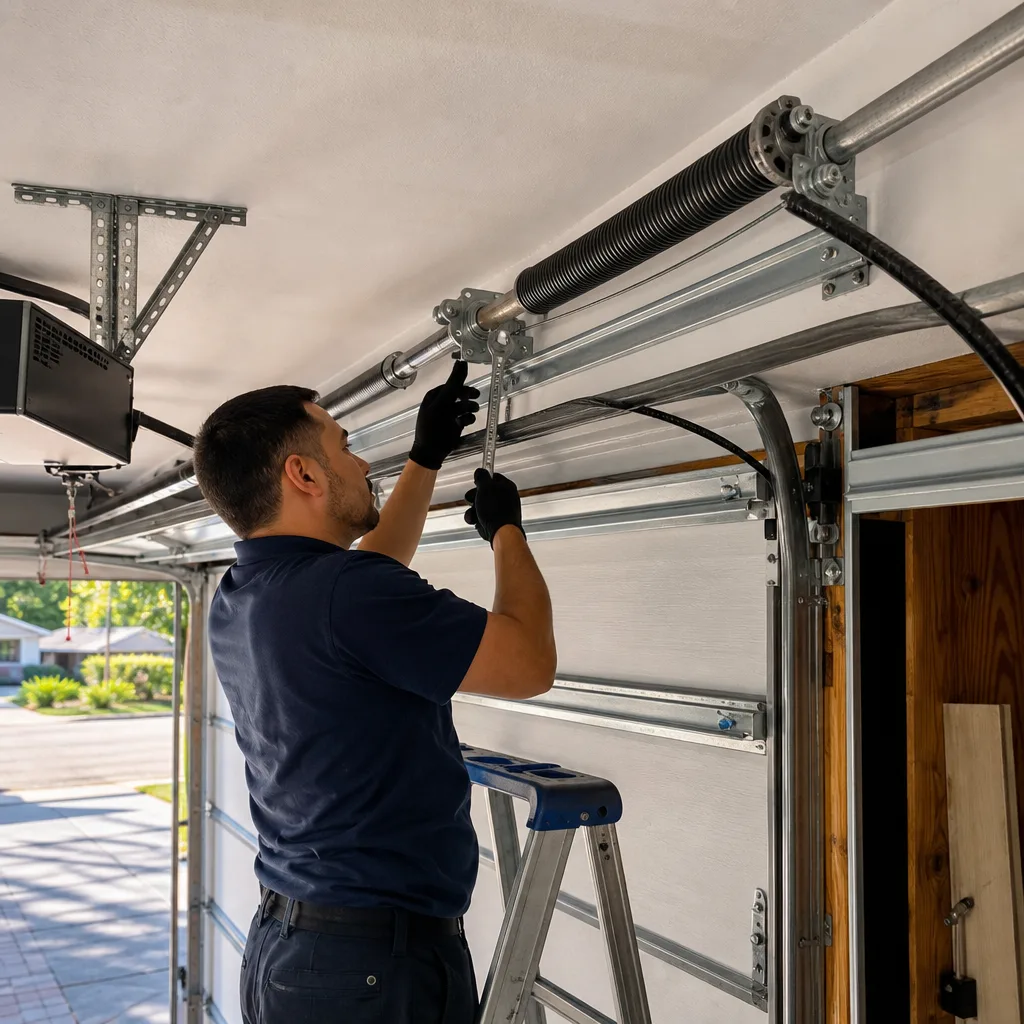
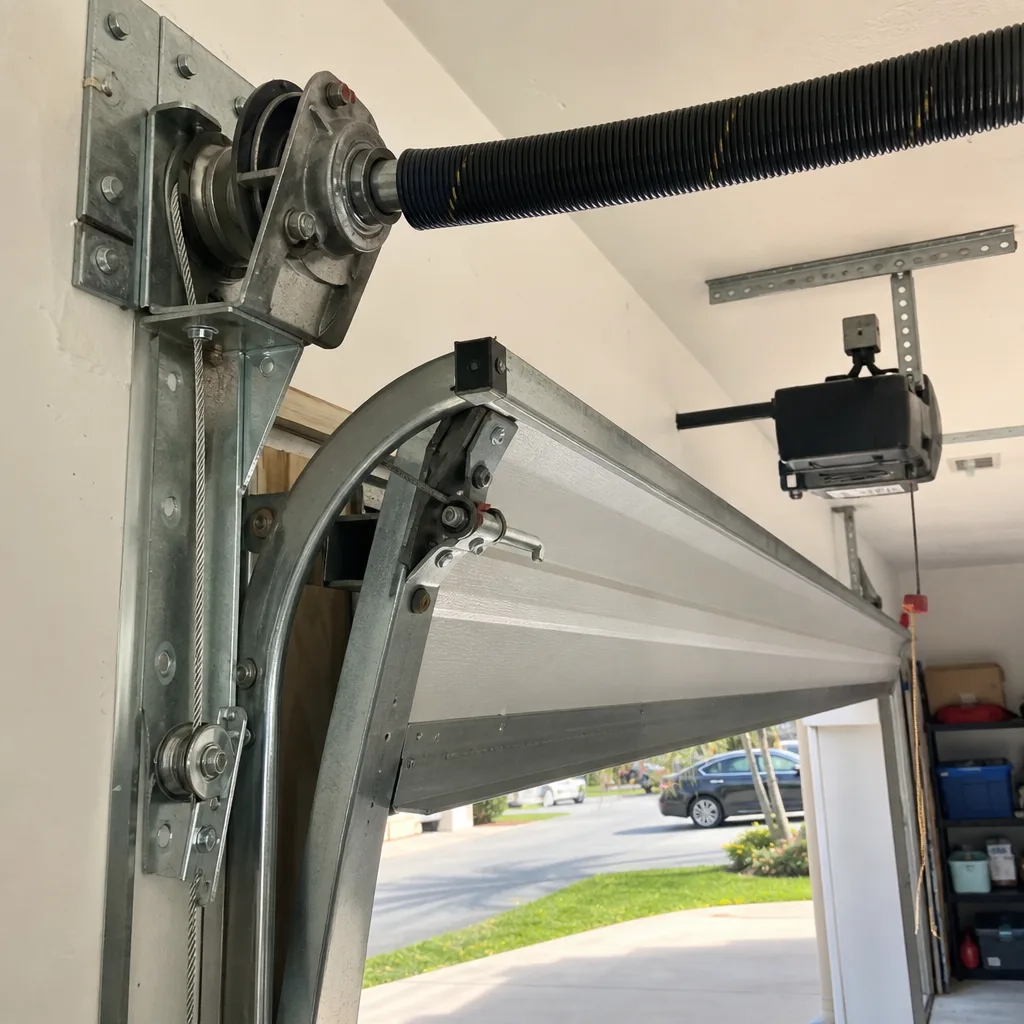
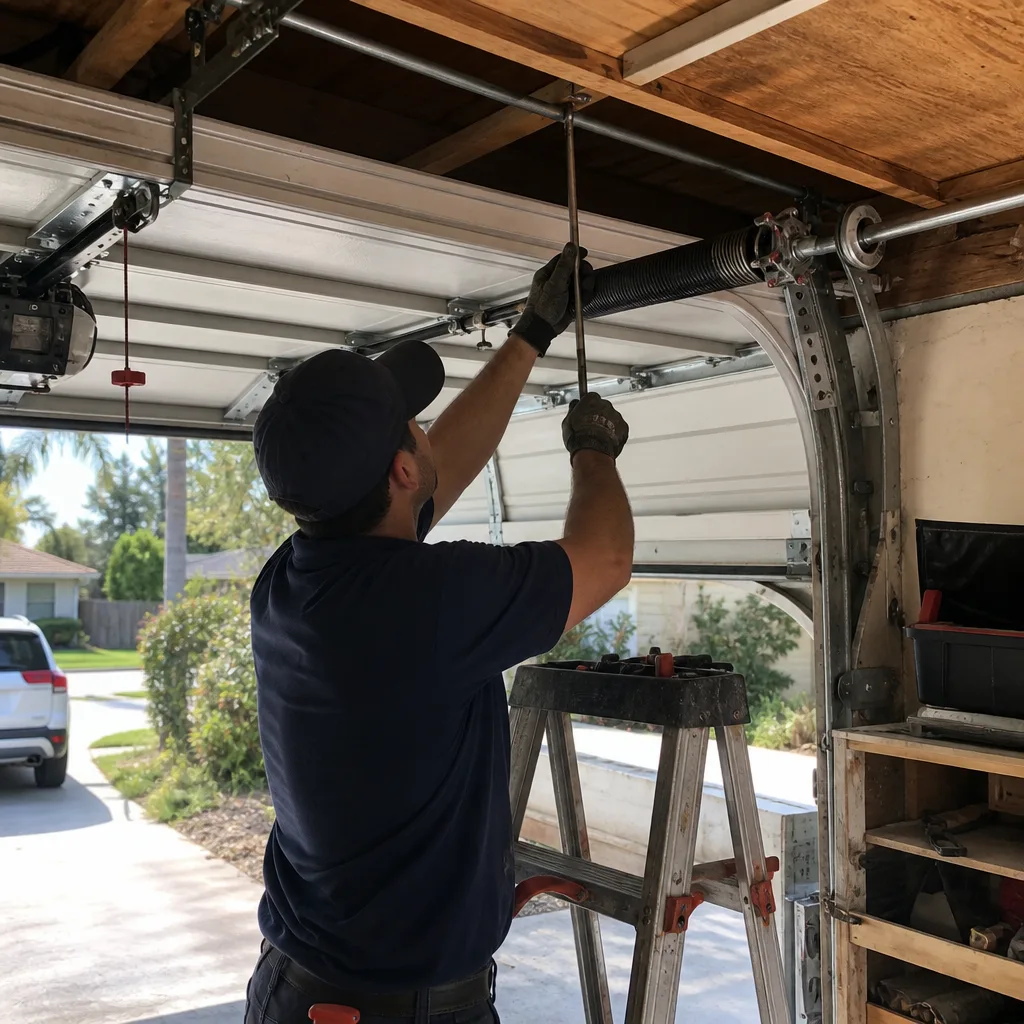
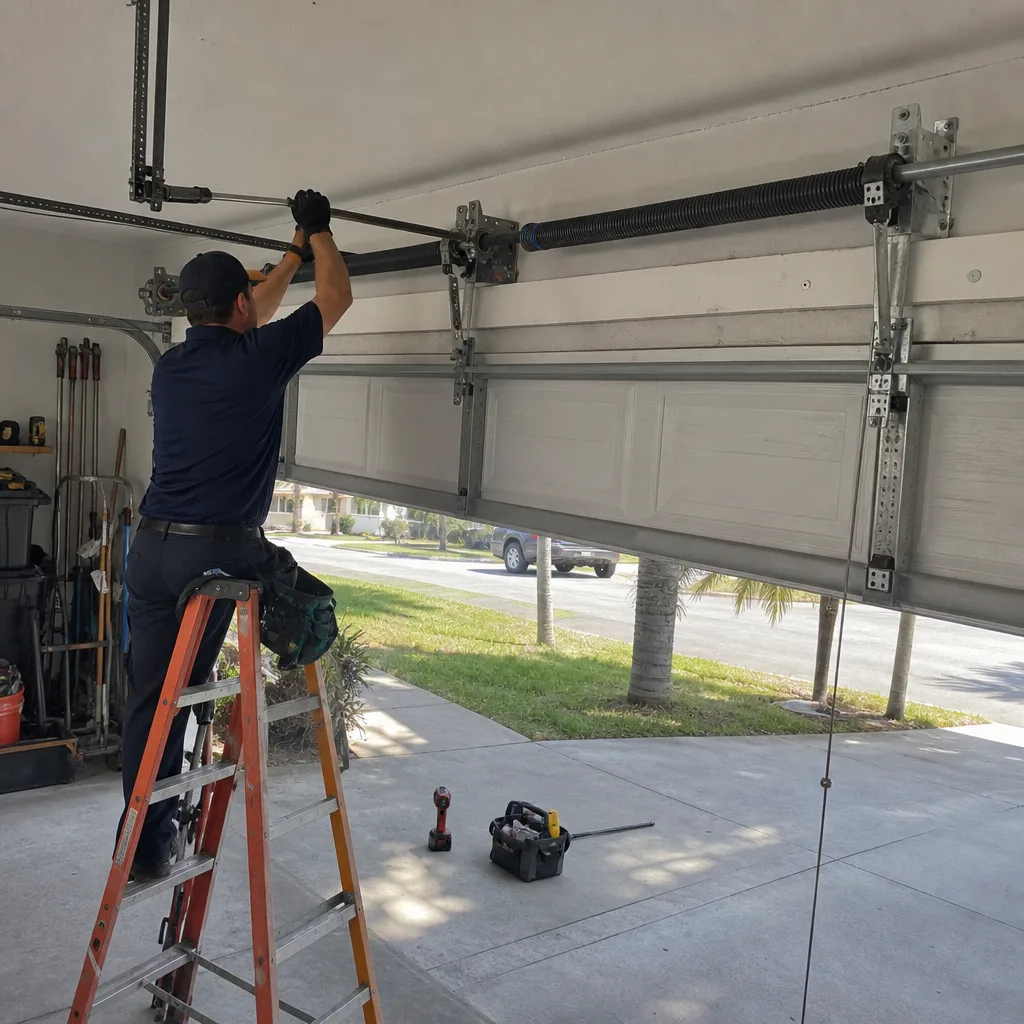
- Torsion spring replacement: The spring above the door that stores the lifting energy. These springs are wound under 7 to 8 full turns of tension when the door is closed. One wrong move with a winding bar and the bar becomes a projectile. We’ll detail the exact numbers below.
- Extension spring replacement: The springs that run along the horizontal track on older doors. Slightly safer than torsion springs but still under enough tension to break a finger if the safety cable is missing or improperly installed.
- Cable replacement: The cables connect the spring system to the bottom of the door. They run through a series of pulleys and carry the door’s full weight when the spring fails. Replacing a cable requires releasing spring tension, which brings you right back to the spring problem.
- Opener logic board or gear replacement: The opener’s control board is the component that interprets the wall button and remote signal. Replacing it requires matching the board to the opener model and re-pairing all remotes. Get it wrong and you have a door that opens when it should not.
Category 3: Professional Only
These tasks require a licensed contractor, full stop:
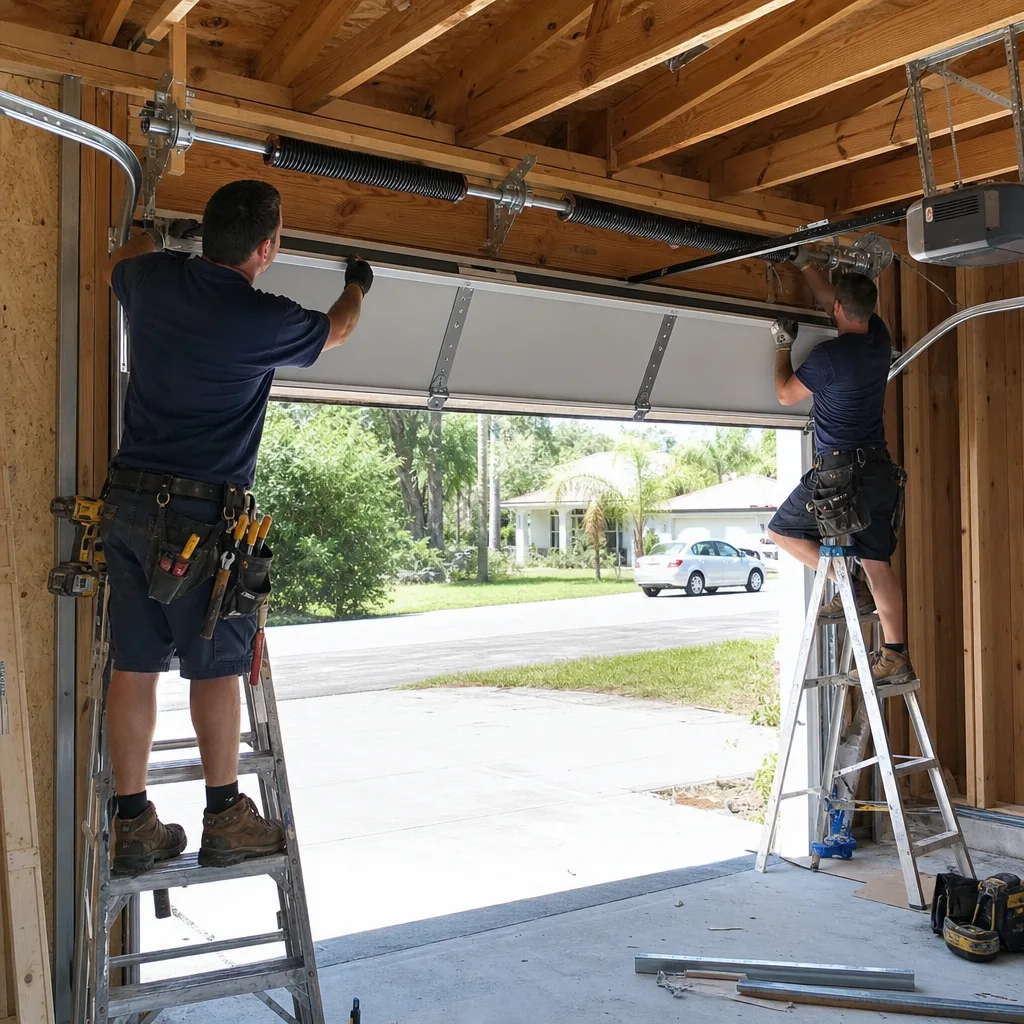
- Full door replacement: Permit required, wind-load testing required, licensed installation required. There is no legal DIY path in Clearwater.
- Structural header work: Modifying the framing above the door to accommodate a different door size. This is structural carpentry, not garage door work.
- Track modification: Changing the track radius or height. The track geometry is tied to the spring spec and the door weight. Get it wrong and the door binds, the springs wear prematurely, or the door comes off the track.
The gray area between Category 2 and Category 3 is where Clearwater homeowners get into trouble. We’ve seen doors installed by a “handyman contractor” that were never permitted, never tested, and failed the first time a tropical storm pushed against them. If the person you hire cannot produce a permit for the work, you do not have a contractor. You have a problem.
The Honest Cost Comparison: DIY Savings vs Real Risk
Let’s put real numbers on the DIY-versus-professional decision for the two most common repair scenarios in Clearwater.
Torsion Spring Replacement: The Math
| Cost Item | DIY | Professional |
|---|---|---|
| Replacement spring (pair) | $60 – $120 | $60 – $120 (part cost, included in quote) |
| Winding bars | $25 – $40 | Included |
| Labor | $0 | $120 – $180 |
| Total | $85 – $160 | $180 – $300 |
So the DIY route saves between $95 and $140. That is the honest savings. Now the honest cost. The Consumer Product Safety Commission reports roughly 20,000 garage-door-related injuries treated in U.S. emergency rooms each year, and a significant share involve spring failures during DIY attempts. The injury pattern is not a sprained wrist. It is lacerations, fractures, and in the worst cases, traumatic brain injury from a winding bar strike.
There is also the warranty issue. Most spring manufacturers, including Clopay and Wayne Dalton, void their warranty when the spring is installed by someone who cannot certify the installation against the manufacturer’s torque specification. A professional installation with a written record preserves the warranty. A DIY install does not.
The financial framing that makes sense: you are not paying $120 to $180 for labor. You are paying that amount to transfer an injury risk and a warranty liability to someone who carries insurance for exactly that purpose.
Opener Installation: A More Favorable DIY Case
Opener replacement is the most DIY-friendly of the mid-tier jobs, but the savings are smaller than most people expect:
- Opener unit: $180 – $350 for a good quality Chamberlain or LiftMaster unit with battery backup (battery backup is worth it in Clearwater’s storm season)
- DIY total: $180 – $350 plus 4-6 hours of your time
- Professional total: $250 – $550 including labor, and the technician handles the old opener disposal
The savings here can be significant if you buy the opener on sale and already own the tools. The caveat: modern openers interact with the door’s balance and the safety sensor system. If your door has an existing balance issue, a new opener will amplify it. A professional installation typically includes a door balance check; a DIY installation does not.
The Partial DIY Approach: Diagnose First, Pay for Labor Second
There is a middle path between full DIY and full-service professional work. It is the approach we see from our best-prepared customers, and it produces faster, more accurate quotes.
The partial DIY approach works like this:
- Document the failure. Take photos of the failed component from multiple angles. If the spring is broken, photograph the break point and the end cones. If the door is off track, photograph the track alignment and the roller positions. Use your phone’s flash. Clear photos matter more than perfect photos.
- Identify the part. Look for a part number or model number. Torsion springs have the wire diameter, inside diameter, and length printed or etched on the cone. Opener logic boards have a model number on a sticker. Knowing the part number before you call gives you leverage in the conversation.
- Research the price. Check the big-box sites and a couple of online parts retailers for the part cost. You now know roughly what the component costs, which means you can evaluate whether a labor quote is fair.
- Call a contractor with the information. You can describe the failure, provide the part number, and ask for a written price before dispatch. The conversation changes from “can you come look at my door” to “here is what I have, here is what I know, what does it cost to fix.”
This approach works because it eliminates the information asymmetry that makes service calls feel risky. You are not at the mercy of whatever the technician says when they arrive. You already know what failed and roughly what the part costs. The technician’s job becomes verifying your diagnosis and handling the labor.
We built our quoting system around this exact dynamic. Every garage door opener repair in Clearwater is quoted with a flat, written price and written scope before any work starts, per Clause 1 of The Haven Standard. You do not have to arrive at the conversation fully informed, but the customers who do get faster service and more accurate quotes.
Why Diagnosis Is the Most Valuable Part of a Service Call
There is a founding rule at Servo Garage Doors Clearwater that predates everything else: photograph the failed component before quoting a replacement. It started in 2015 when our owner insisted that customers should see the broken part with their own eyes before being asked to pay for a new one. That rule became Clause 4 of The Haven Standard.
Here is why diagnosis matters more than most homeowners realize. A garage door system has roughly a dozen wear components: springs, cables, rollers, hinges, brackets, tracks, the opener motor, the logic board, the trolley carriage, the limit switch, the photo-eye sensors, the wall button. When the door stops working, multiple components often contribute. A door that will not open might be a dead logic board, a stripped gear, a broken spring, a misaligned sensor, or a combination of all four.
If you skip diagnosis and replace the spring when the real problem is a failing opener gear, you have spent $200 and the door still will not open. If you replace the opener when the real problem is a broken spring, the new opener burns out its gear trying to lift a door the spring is no longer counterbalancing. Diagnosis prevents both failures.
This is also why we document everything. When a Servo technician arrives in Clearwater, the first step is to assess and photograph the system. The customer receives a documented photo record on every visit: what was found, what was done, and the condition of the components we did not replace. You see the broken spring before we quote the replacement. You see the worn roller before we suggest the upgrade. The paper trail makes the work verifiable.
The practical takeaway: even if you plan to hire a professional, do the diagnosis work first. Photograph the failure, identify the part if you can, and research the component cost. You will get a more accurate quote, faster service, and a conversation where you are an informed participant instead of a captive audience.
Common Mistakes to Avoid
- Watching one YouTube tutorial and assuming competence. The person in the video has done this dozens of times. They make it look easy because skill looks effortless. Your first attempt will not look like their fiftieth. For spring and cable work, the gap between the video and your reality is where the injuries happen.
- Replacing the door without pulling a permit. In Clearwater, unpermitted door replacement can void insurance claims and complicate resale. The buyer’s inspector will flag it. The insurer will use it. Do not create a liability to save a permit fee.
- Installing a new opener without checking door balance. If the door is not properly counterbalanced, a new opener inherits the problem. Disconnect the opener and manually lift the door. It should stay at half-height on its own. If it falls or rises, the springs need attention before the opener gets installed.
- Replacing the spring yourself to save the labor cost. The savings of $95 to $140 does not cover the emergency room copay, the missed work, or the voided spring warranty. This is the most common mistake we see in Clearwater, and the hardest one to watch.
- Lubricating the track with WD-40. The track should stay clean and dry. Lubricant on the track collects dirt and causes the rollers to bind. Lubricate the rollers, hinges, and springs. Leave the track alone.
- Buying the cheapest opener available. Clearwater loses power during storms. An opener without battery backup is a door you cannot open when the power is out. Spend the extra $40 on a battery backup unit. It matters more than horsepower.
- Deleting the safety cable on an extension spring door. The safety cable runs through the center of extension springs and contains the spring if it breaks. Removing it because it is “in the way” removes the only thing stopping a broken spring from flying into the garage. Never do this.
When to Call a Professional
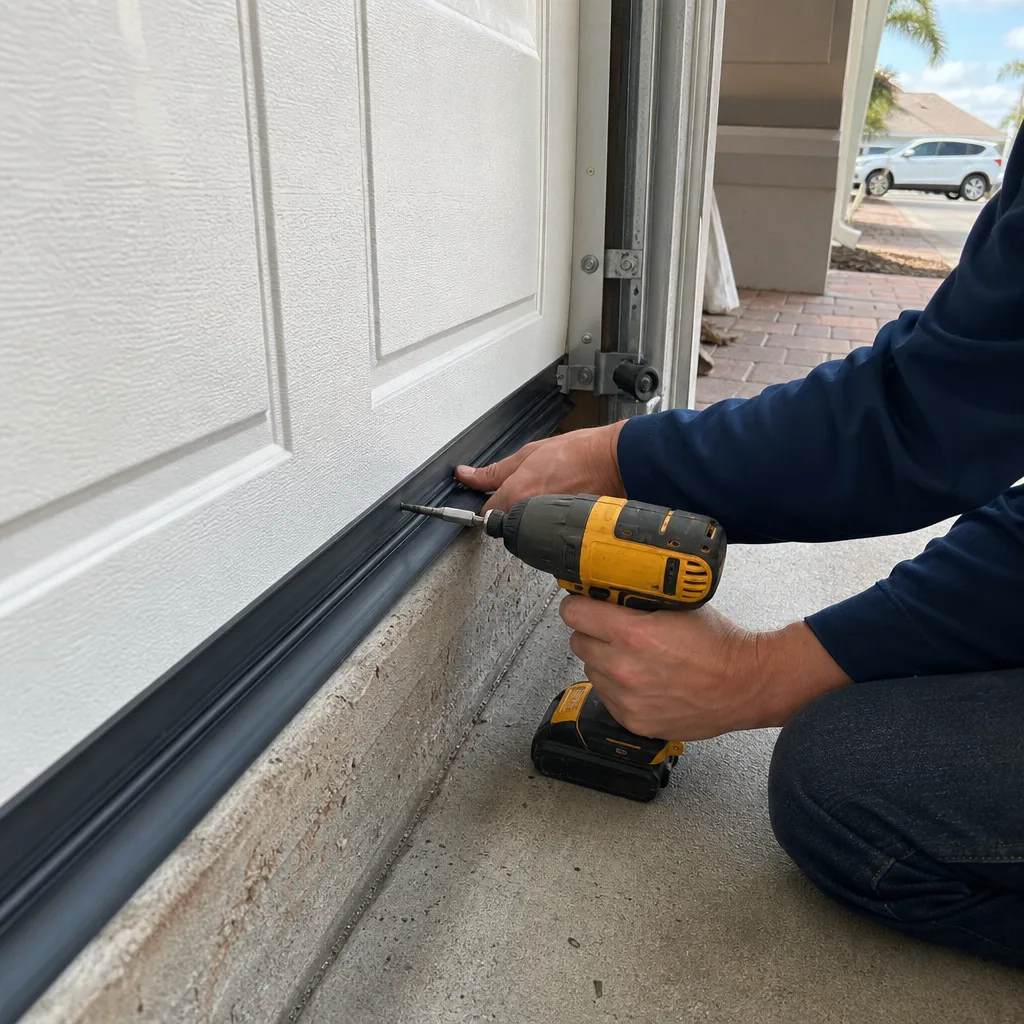
Call a professional when the task involves a torsion spring under tension, a cable connected to a spring, a full door replacement requiring a permit, or any structural modification to the header or track. Call a professional when you want a documented record of what was found and what was done, because that record protects the warranty and supports any future insurance claim. Call a professional when the door is your primary entry point and you need it working today, not after a weekend of troubleshooting. Servo Garage Doors Clearwater offers free estimates in Clearwater, with live phone coverage 24/7, and every quote is a flat, written price delivered before any work starts. Call (727) 485-0719 for a free estimate.
Frequently Asked Questions
No. Full garage door replacement in Clearwater requires a permit and a licensed contractor under Florida Building Code section R609, which mandates wind-load compliance for doors in wind-borne debris regions. The door assembly is tested as a unit, and only a licensed installation with a permit creates the documentation that verifies compliance.
Garage door spring replacement in Clearwater typically costs $180 to $300 for a pair of torsion springs, including parts and labor. The DIY alternative costs $85 to $160 for parts and tools, but voids most spring warranties and carries a documented injury risk from the winding process. Call (727) 485-0719 for an exact quote. Estimates are free and the price is written before any work starts.
Yes, as long as you are replacing an existing opener in the same footprint without modifying the track or structural mounts. The opener is a plug-in appliance; the dangerous components are the springs and cables. A DIY opener installation typically saves $70 to $200, but budget 4 to 6 hours and confirm your door is properly balanced before you start.
You can legally replace weatherstripping, swap rollers, repaint panels, clean and align photo-eye sensors, lubricate moving parts, and replace a same-footprint opener. You cannot legally perform a full door replacement or structural header work without a permit and licensed contractor. Spring and cable work falls in a gray area: legal but inadvisable given the tension involved.
Diagnose first. Isolate the failure: disconnect the opener, lift the door manually, and observe where it binds, falls, or fails to move. Photograph the failed component and look for a part number. If the problem involves springs, cables, or the bottom brackets, call a professional. If it is a worn roller or weatherstripping, a DIY replacement is reasonable.
Yes. Every garage door installation in Clearwater and repair job is quoted with a flat, written price and written scope before any work begins, per Clause 1 of The Haven Standard. The technician photographs the failed component before quoting a replacement, per Clause 4, so you see exactly what was found and what the fix will cost. Call (727) 485-0719 for a free estimate.
The Bottom Line
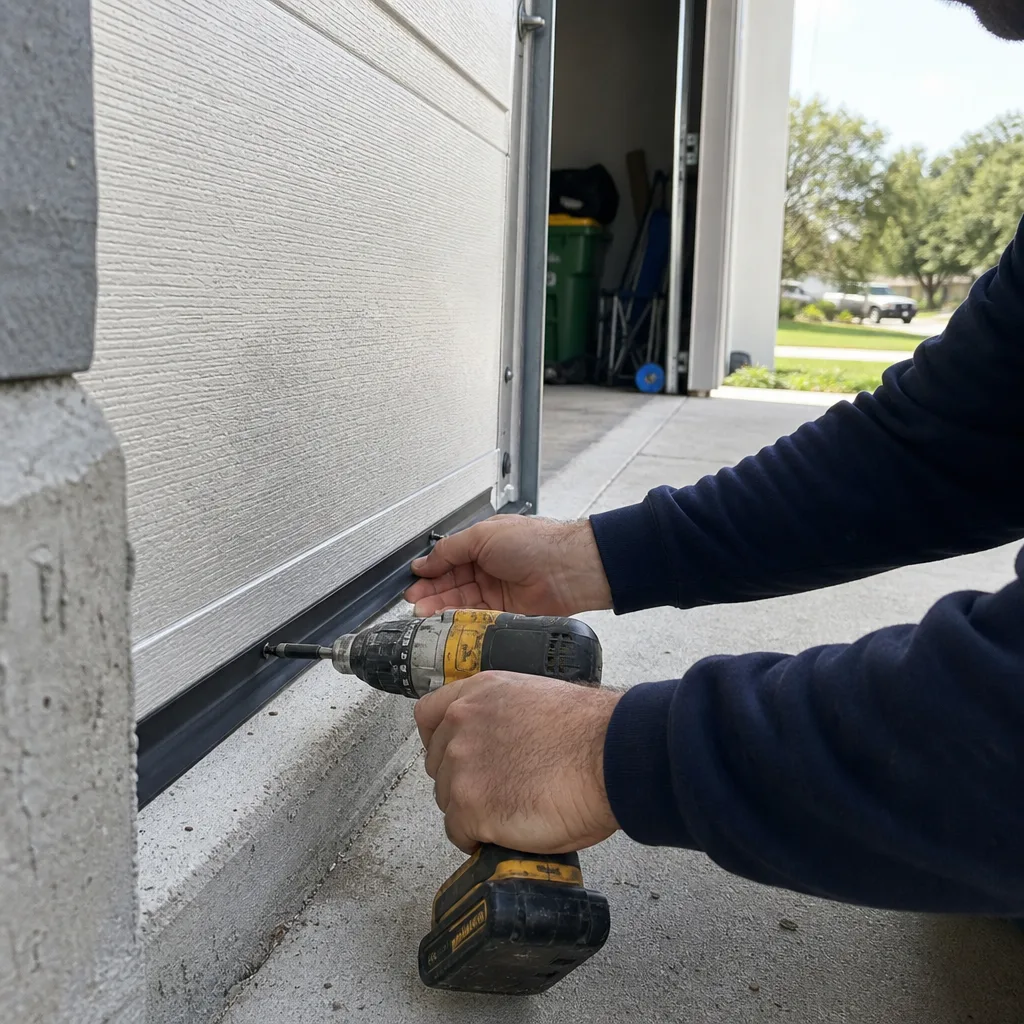
The DIY-versus-professional garage door question in Clearwater is not about how handy you are. It is about liability. Florida code makes full door replacement a professional-only job, full stop. Spring and cable work is legal to do yourself but carries an injury risk that makes the $95 to $140 in savings a bad deal. Cosmetic and low-risk maintenance tasks like weatherstripping, roller swaps, and sensor alignment are genuinely DIY-able and worth doing yourself. The smartest approach for anything in between is partial DIY: diagnose the failure, photograph the component, research the part cost, and arrive at the contractor conversation informed. You can find more guides & resources on our blog to help with that research. You will get a better quote, faster service, and a paper trail that protects you down the line. For anything involving tension, permits, or documentation, call a professional who puts the price in writing before the first tool comes out.
Call Servo Garage Doors Clearwater home at (727) 485-0719 for a free estimate. We service all major brands including Clopay, Amarr, and Wayne Dalton, and every job ends with a documented photo record you keep.
Written by Marcus Deller, Owner at Servo Garage Doors Clearwater, serving Clearwater since 2015.