
Last updated September 20, 2026
Full 25-point door and opener safety check with every visit - springs, cables, rollers, tracks, and your LiftMaster or Chamberlain opener included
You get a price before we start. It does not change when the truck arrives.


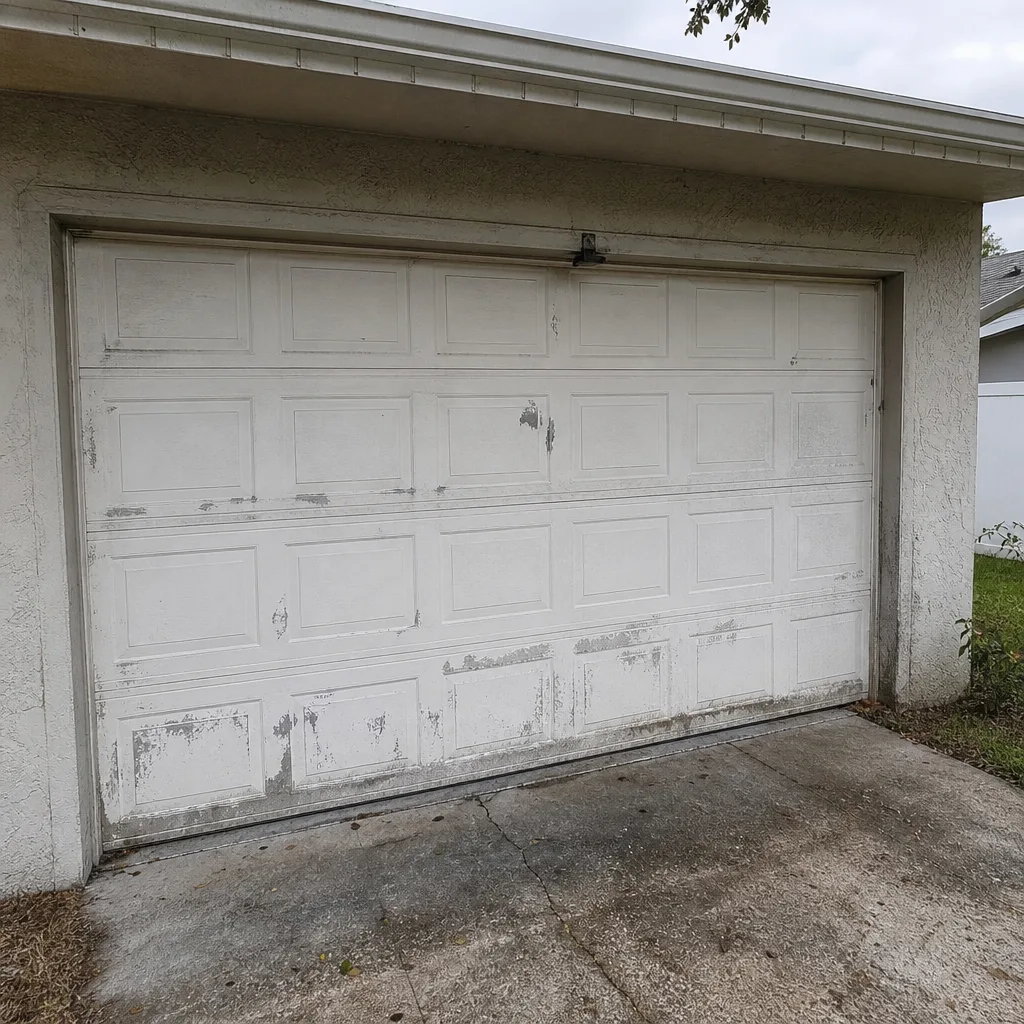 Before
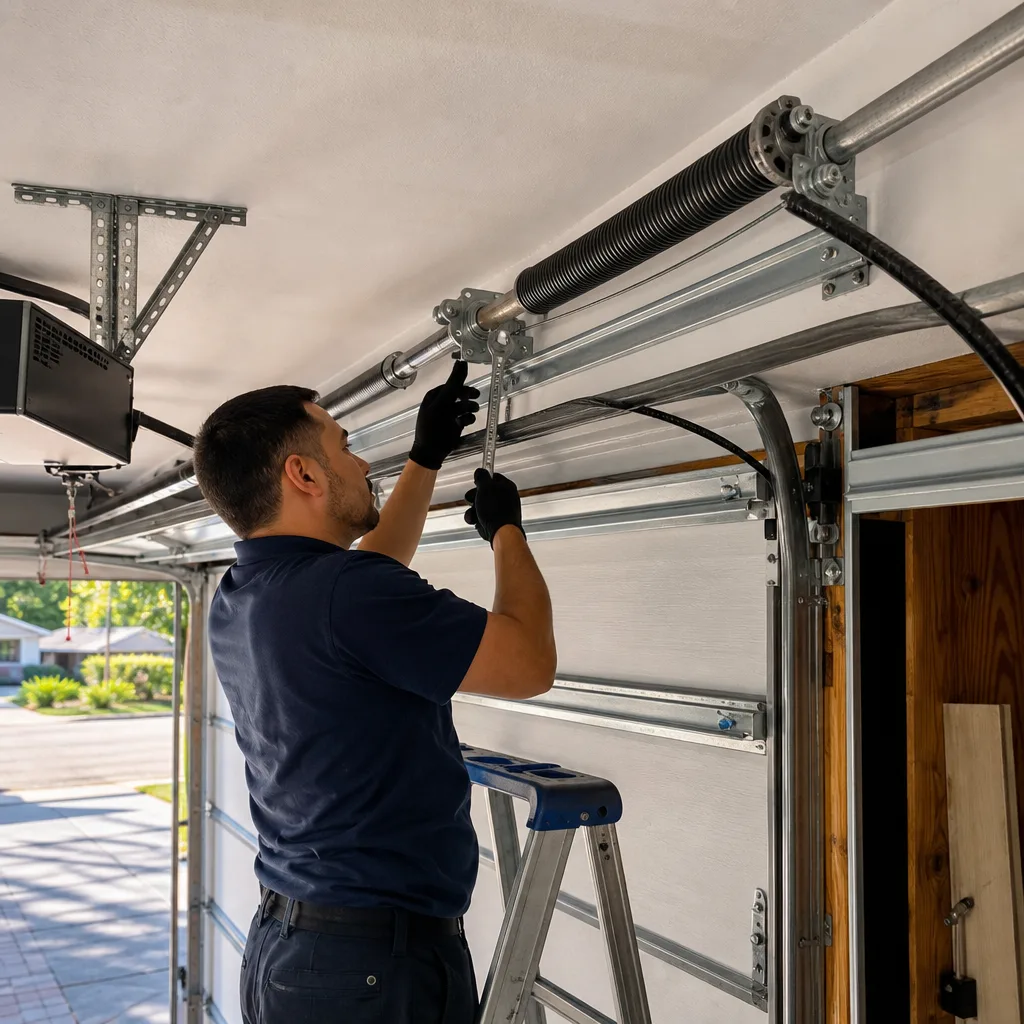 After
After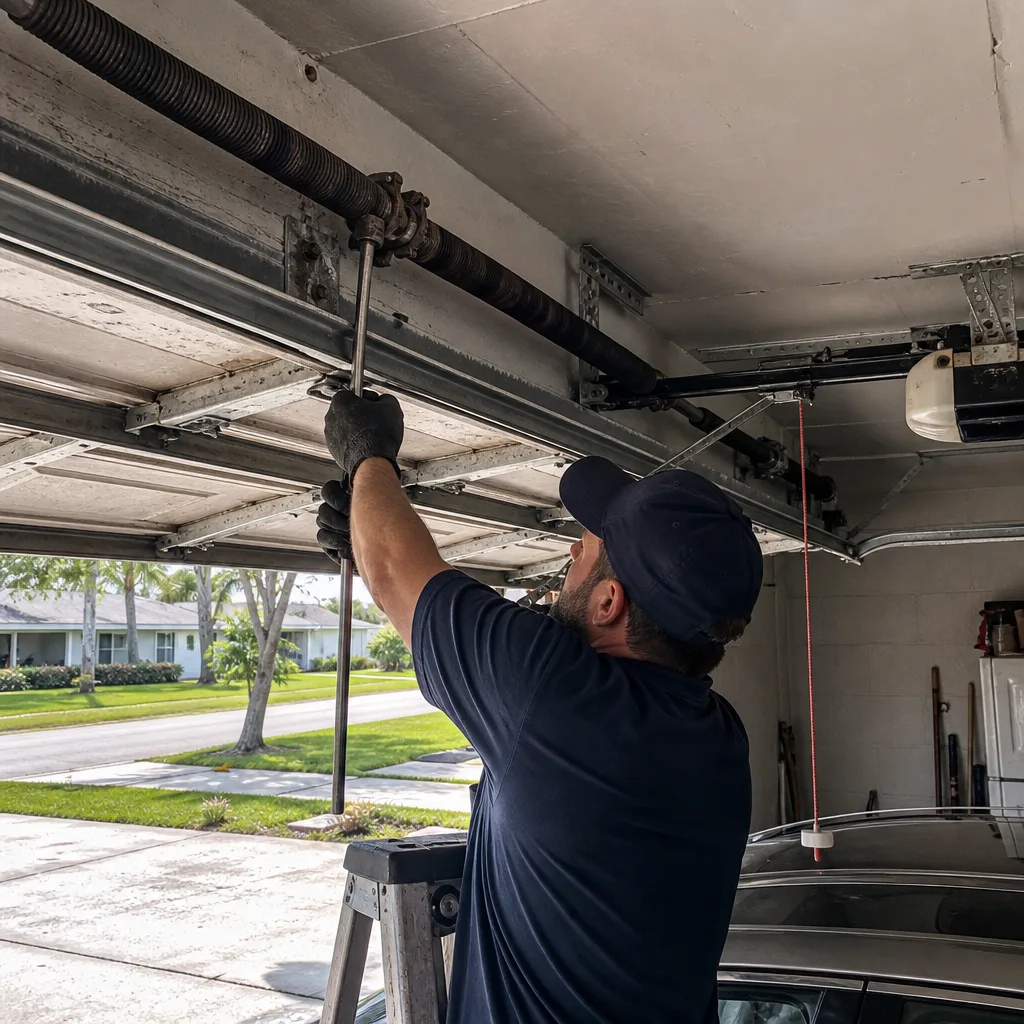 Before
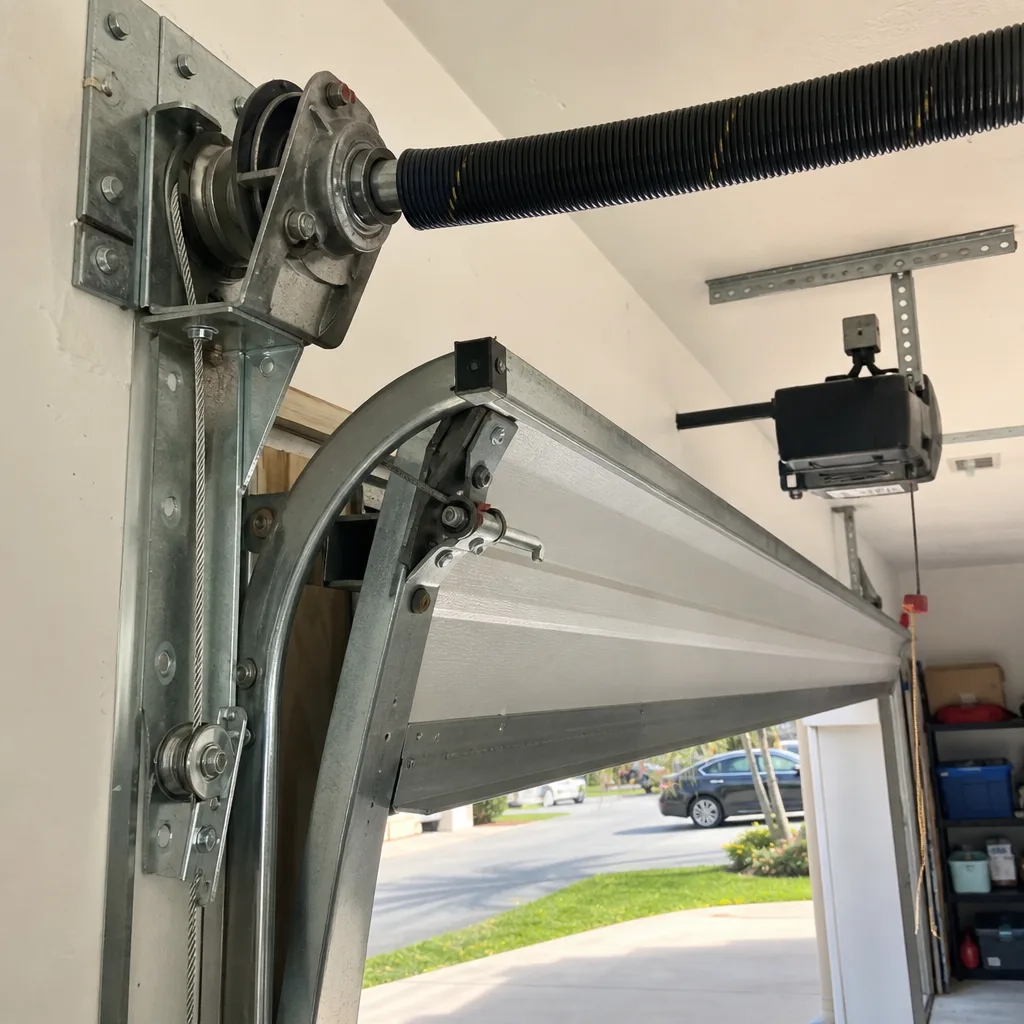 After
After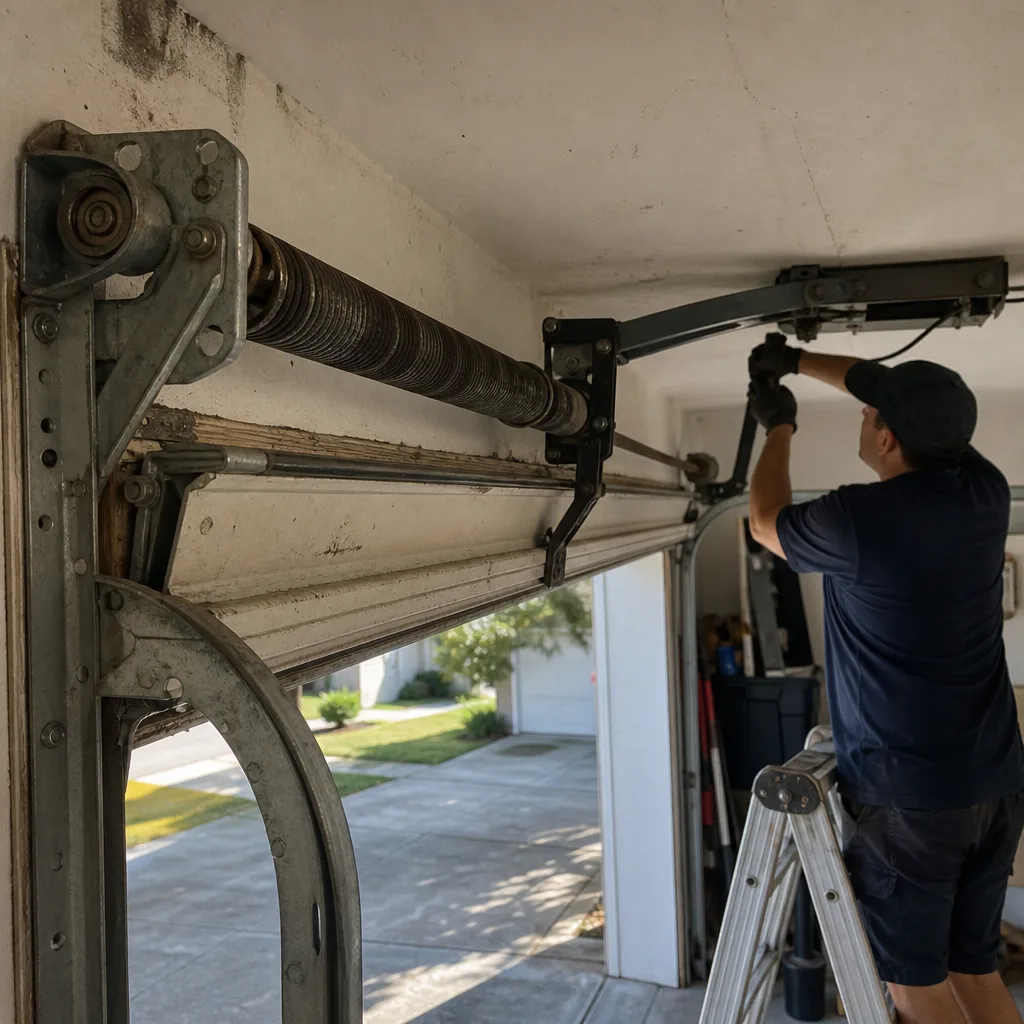 Before
 After
AfterGarage Door Repair Maintenance Checklist for Clearwater Homeowners
A torsion spring rated for 10,000 cycles loses that rating faster in high-humidity coastal environments, but the manufacturer’s maintenance schedule was written for a climate-controlled showroom, not a Clearwater garage that hits 85% relative humidity before noon. That gap between the printed manual and Pinellas County reality is where doors fail. This guide gives you the exact maintenance checklist we use on Garage Door Repair services across Clearwater, with specific lubricants, specific intervals adjusted for salt air, and a clear line between what you can safely do yourself and what belongs on a technician’s work order.
Quick Answer
A garage door maintenance checklist for Clearwater homeowners should include monthly visual inspections of rollers, cables, and track mounting brackets; lubrication of rollers and hinges with white lithium grease every six months (not annually, due to coastal humidity); a balance test that confirms the door holds position within 2 inches when stopped mid-travel; and an annual professional inspection of torsion spring tension, cable drum alignment, and opener force settings. Most homeowner-executable tasks take under 30 minutes. Spring adjustment and cable work require a licensed technician.
Table of Contents
- Why Clearwater’s Climate Changes the Maintenance Math
- The Owner-Executable Task List
- What Requires a Trained Technician
- Lubrication by Component: What to Use and What to Never Touch
- How to Test Door Balance and Read the Result
- Coastal-Adjusted Service Intervals
- Your Maintenance Log: The Document That Protects You
- Common Mistakes to Avoid
- When to Call a Professional
- Frequently Asked Questions
BeforeAfterWhy Clearwater’s Climate Changes the Maintenance Math
Clearwater sits on a peninsula between the Gulf of Mexico and Tampa Bay. That geography means two things for your garage door: constant salt aerosol and humidity that rarely drops below 70% relative humidity for weeks at a time. Neither shows up in a manufacturer maintenance schedule written in Ohio.
Salt air accelerates corrosion on any exposed metal component. We’ve pulled rollers out of Clearwater Beach garages that looked like they’d been submerged, when in reality they’d simply spent four years a half-mile from the surf line. The corrosion isn’t cosmetic; it increases rolling resistance, which means the opener motor works harder, which shortens the logic board’s life. On a Chamberlain or Genie opener, a strained motor pulls more current, and the board’s capacitors age faster under heat.
Humidity attacks differently. Nylon rollers absorb moisture and swell slightly, changing their diameter. Steel cables develop surface rust that abrades the nylon sheaves they ride over. And torsion springs, the component under the most constant tension in your entire house, develop micro-pitting on the coil surface. That pitting becomes a stress concentration point, and that’s where the spring breaks, not at random.
The practical result: most manufacturers recommend an annual inspection. In Clearwater, we’ve found that interval too long for homes within three miles of the Gulf or the bay. Every six months is the realistic schedule for lubrication and visual inspection, with a professional inspection annually. The cost difference is modest; the cost of ignoring it is a spring replacement you didn’t budget for.
This guide was written from what we see on service calls across Clearwater, from Island Estates to Countryside to downtown. The patterns don’t change by neighborhood, but by distance to salt water. If you can smell the Gulf from your driveway, you’re on the six-month schedule.
The Owner-Executable Task List
These are tasks a homeowner can do safely with basic tools and attention. None require releasing spring tension, touching cables under load, or working with electricity. If any task makes you uncertain, skip it and put it on a technician’s list. A skipped task costs nothing; an attempted one done wrong can cost a finger.
Monthly Visual Inspection (10 minutes)
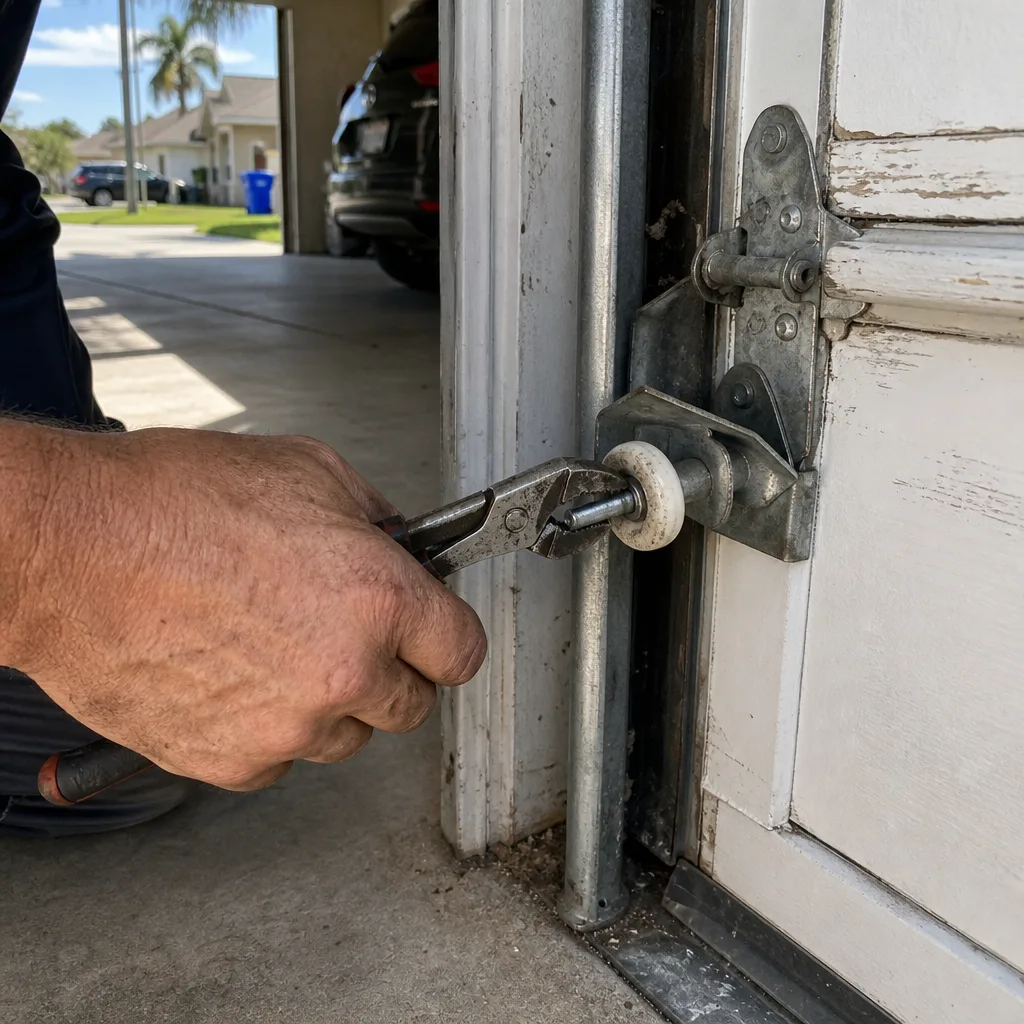
- Rollers: Look at each hinge-mounted roller. Check for visible cracks in nylon wheels, flat spots, or wobble when the door moves. A cracked roller fails during operation, not while sitting still.
- Cables: Inspect the lift cables on both sides of the door. Look for frayed strands, rust, or any gap between the cable and the drum. Do not touch them; inspect visually only.
- Track brackets: Check the L-shaped brackets that mount the vertical and horizontal tracks to the wall and ceiling. Look for loose bolts, wall gap, or rust staining running down from the fastener.
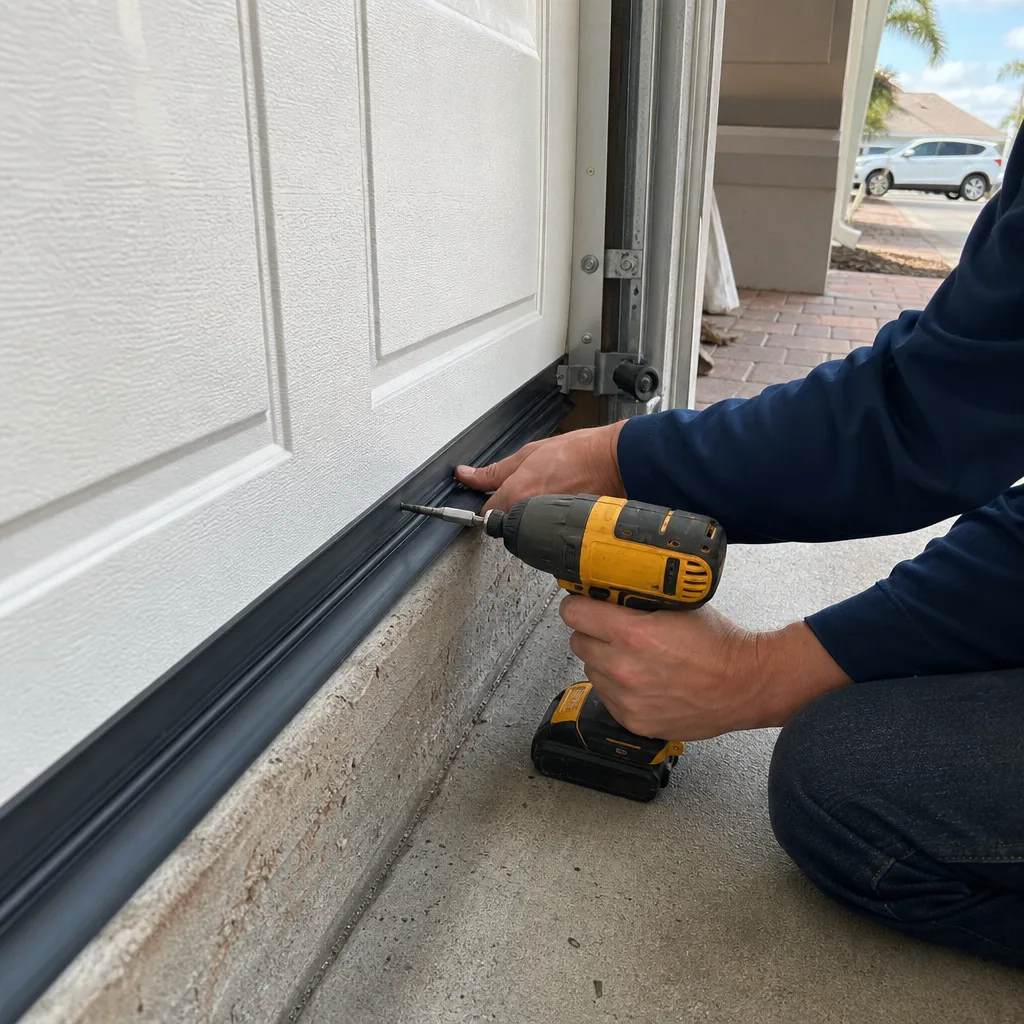
- Weather seal: The bottom rubber seal should sit flat against the concrete. In Clearwater, heat accelerates drying and cracking. A split seal lets water in during summer storms, and leaves, and the occasional palmetto bug.
- Hinge plates: Check the hinges connecting door panels. Look for hairline cracks at the screw holes. This is the most common failure point on older Clopay and Amarr doors.
Six-Month Lubrication (15 minutes)
Lubrication in Clearwater follows a six-month cycle, not the annual one most manuals suggest. You’ll need one product: white lithium grease in a spray can. If you want a second, add a silicone-based lubricant for the weather seal. That’s the entire shopping list.
- Hinges: Spray each hinge pivot point where the two plates meet. One short burst. Wipe excess with a cloth.
- Roller stems: Lubricate the stem where the roller shaft enters the hinge barrel. Do not lubricate the nylon wheel itself; it’s self-lubricating and grease on the wheel face just collects grit.
- Spring: A light coat on the torsion spring coils helps slow oxidation. Use a cloth to apply it; don’t spray the entire spring so it drips.
- Weather seal: Silicone lubricant on the bottom rubber seal keeps it pliable through Clearwater’s hot seasons and prevents it bonding to the concrete.
Quarterly Safety Check (5 minutes)
Test the auto-reverse feature required by federal law since 1993. Place a 2×4 flat on the ground in the door’s path and close the door on it. The door should reverse within two seconds of contact. If it doesn’t, stop using the opener and call for service. This is also a good time to test the photo eye sensors by passing an object through the beam while the door closes. The door should reverse immediately. These two checks take five minutes and catch the failures that hurt people.
If you’re doing this work because a repair is overdue, our Garage Door Repair in Clearwater page covers what we check and how we quote it.
What Requires a Trained Technician
Some maintenance tasks sit behind a hard line. They involve stored mechanical energy that doesn’t forgive mistakes. If you hire a handyman for these, ask to see their license. If they can’t produce one, find someone who can-our How to Hire a Garage Door Contractor in Clearwater: A Step-by-Step Guide covers exactly what to verify.
Torsion Spring Inspection and Adjustment
A torsion spring stores enough energy to lift your 150 to 250 pound door. That energy sits coiled above the door every hour of every day. A trained technician checks the spring’s wire diameter, measures coil spacing for fatigue, and adjusts tension only with winding bars made for that specific spring size. If your spring shows visible gaps between coils, or if the door is suddenly heavier to lift manually, the spring is failing. Do not use the door more than necessary until it’s replaced.
Cable and Drum Alignment
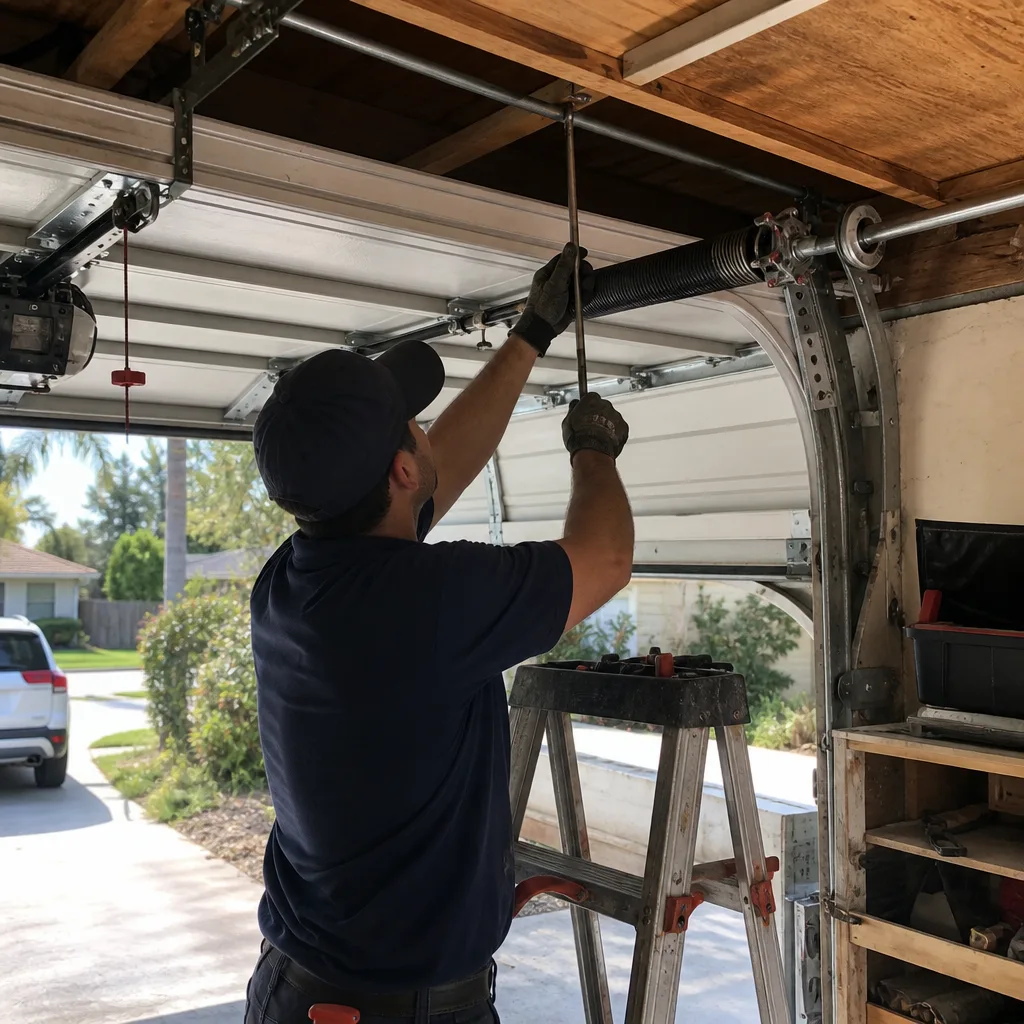
Lift cables wind onto drum spools mounted on the shaft above the door. If a cable slips off the drum or develops a gap, the door lifts unevenly, and the panel can buckle under the stress. Repositioning a cable under tension is not a homeowner task. A technician releases tension first, re-seats the cable, checks the drum set screws, and resets the balance. Watch for a door that rises slightly tilted; that’s the earliest sign.
Opener Force and Travel Limit Adjustment
Your opener’s limit switches tell it where to stop. Its force setting tells it how hard to push. Both drift with use and temperature. A technician adjusts these with the door disconnected and uses a force gauge to verify the auto-reverse stays within spec. On LiftMaster, Chamberlain, and Genie openers, the same service call usually includes checking the logic board and the trolley carriage for wear.
Track Alignment and Panel Replacement
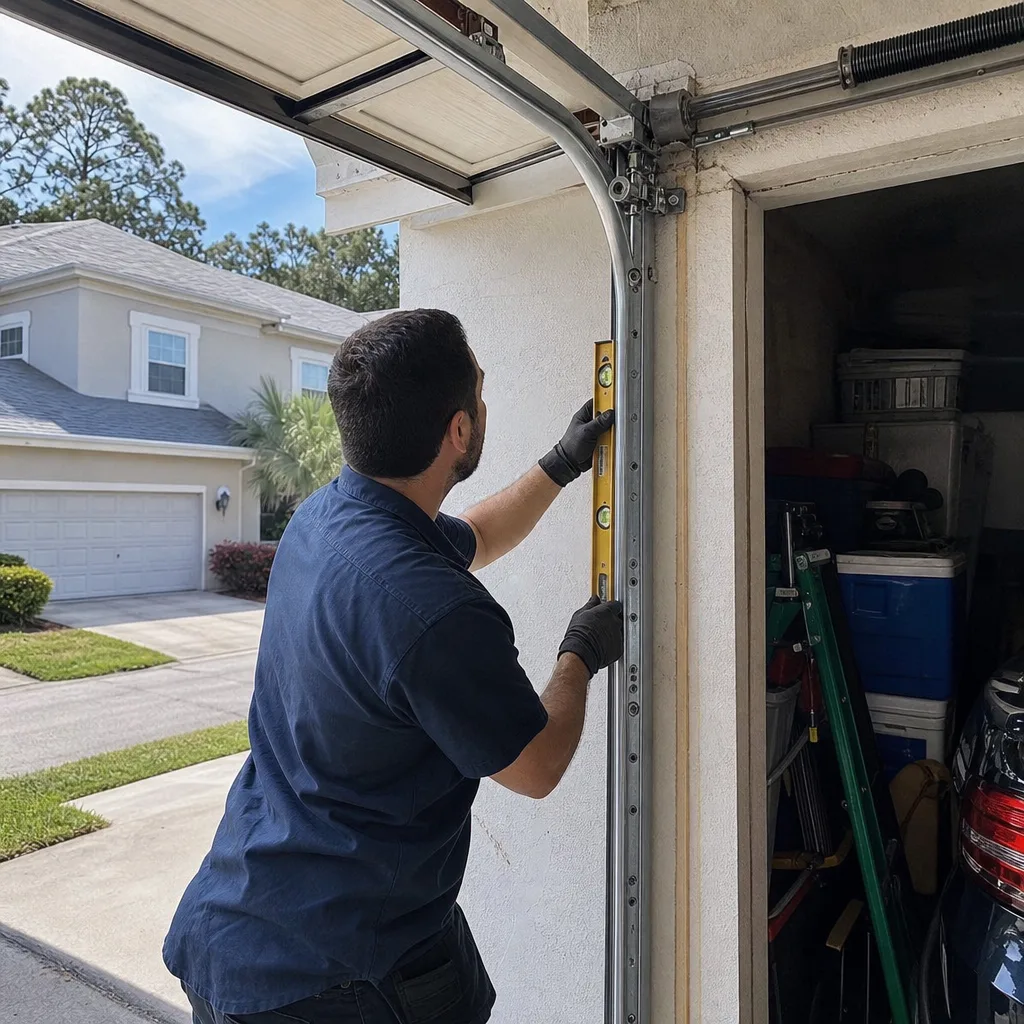
Vertical tracks must be plumb and the horizontal tracks level. A track out of alignment by even a quarter inch causes roller wear that shows up as grind marks on the track’s inside edge. Panel replacement or re-balancing after a panel change requires calibrating the entire system, not just bolting on new steel.
For new door work and related maintenance, our Garage Door Installation in Clearwater page explains what a written scope looks like before any work starts.
Lubrication by Component: What to Use and What to Never Touch
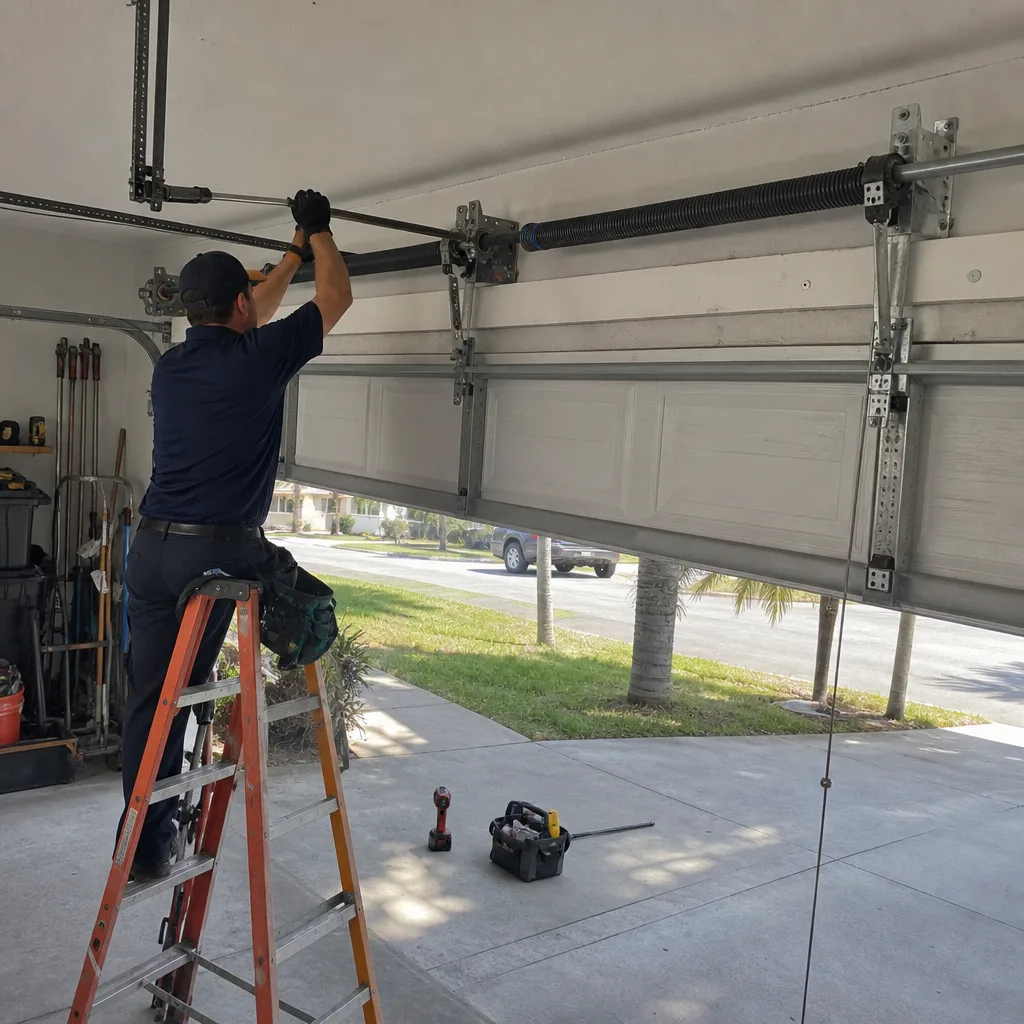
Most garage door maintenance failures trace back to one mistake: using the wrong lubricant on the wrong part. The exact product matters. Here’s the breakdown by component, because “lubricate moving parts” is vague enough to be useless and confident enough to cause damage.
Rollers: White Lithium Grease on the Stem Only
Nylon rollers run on sealed bearings or a simple steel stem riding in the hinge barrel. The bearing inside the wheel is maintenance-free. The stem needs lubrication where it enters the hinge. Use white lithium grease applied to the stem, not the wheel face. If the wheel face gets lubricated, it collects dust and sand aerosol that Clearwater’s sea breeze carries constantly, and that slurry grinds the nylon down faster than running it dry.
Hinges: White Lithium or Silicone Spray
Hinge pivot points take constant load and are the most common source of door squeal. White lithium grease stays put and won’t wash off. Silicone spray works too and is cleaner to apply. Do not use penetrating oil; it’s designed to free, not to lubricate long-term, and it attracts dirt.
Torsion Spring: Light Machine Oil or Lithium Cloth Application
The spring coils slide against each other as the door opens, so a light coat of oil slows surface rust and reduces coil friction. Wipe it on with a rag; don’t drench. In Clearwater’s salt air, spring oxidation is the primary cause of coil pitting, which shortens the 10,000-cycle rating. A lightly maintained spring lasts to its rating; a crusty one breaks early.
Tracks: Nothing. Ever.
Tracks are not lubricated. Period. The rollers ride inside the track, and any lubricant on the track surface prevents the roller from maintaining consistent contact. It also captures sand, which Clearwater has in abundance. If your tracks look dirty, wipe them clean with a dry cloth. If the door labors, the problem is balance or roller wear, not dry tracks. This is the second most common maintenance mistake we document in photo records.
Weather Seal: Silicone Only
The bottom seal is rubber or vinyl. Petroleum-based products break down rubber compounds. Silicone keeps the seal flexible without attacking the material. Replace the seal when it’s cracked or when daylight shows under a closed door.
What About WD-40?
WD-40 is a water displacement formula, not a lubricant. It’s useful for cleaning and light rust removal, then it evaporates and leaves the surface dry. If you’ve been using WD-40 as your garage door lubricant, the door has been running effectively dry. Switch to white lithium for hinges and stems, and wipe components clean before the first application.
How to Test Door Balance and Read the Result
The balance test answers one question: is the spring doing its job? A properly balanced door feels nearly weightless when you lift it manually. A door out of balance is the earliest warning that a spring is failing, and it’s the test that tells you whether an opener replacement is really a spring problem.
- Close the door. Pull the red emergency release handle to disconnect the opener from the door.
- Lift the door manually to about waist height, roughly half travel.
- Let go. The door should hold its position.
- Measure the drift. If the door stays within 2 inches of where you released it, the spring is balanced. If it drops more than 2 inches or rises on its own, the spring is out of adjustment or failing.
- Repeat at quarter and three-quarter positions. A spring can be balanced at center and still be off at the travel ends.
Reconnect the emergency release by pulling the handle toward the door and running the opener until the trolley clicks back in. The emergency release is designed to be used, not feared.
The 2-inch tolerance is what we use on service calls. A door that drifts 6 inches is noticeably heavier and puts stress on the opener’s gear train. A door that rises on its own has a coiled spring with too much tension, and that’s harder on cables and drums. Neither condition fixes itself. Both get worse, and both are cheaper to address at first detection than after a component fails.
Coastal-Adjusted Service Intervals
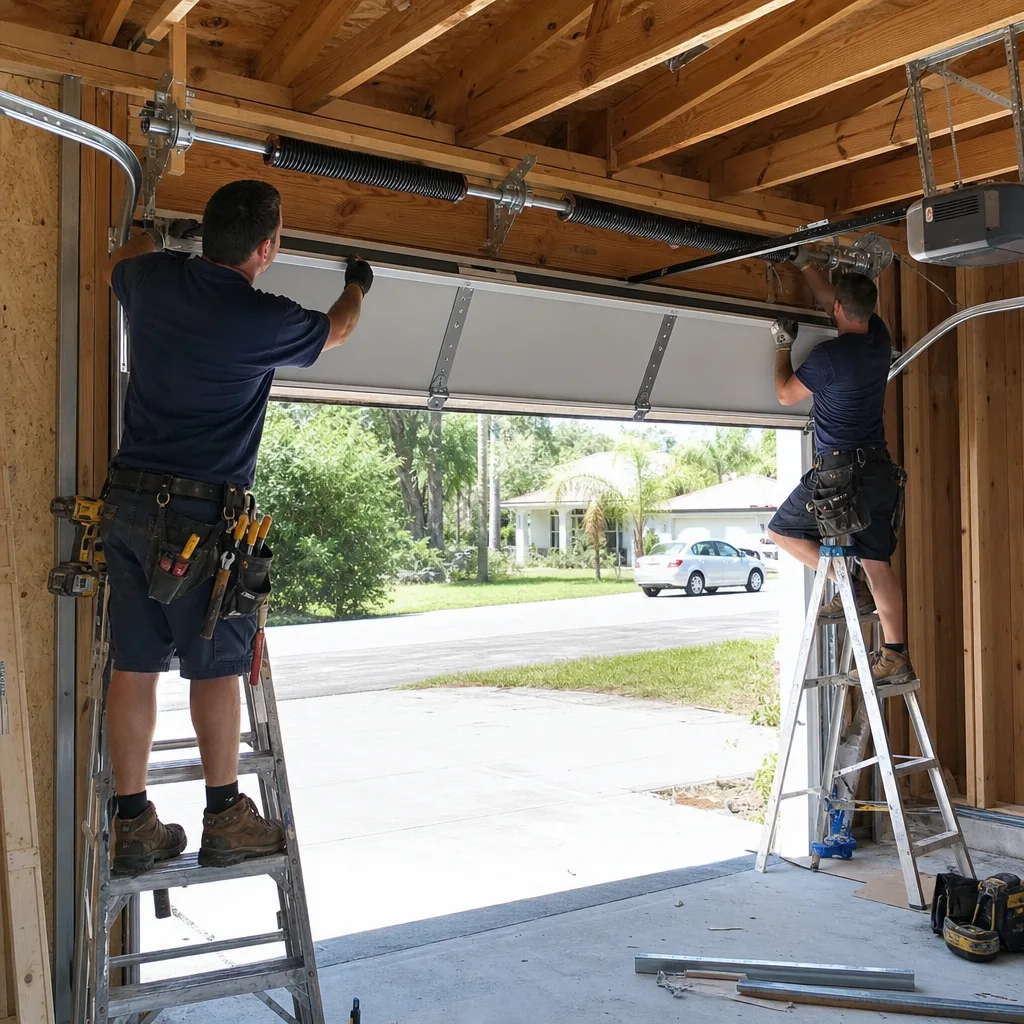
The manufacturer’s schedule assumes a garage that’s dry, temperature-stable, and inland. Clearwater has none of those. Here’s the adjusted schedule we recommend for homes from Clearwater Beach to Palm Harbor, based on what we’ve documented across thousands of service calls.
Why Six Months, Not Twelve
Salt aerosol deposits on exposed metal continuously. The effective humidity in a garage within two miles of the Gulf stays high enough to accelerate rust formation on untreated steel. Six months is the interval at which we still find components clean with nothing more than light surface dust. At twelve months, we start finding pitting on springs and cable rust that’s structural, not cosmetic.
The Interval Table
- Visual inspection: Every month, 10 minutes, no tools required.
- Lubrication: Every six months for homes within three miles of the Gulf or bay. Every twelve months for inland Clearwater, Largo, and Safety Harbor homes.
- Balance test: Every three months, takes five minutes, no cost.
- Photo eye and auto-reverse test: Every month, takes five minutes, no cost.
- Professional inspection: Once per year for all Clearwater homes. Every six months for doors over 10 years old.
- Weather seal replacement: Inspect monthly, replace every two to three years depending on sun exposure. South-facing doors degrade faster.
Opener Maintenance
Your opener may be a LiftMaster, Chamberlain, or Genie, but the maintenance principle doesn’t change by brand. The logic board sits in a plastic housing that traps heat. In Clearwater’s summer, garage ceilings hit 110 degrees or more, and the board runs hot for months. Check the opener belt or chain tension twice a year, since thermal expansion changes it. Listen for a clicking or grinding noise; that’s the sprocket telling you it’s worn. If your opener is over ten years old and running a new spring, the old opener becomes the weak link.
Opener issues have their own diagnostic path. Our Garage Door Opener Repair & Installation in Clearwater page walks through what we test and what the written quote covers.
Your Maintenance Log: The Document That Protects You
Most homeowners can’t say when their spring was last inspected, which hinges were lubricated, or what a technician quoted for a cable replacement in 2023. That information gap works in the favor of any contractor who wants to claim a failure was long-standing or pre-existing. A one-page log solves that.
Here’s a log template you can keep in a notebook, a spreadsheet, or the notes app on your phone. The point isn’t perfection; it’s record-keeping that survives a dispute.
| Date | Task Performed | Parts or Products Used | Results or Measurements | Next Action |
|---|---|---|---|---|
| Example: March 12, 2026 | Balance test | None | Door held at center, drifted 1 inch at quarter position | Re-test in July |
| Example: March 12, 2026 | Lubrication | White lithium grease, hinges and roller stems | Grease applied, excess wiped | Repeat September |
| Example: April 3, 2026 | Professional inspection | Technician visit | Spring measured 0.250-inch wire, no pitting; cables clean; opener force within spec | Annual inspection April 2027 |
Why the Log Matters
When a spring breaks, the failure often looks sudden. A log showing that the spring was inspected and measured three months prior, with no pitting documented, tells a different story than a homeowner who says “it worked fine until yesterday.” The same applies to cable wear, track alignment, and opener force settings. If you ever need a second opinion on a repair quote, your maintenance log plus any photo documentation gives the next technician a baseline. That’s the exact scenario our free second opinion offer was built for, and it works best when you bring written history, not memory. For additional help spotting issues early, see our Garage Door Warning Signs: A Clearwater Homeowner’s Reference Guide.
For the full picture on how we document work when we’re the ones on site, the Servo Garage Doors Clearwater home page explains photo records and written scopes.
Common Mistakes to Avoid
- Using WD-40 as a lubricant. It’s a cleaner and rust breaker, not a long-term lubricant. It leaves components dry and attracts grime.
- Lubricating the tracks. Tracks run clean. Lubricant on the track surface collects sand and grinds rollers down faster.
- Skipping the 2-inch balance tolerance. A door that drifts 4 inches may still open and close, so homeowners ignore it. That drift is a spring nearing failure, and catching it early means a simple adjustment or a planned replacement instead of a broken spring at 7 a.m.
- Ignoring a rusted cable. Surface rust becomes structural rust in Clearwater’s humidity. By the time you see visible fraying, the cable has lost significant strength and should be treated as an imminent failure.
- Adjusting the opener force setting to compensate for a heavy door. If the door sticks and you turn up the force, you’re masking a balance problem. Fix the balance, then set the force back to factory spec.
- Treating the emergency release as a last resort. It’s designed for routine disconnection during balance tests and power outages. Not knowing where it is doesn’t make the situation safer.
- Deferring maintenance because the door still works. Garage doors fail asymmetrically. A door that worked yesterday can snap a spring tomorrow. Maintenance shortens the odds.
When to Call a Professional
Call a technician if your door drifts more than 2 inches on a balance test, if you find frayed cable strands, if the auto-reverse doesn’t trip within two seconds, if a spring shows visible gaps between coils, or if the door lifts tilted. These are not adjustment items; they’re failure indicators. Call also if you hear grinding from the opener, if the door reverses without reason, or if there’s any damage to a panel that changes the door’s weight distribution. Servo Garage Doors Clearwater offers free estimates in Clearwater, and our technicians arrive with a written scope before any work starts. Call (727) 485-0719 to schedule.
Frequently Asked Questions
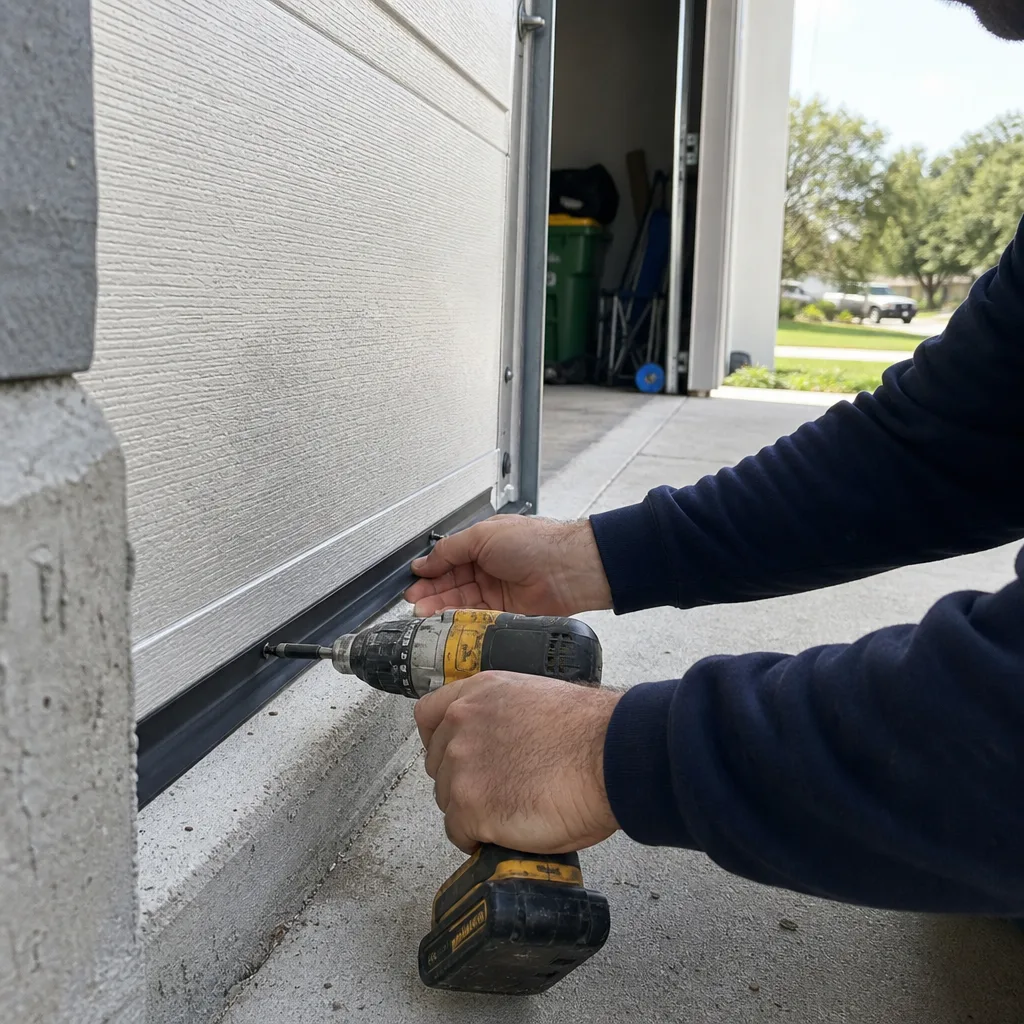
A professional garage door inspection in Clearwater typically runs between $75 and $150 if it’s a standalone visit, while lubrication-only service usually falls between $60 and $100. Many homeowners fold maintenance into a repair or replacement call, which reduces the incremental cost. We quote a flat, written price before any work starts, so you’ll know the number before the technician raises the door. Call (727) 485-0719 for an exact quote; estimates are free.
Yes, homeowners can safely lubricate hinges, roller stems, and springs using white lithium grease, provided they don’t release spring tension or touch cables under load. The work takes about 15 minutes every six months. Tracks should never be lubricated, and any component that requires releasing tension or removing fasteners under load belongs to a technician.
Torsion spring failure is the most common, and Clearwater’s salt air accelerates coil pitting that shortens the spring’s rated life. We also replace more weather seals here than in inland Florida, because UV exposure and heat dry the rubber faster. Cables develop rust that requires replacement before visible fraying.
Disconnect the opener with the emergency release, lift the door to waist height, and let go. The door should hold position within 2 inches. If it drops more than that or rises on its own, the spring is out of adjustment or failing. Run the test at quarter, half, and three-quarter positions for a complete read.
Yes. Every visit includes a documented photo record of what we found and what we did, so you know exactly what the technician saw. That’s Clause 4 of The Haven Standard, the document Servo has operated under since 2015. You’ll also get a written scope and flat price before work starts, per Clause 1.
Openers need their belt or chain tension checked twice a year, the auto-reverse and photo eye sensors tested monthly, and the force and travel limit settings verified annually. In Clearwater’s heat, the logic board runs hot, and an older opener running a new spring often becomes the next failure. If the opener is over ten years old, annual professional inspection is the right interval. Call (727) 485-0719 to schedule opener service; estimates are free.
The Bottom Line
Clearwater’s coastal climate cuts garage door service intervals in half compared to inland schedules. The homeowner’s job is monthly visual checks, quarterly safety tests, and six-month lubrication with white lithium grease. The technician’s job is spring tension, cable alignment, and opener force calibration. Keep a maintenance log with dates and measurements, and you’ll never be the homeowner who can’t answer when the spring was last inspected. Browse our more guides & resources for additional maintenance tips. If the balance test fails, if a cable shows rust, or if the auto-reverse doesn’t trip, call (727) 485-0719. Servo Garage Doors Clearwater quotes a flat price before we touch the door, and we hand you the photo record when we leave.
Written by Marcus Deller, Owner at Servo Garage Doors Clearwater, serving Clearwater since 2015.