
Last updated September 20, 2026
Full 25-point door and opener safety check with every visit - springs, cables, rollers, tracks, and your LiftMaster or Chamberlain opener included
You get a price before we start. It does not change when the truck arrives.

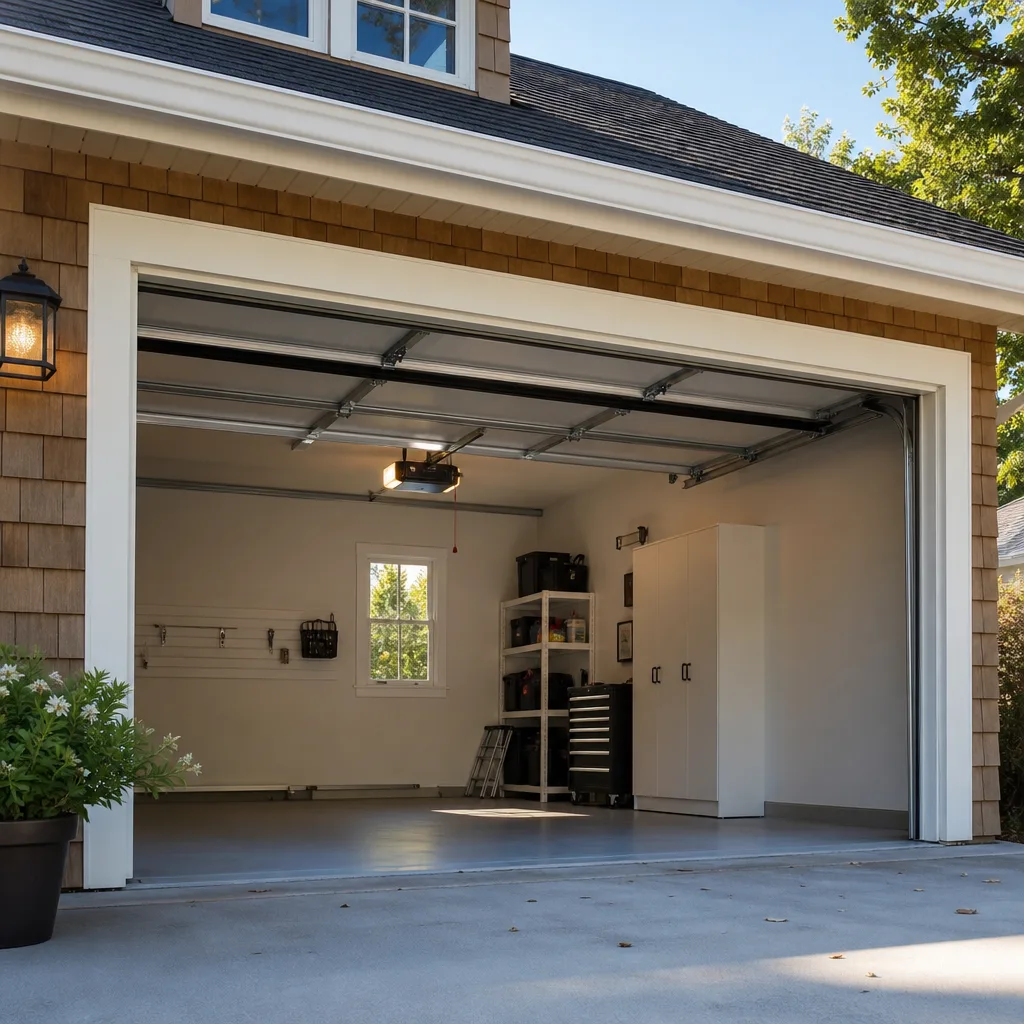
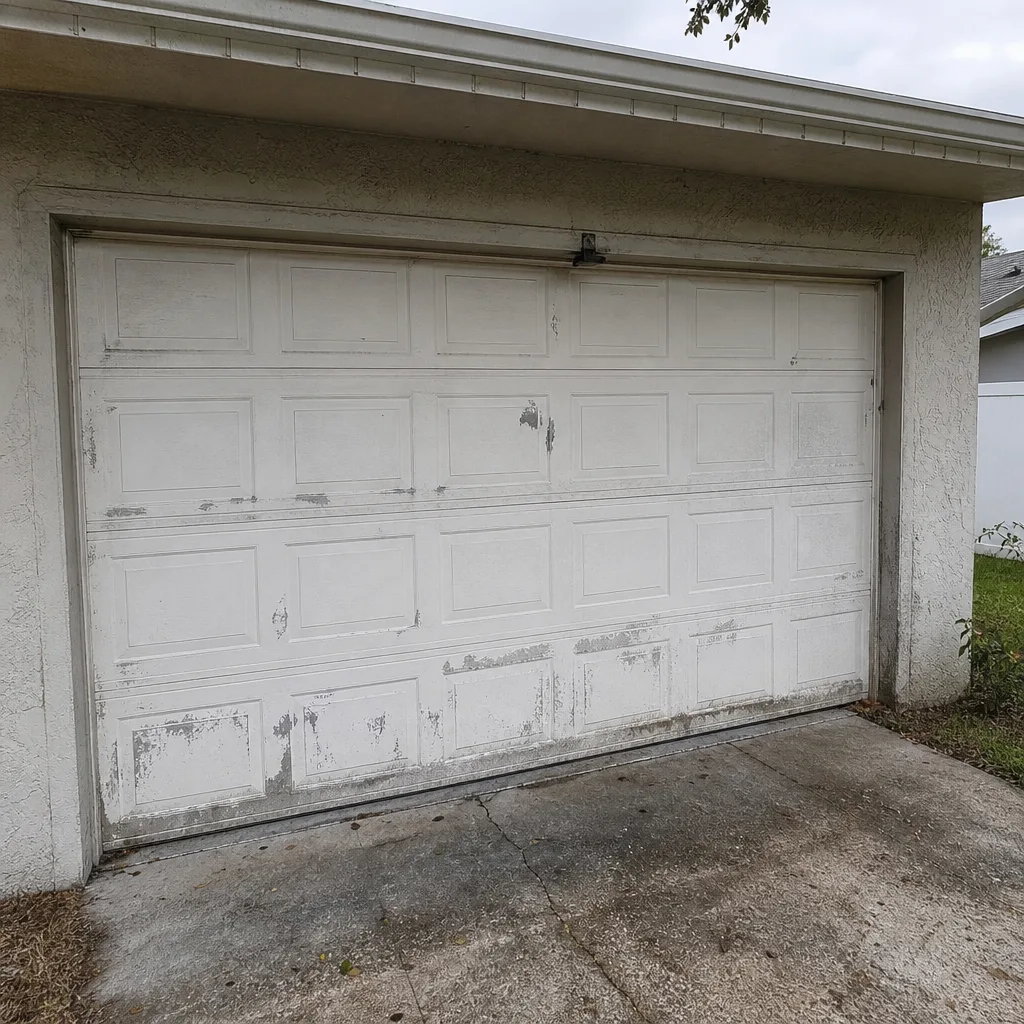 Before
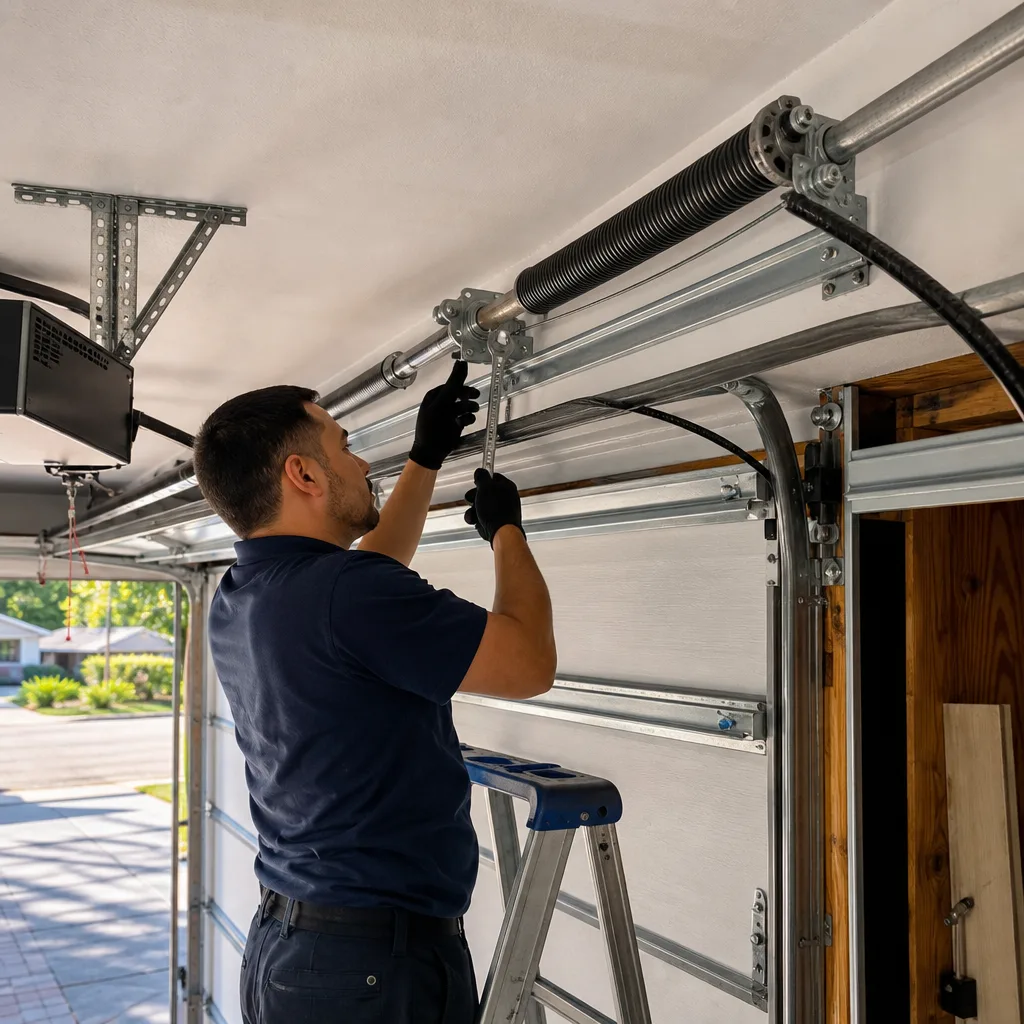 After
After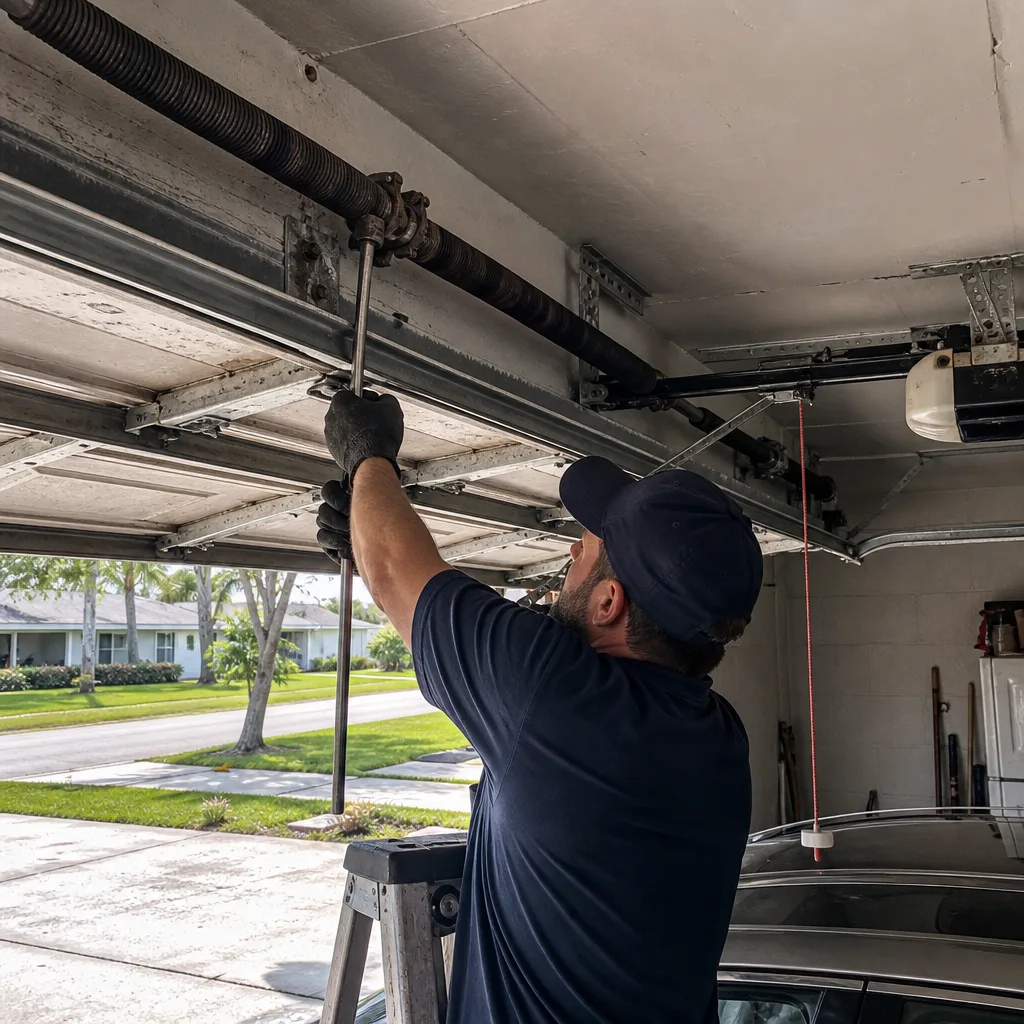 Before
 After
After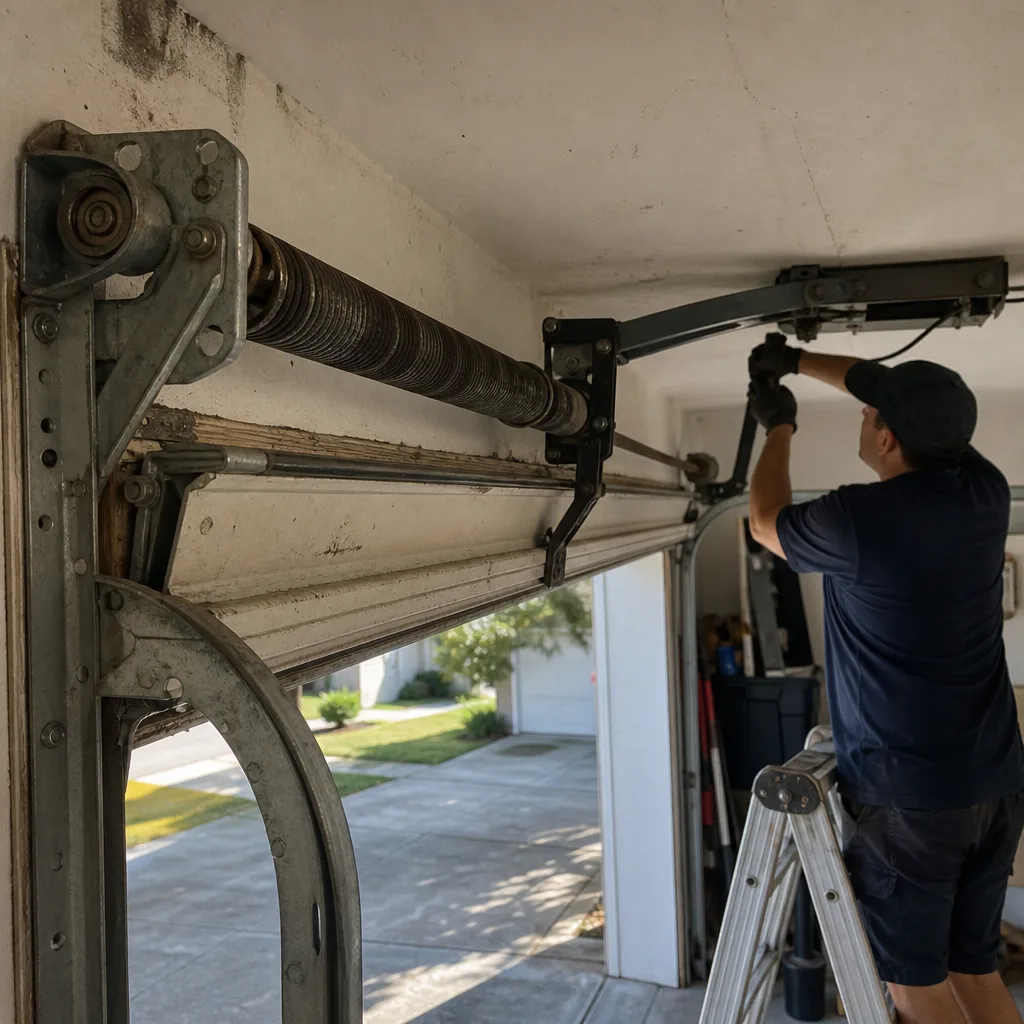 Before
 After
AfterHow to Hire a Garage Door Contractor in Clearwater: A Step-by-Step Guide
Florida has no standalone licensing requirement for garage door technicians. The person adjusting your high-tension torsion spring tomorrow may hold nothing more than a business registration and a van with a logo on it. That matters in Clearwater, where salt air corrodes hardware faster and hurricane-season storms send springs snapping at 2 a.m. This guide walks through exactly what to ask before you let anyone touch your door, what a legitimate written quote looks like, and which behaviors should make you end the call. For more guides & resources, see our blog. By the end, you’ll know how to separate a documentation-driven contractor from one who sells urgency and a handshake.
Quick Answer
To hire a garage door contractor in Clearwater, FL, ask for proof of insurance and any state or county credentials up front, then insist on a written itemized price before any work begins. A legitimate contractor photographs the failed component, explains what they found, and hands you a flat quote you approve on paper. Anyone who starts work on a verbal quote, refuses to document the failure, or pressures you with same-day urgency is one to walk away from.
Table of Contents
- What Licensing and Insurance Should a Clearwater Garage Door Contractor Have?
- The Correct Sequence of a Service Call, Step by Step
- Five Questions to Ask on the First Phone Call
- How to Read a Garage Door Quote Line by Line
- Red Flags Specific to the Clearwater Market
- How Much Does Garage Door Work Actually Cost in Clearwater?
- What You Can Check Yourself (and What You Should Never Touch)
- Common Mistakes to Avoid
- When to Call a Professional
- Frequently Asked Questions
BeforeAfterWhat Licensing and Insurance Should a Clearwater Garage Door Contractor Have?
Here’s the thing most hiring guides won’t tell you: the state of Florida does not issue a specific “garage door technician” license. Contractors doing garage door work in Clearwater typically operate under a general contractor’s license, a specialty contractor registration through Pinellas County, or a local business tax receipt. What you want to see is paperwork that confirms the company is a real registered business, carries liability insurance and workers’ compensation (or an exemption), and will show you both without acting offended that you asked.
Before anyone touches your door, ask these three things:
- Proof of insurance. A legitimate Clearwater garage door company carries general liability coverage and can email you a certificate of insurance in minutes. If the certificate looks old or the phone number doesn’t match the company, ask for a current one.
- A business license or registration number. In Clearwater, the business should hold a local business tax receipt through the city or county. The license number appears on the company’s page, not buried in fine print. If they can’t produce a number, that’s your answer.
- Workers’ compensation coverage. If a technician gets hurt on your property and the company carries no workers’ comp, that injury can become your liability. A company that runs a legitimate operation has this and can show proof.
We’ve operated in Clearwater since 2015 as an independently owned and operated company under The Haven Standard, and we keep our license and insurance current and available. If a contractor hesitates when you ask for credentials, that hesitation is information in itself.
The Correct Sequence of a Service Call, Step by Step
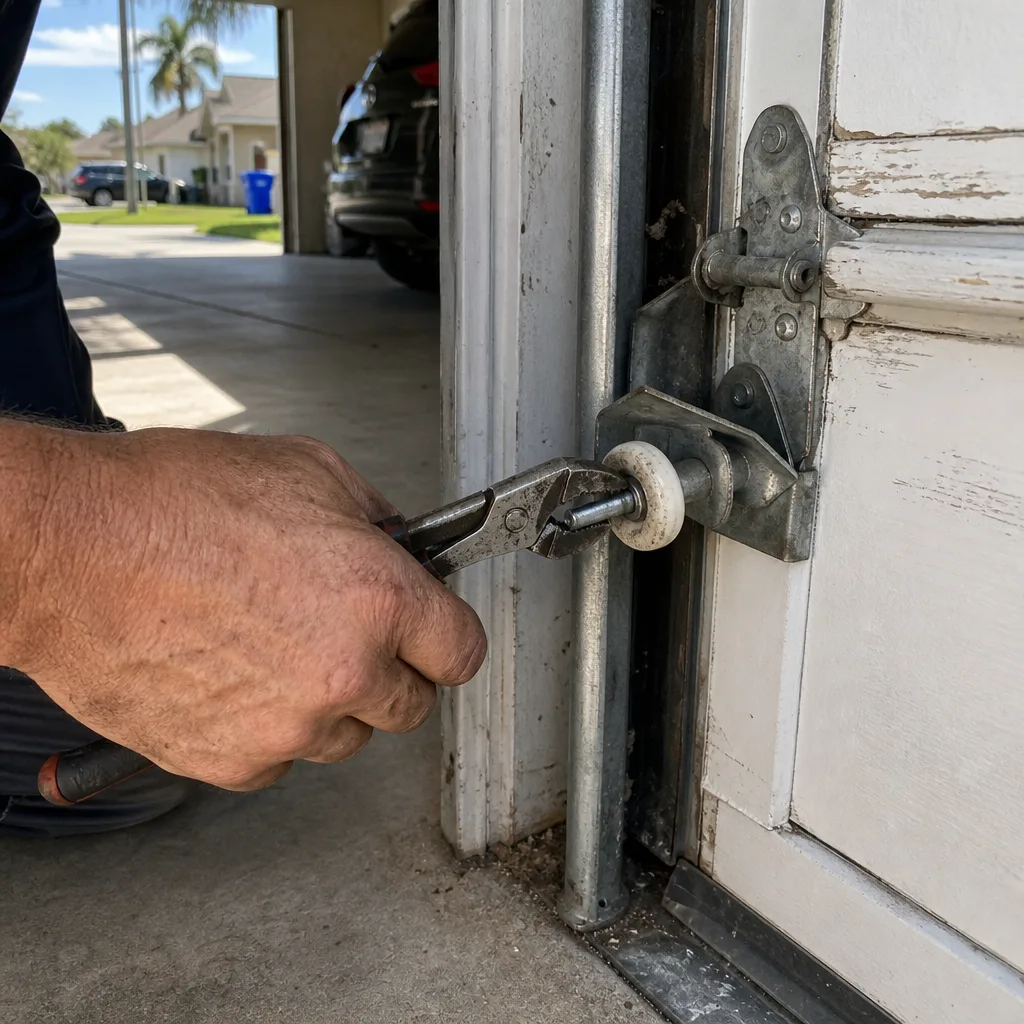
The single biggest predictor of whether a garage door job goes well is the order in which the contractor does things. A legitimate service call in Clearwater follows a specific sequence, and any deviation from that order is a warning sign. Here is what a trustworthy visit looks like:
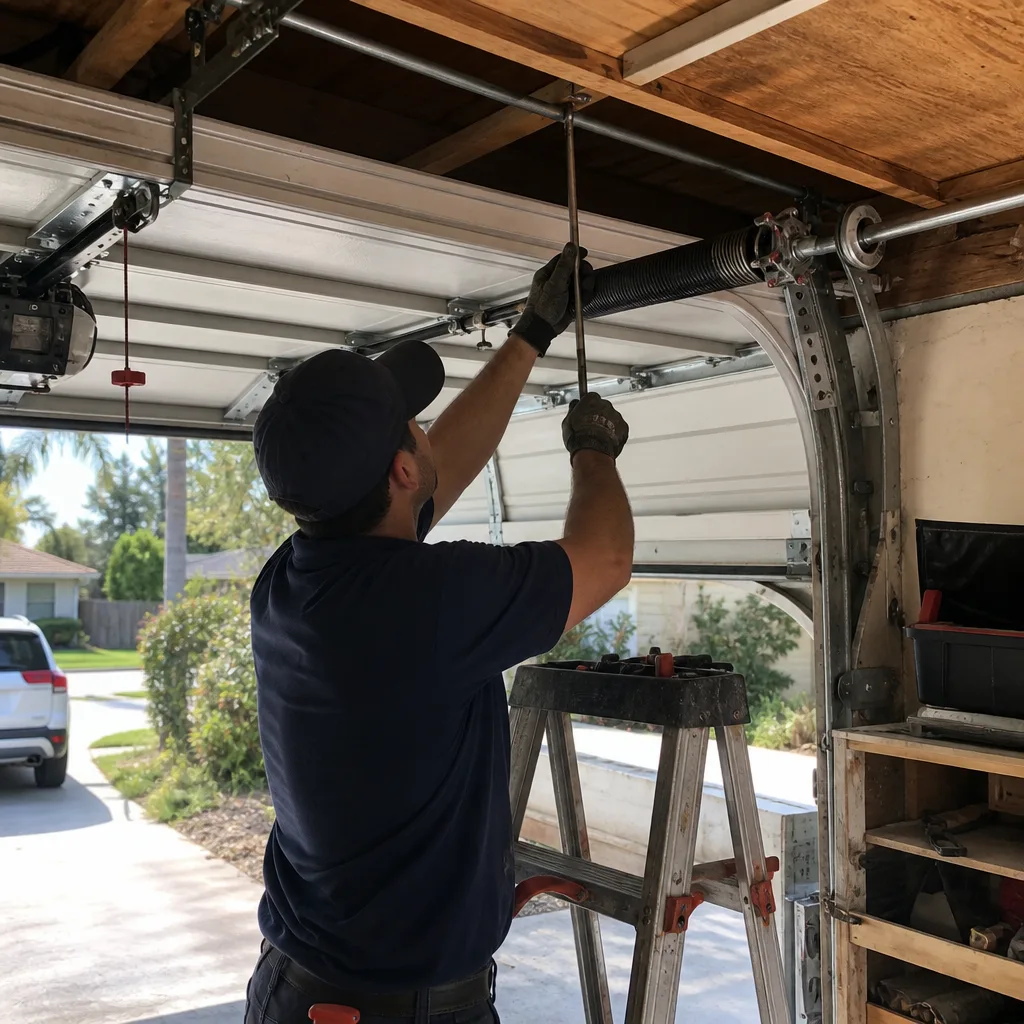
- The technician arrives and inspects first. Before any price discussion, a good technician looks at the door, runs it through a few cycles, and identifies what actually failed. This takes 10 to 20 minutes on most jobs.
- The failed component is photographed and shown to you. This is the step most contractors skip. A torsion spring with a clean break at the coil, a frayed cable, a worn trolley carriage: you should see it. If the technician describes the problem but never shows you the part, you’re being asked to trust a verbal description instead of evidence.
- A written itemized quote is delivered. The price, the scope, the parts being used, and the warranty are written on paper (or sent to your phone) with a flat number. Not a range. Not a “ballpark.” A number.
- You authorize the work in writing. You sign, initial, tap “approve” on a screen, or reply to a text. The key point: the price on that quote is the price you pay. There is no “we found something else” surprise, because the inspection already happened.
- The work is completed and documented. Photos of the finished work, the parts removed, and the new parts installed are delivered to you. You get a record of what was found and what was done.
That last step is not extra service. It’s the core of how a documentation-driven company operates. We photograph the failed component before quoting a replacement because it removes the single biggest source of distrust between a homeowner and a contractor: the fear that you’re being sold something you don’t need. In our experience, a contractor who resists showing you the failed part typically has a reason.
Five Questions to Ask on the First Phone Call
The Call is where good contractors separate themselves. But it’s also where the bad ones do their best work, because it’s easy to sound competent on the phone. These five questions cut through the performance:
- “Can you give me a written price before the technician starts the work?” A written-price-first company says yes, immediately, with zero qualifications. A urgency-based company says something like “we’ll get you taken care of” or “the tech will have the pricing with him.” That’s a no.
- “What’s your process if the technician finds something wrong that’s different from what I described?” The answer you want is some version of: “He photographs it, shows you, and writes a new quote before touching anything.” The answer that should end the call is: “We’ll handle it and work it out.”
- “Do you carry parts on the truck for the most common failures?” A legitimate Clearwater garage door repair company stocks torsion springs, cables, rollers, and opener parts on the truck, because almost every job needs one of those. If the answer is vague or “depends,” you’re likely dealing with a salesperson, not a repair operation.
- “What’s your warranty in writing?” A real warranty has a duration and a scope: “We cover the spring for 10,000 cycles or two years, whichever comes first.” A vague one is “we stand behind our work.” The first one is a promise. The second one is a sentence.
- “Who’s the technician that will show up, and is he background-checked?” Companies that send background-checked, uniformed technicians will tell you, and will give you the technician’s name before he arrives. Companies that send whoever is available get uncomfortable with this question.
How to Read a Garage Door Quote Line by Line
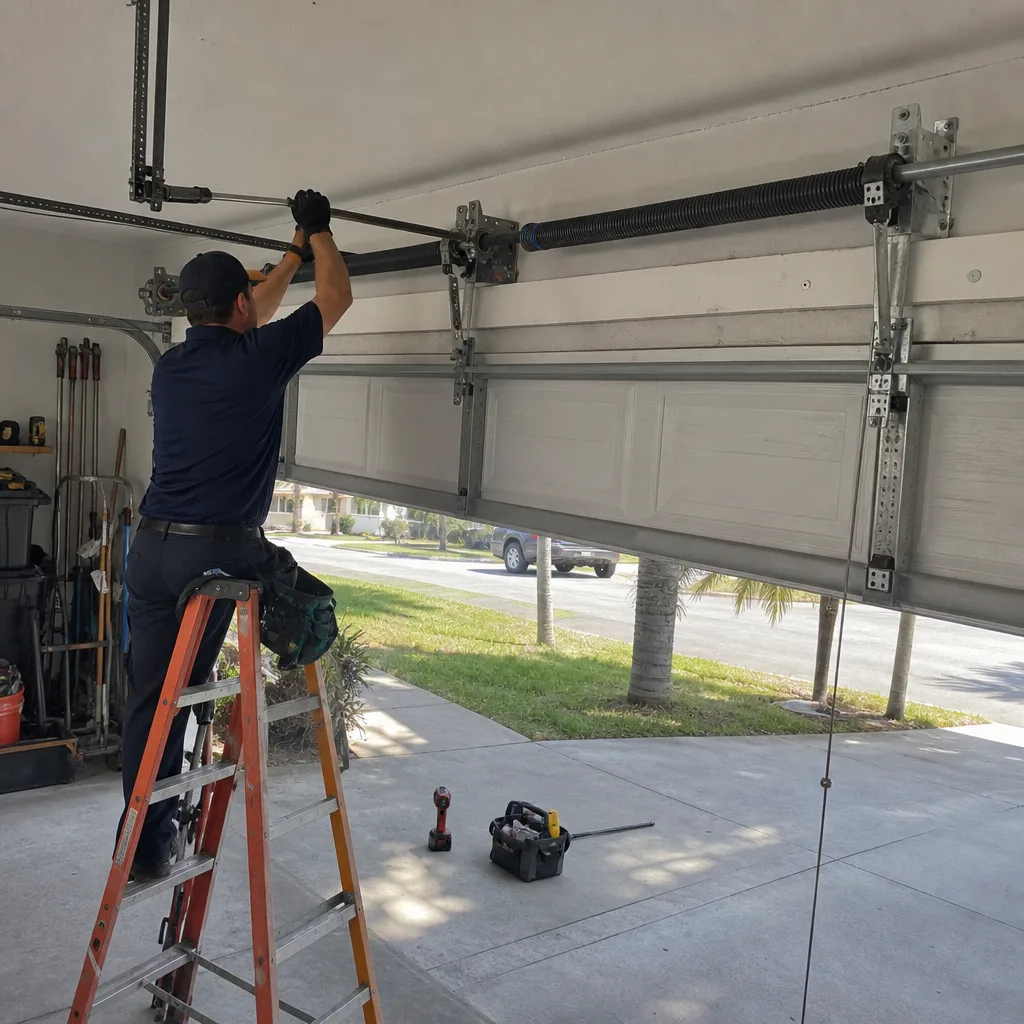
A written quote is either a document or a prop. Learning to tell the difference takes five minutes. Here’s what a real garage door quote in Clearwater should look like, line by line:
- Part identification. “Torsion spring replacement” should specify spring type (torsion vs. extension), wire diameter (e.g., 0.25-inch), and cycle rating (e.g., 10,000 cycles). A quote that says “spring replacement” with no specs is deliberately omitting the part of the quote that tells you whether it’s a $90 spring or a $280 spring.
- Labor as a separate line. Labor is usually the largest line item. A clear quote separates parts from labor, so you can see what you’re paying for each.
- Total price, flat. Not “starting at,” not “based on,” not “depending on what we find.” A flat number, because the inspection already happened and the quote is written after diagnosis, not before.
- Warranty in writing. The warranty should be a line on the quote, not a verbal promise: “Spring replacement covered for X years / X cycles.”
- No “miscellaneous” or “additional parts as needed” line. This is the line that turns a $300 quote into a $600 invoice. A legitimate quote has no “we’ll see” category.
Here’s an example from a real Clearwater quote we published, for a torsion spring replacement on a single-car door:
- Torsion spring, 0.225-inch wire, 20,000-cycle rated: $189
- Labor, including spring replacement and door balance adjustment: $145
- Documented photo record of findings and completed work: included
- Warranty: 2 years on parts, 1 year on labor
- Total: $334
The absence of a “miscellaneous” line is the whole point. The price on the quote is the price on the invoice. If a contractor won’t write a flat price, they’re not giving you a quote. They’re giving you a starting point.
Red Flags Specific to the Clearwater Market
Clearwater presents some hiring risks that you won’t find in inland Florida. The salt air from the Gulf corrodes hardware faster, and the fall storm season creates a predictable wave of emergency calls. Both of those things attract a specific kind of contractor behavior:
- Post-storm surge pricing. After a hurricane or severe storm moves through Clearwater, the calls spike: doors blown off track, springs snapped, panels dented by debris. Some contractors raise prices in the days after a storm. A written-price-first company quotes the same flat price regardless of the weather. If a price sounds inflated in the days after a storm, get a second opinion. We offer a free second opinion on any written estimate from another company, and the offer doesn’t depend on a coupon or a code.
- Same-day pressure tactics. “I can do it right now for this price, but if I have to come back it’ll be more.” This is urgency theatre. A legitimate repair in Clearwater is quoted flat, and the price doesn’t change based on how fast you say yes.
- Refusal to photograph the component before quoting. This is the big one. We’ve built our entire company around the opposite: the customer sees the failed part before anyone quotes a replacement. If a Clearwater technician won’t show you the broken spring or the frayed cable, assume there’s a reason. There usually is.
- The “looks fine” upsell. “Your opener’s fine but it’s old, and since we’re here, we can replace it for a deal.” This is how a $180 cable replacement becomes a $900 opener job. A documentation-driven contractor describes what they found. They don’t pitch what you didn’t ask about.
How Much Does Garage Door Work Actually Cost in Clearwater?
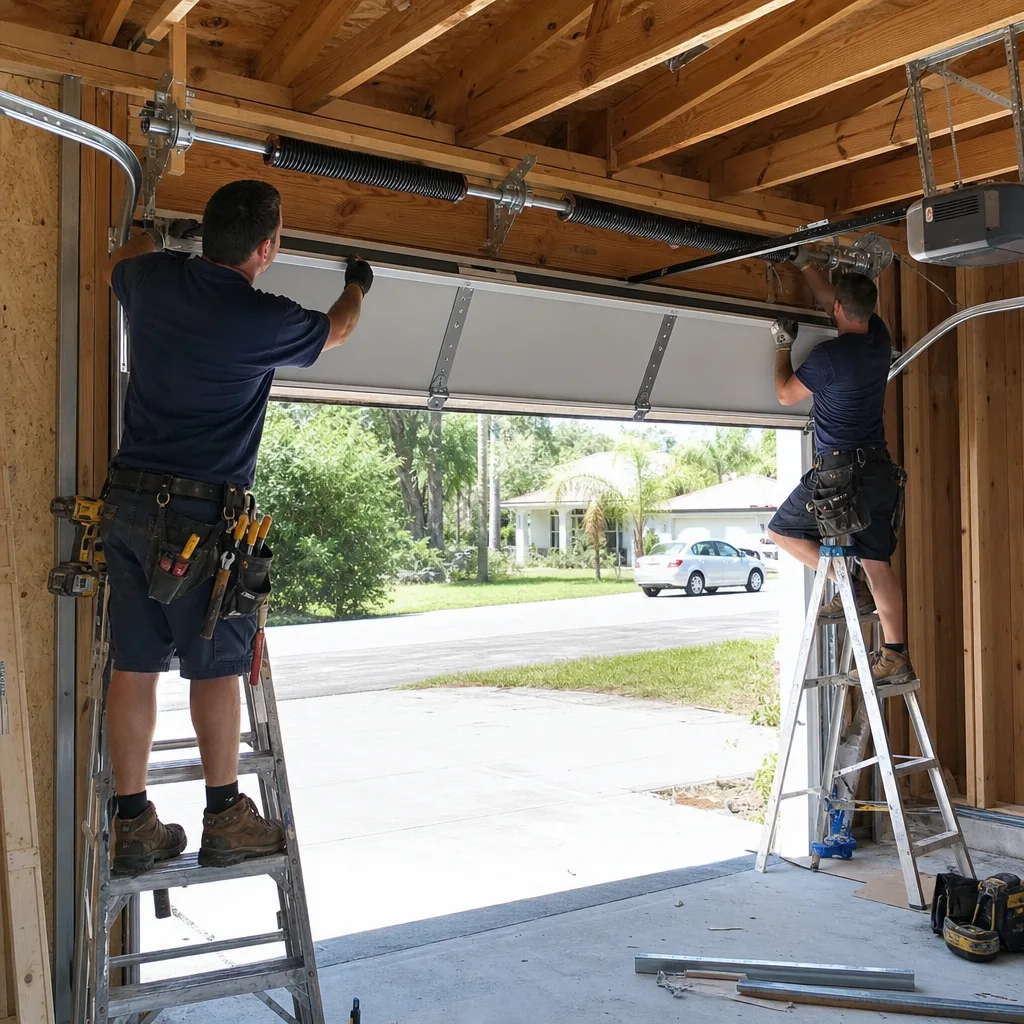
Clearwater pricing runs close to the Florida average for garage door work, with some local variation. Here’s what we see in the market, in dollars, not ranges:
- Torsion spring replacement (single door): $250-$380 total, parts and labor. The spread depends on spring wire diameter and cycle rating.
- Garage door opener repair (logic board, gear kit): $180-$350, depending on the opener brand and the part. LiftMaster and Chamberlain parts are widely available in Clearwater, which keeps pricing competitive.
- Garage door opener installation (with new opener): $450-$750 including the opener, labor, and programming.
- Full garage door replacement (single-car): $1,100-$2,400, depending on the door material and insulation level. A basic steel door from Clopay runs lower; a carriage-style door from Amarr runs higher.
- Cable replacement: $150-$250, usually same day, which matters because a snapped cable is a safety issue, not a cosmetic one.
- Roller replacement (all rollers): $120-$220.
These are the numbers we write on quotes in Clearwater every week. The important thing is not the number itself, it’s that the number is flat and written before work begins. “Call for a quote” is not how we work, and it shouldn’t be how you hire.
What You Can Check Yourself (and What You Should Never Touch)
Some diagnostics are safe and genuinely useful. Some are dangerous. Here’s the line, drawn clearly:
Safe to check yourself
- The balance of the door. Disconnect the opener by pulling the release cord, then manually open the door halfway. If it stays put, the springs are balanced. If it falls or rises on its own, the springs are worn or the door is out of balance.
- Visible wear on rollers and hinges. Look at the rollers on the vertical tracks. If they’re cracking, wobbly, or the bearings are visibly worn, you’ve found a problem you can point to.
- The photo-eye sensors. If the door won’t close, check that the two sensors on either side of the door are aligned (the indicator lights usually tell you) and that nothing’s blocking the beam.
Never touch, ever
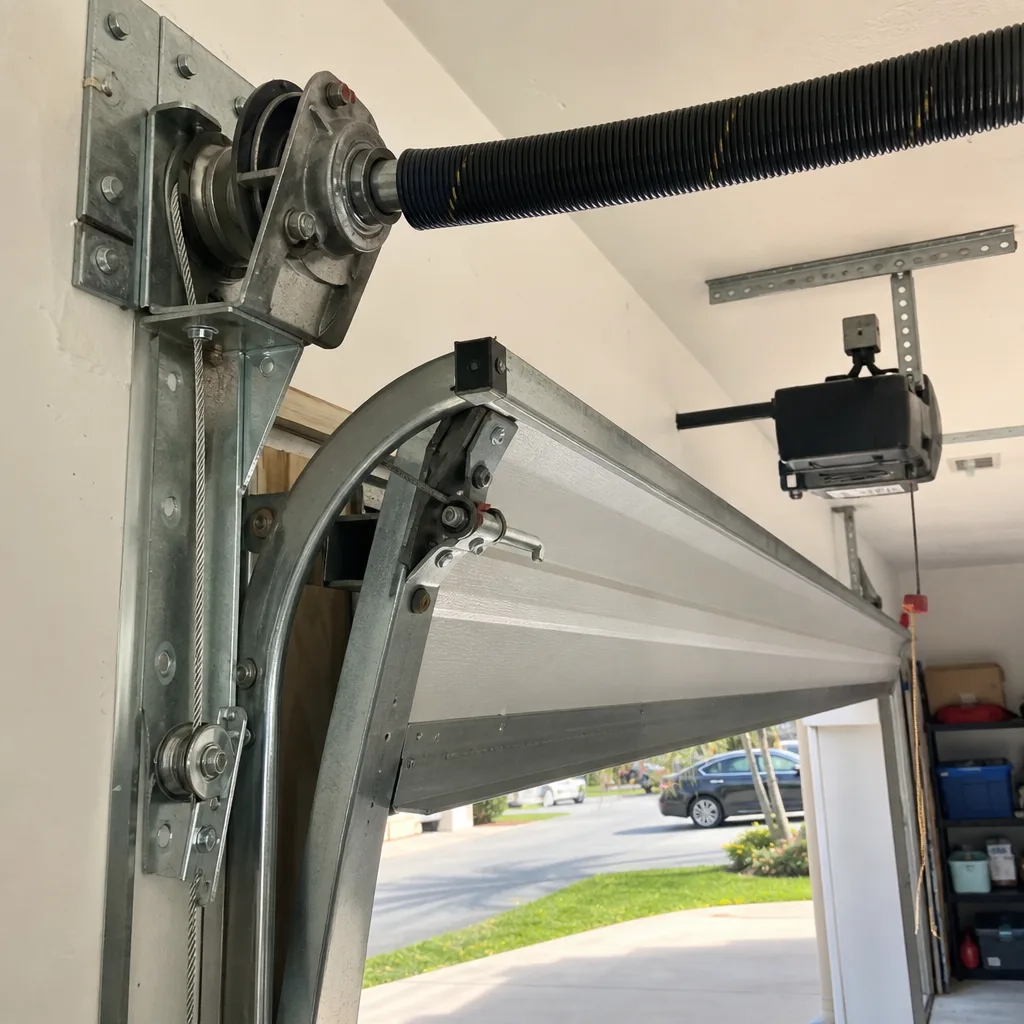
Torsion springs, extension springs, and cables. These components are under high tension. A torsion spring stores enough energy to cause serious injury or death if it released improperly. Even with the door in the down position, the springs hold tension. Cable systems are under similar load. If the problem involves springs or cables, call a professional. Always. This is not a DIY-shaming statement, it’s a safety fact. Every reputable garage door technician in Clearwater will tell you the same thing.
Common Mistakes to Avoid
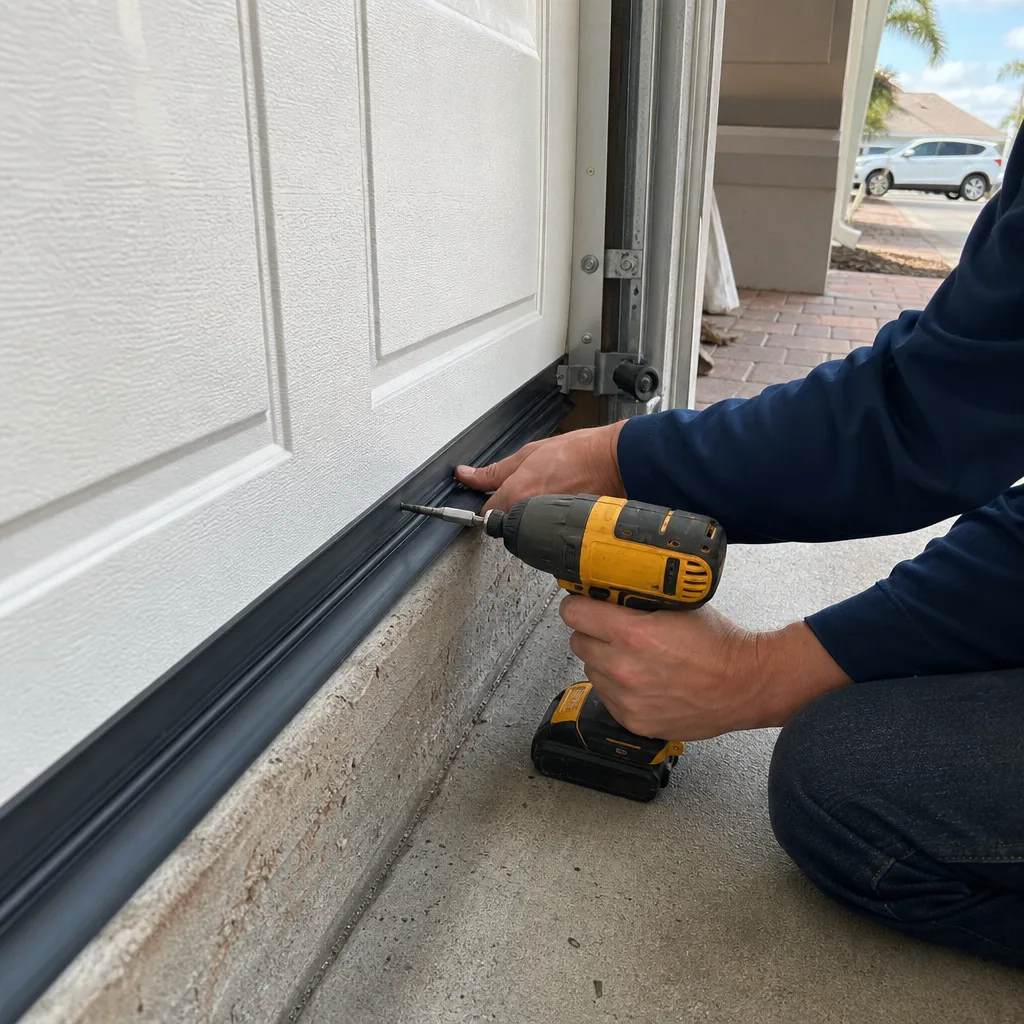
- Accepting a verbal quote and letting the technician start work. This is the single most common hiring failure, and it’s the one that leads to invoice shock. If the price isn’t written down before the first bolt is turned, you’re not hiring a contractor. You’re gambling.
- Not asking about the specific part that failed. “Your spring is bad” is a sales statement. “Your torsion spring measured at 0.25-inch wire diameter and shows a clean break at the coil” is a diagnosis. Insist on the second one.
- Skipping the insurance check. In Clearwater, hiring an uninsured tech is a real liability exposure. Get the certificate of insurance before the appointment, not after the work starts.
- Letting urgency make the decision. A snapped spring is an emergency, and the urgency is real. But an emergency is not a reason to skip the written quote. A good contractor quotes fast and still puts it in writing.
- Not getting the warranty in writing. Verbal warranties are worth roughly the paper they aren’t printed on.
- Accepting a “miscellaneous” line item. See the quote section above. This line exists to make the final number larger than the quoted one.
- Googling “cheapest garage door repair Clearwater” and picking the first result. Price matters, but the lowest price is often a teaser quote that’s about to grow. Price plus documentation is the filter.
When to Call a Professional
Call a garage door professional in Clearwater if any of these are true: the door won’t open or close, a spring is visibly broken, the opener makes a grinding sound, the door is off-track, or the cables are frayed. Also call for any spring or cable issue, even if you could theoretically “watch a YouTube video” for it. You shouldn’t, and the video never accounts for the age of your specific door or the condition of your specific hardware. Servo Garage Doors Clearwater offers free estimates in Clearwater, and a real person answers the phone 24/7, including emergency garage door calls. Call (727) 485-0719.
Frequently Asked Questions
A trustworthy garage door contractor in Clearwater asks for the documentation you request, quotes a flat written price before starting work, and shows you a photo of the failed part before quoting a replacement. Start with insurance verification, then ask the five phone questions above. If the company passes all of them, you’ve found a contractor who operates on written price and documentation, not urgency. For a free estimate, Servo Garage Doors Clearwater is the place to start.
A Clearwater garage door repair quote should include a specific identification of the part (spring type, wire diameter, cycle rating), a separate labor line, a flat total, and a written warranty. It should not include a “miscellaneous” line or a price range. If a quote omits the part specifications, ask for them before you authorize anything.
Florida doesn’t issue a specific garage door technician license, but a legitimate Clearwater contractor operates with a general contractor’s license or a county registration and carries both liability insurance and workers’ compensation. Ask for the certificate of insurance and the license number up front. Any hesitation is a reason to call someone else.
Garage door spring replacement in Clearwater typically runs $250-$380 for a single door, including parts and labor, depending on the spring’s wire diameter and cycle rating. A higher cycle rating means a longer-lasting spring and a slightly higher price. Call (727) 485-0719 for an exact written quote, and check our Garage Door Repair in Clearwater page for more detail.
Yes, many Clearwater garage door companies offer same-day service, and emergency service 24/7. Our emergency line is answered by a real person at any hour, with a named technician and an on-the-way text rather than a callback window. But same-day does not mean the price stops being written. A flat written quote applies to emergency work too.
In Clearwater, we see more torsion spring failures than anything else, followed by broken cables and opener logic board failures. The salt air accelerates corrosion on hardware near the Gulf, and the humidity shortens the life of some electrical components. A torsion spring that fails on a hot, humid afternoon is a routine call for us. If you’re shopping for a new opener, our Garage Door Opener Repair & Installation in Clearwater page covers the options.
A standard garage door installation in Clearwater takes half a day to a full day, depending on the door style, whether the tracks need replacing, and whether the old door needs haul-away. Labor is scheduled in advance and done in one visit. For a detailed breakdown of timing and options, see Garage Door Installation in Clearwater.
The Bottom Line
Hiring a garage door contractor in Clearwater comes down to one principle: written before work. For a deeper dive, see The Complete Guide to Garage Door in Clearwater. A legitimate contractor documents the failed part, writes a flat itemized quote, gets your written authorization, and then completes the work with photos of what was found and what was done. Anyone who skips the paper and leans on urgency is selling you a story instead of a repair. Ask for credentials, read the quote line by line, and if the price isn’t written down before the first bolt is turned, walk away. The right contractor makes the process boring. That’s the point.
Written by Marcus Deller, Owner at Servo Garage Doors Clearwater, serving Clearwater since 2015.